
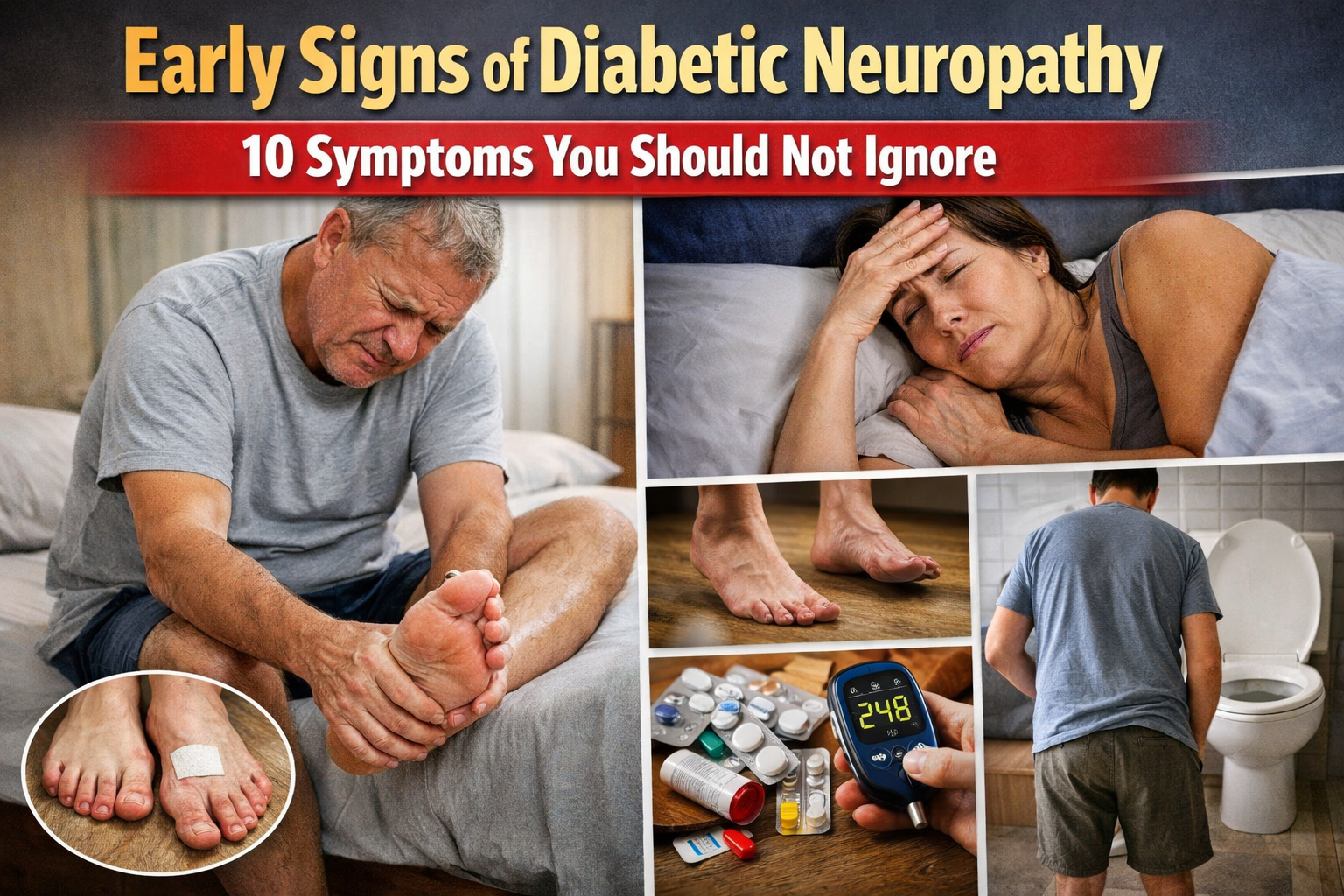
Early Signs of Diabetic Neuropathy: 10 Symptoms You Should Not Ignore
Early Signs of Diabetic Neuropathy: 10 Symptoms You Should Not Ignore
Diabetic neuropathy is one of the most common long-term complications of diabetes. It happens when diabetes-related metabolic changes damage nerves over time, especially when blood glucose stays above target for long periods. NIDDK says diabetic neuropathy can affect different nerve groups, and peripheral neuropathy alone affects about one-third to one-half of people with diabetes. The challenge is that symptoms do not always arrive all at once, and some people have nerve damage with few obvious complaints at first.
That is why early recognition matters. Nerve damage often starts in the feet and legs before moving higher or involving the hands, and it can raise the risk of injuries, foot ulcers, infections, and mobility problems if reduced sensation goes unnoticed. The American Diabetes Association notes that up to 50% of diabetic peripheral neuropathy cases may be asymptomatic, which means people can miss the problem until complications develop.
This guide explains 10 important diabetic neuropathy symptoms, what they can feel like in everyday life, and when they deserve prompt medical attention.
What diabetic neuropathy actually is
Diabetic neuropathy is nerve damage caused by diabetes. It is not a single symptom and not a single disease pattern. Different forms can affect sensory nerves, motor nerves, or autonomic nerves that help control digestion, bladder function, sexual response, heart rate, blood pressure, sweating, and awareness of low blood sugar. That is why one person may notice burning feet, while another notices dizziness on standing, bladder trouble, or unexplained nausea.
The most common form is peripheral neuropathy, which usually starts in the feet. Autonomic neuropathy can affect internal organ function. Less common patterns, such as focal or proximal neuropathies, can also occur in people with diabetes.
1) Numbness or tingling in the feet or hands
For many people, the earliest clue is not dramatic pain. It is a strange “pins and needles” feeling, mild numbness, or a sense that the feet do not feel normal anymore. NIDDK and CDC both describe tingling and numbness as common early features of peripheral diabetic neuropathy, usually beginning in the feet and sometimes later involving the hands.
This symptom can be easy to brush off, especially if it comes and goes. But it matters because reduced sensation can make it harder to feel blisters, pressure points, cuts, or a shoe that is rubbing the skin. Over time, that loss of protective sensation is one of the reasons foot injuries become more dangerous in diabetes.
2) Burning pain, especially in the feet
Some people do not lose sensation first. Instead, they develop a hot, burning, raw, or “feet on fire” type of pain. NIDDK and Mayo Clinic both list burning pain among common symptoms of peripheral diabetic neuropathy. CDC also notes that pain and increased sensitivity may be worse at night.
Burning neuropathic pain often feels different from muscle soreness or joint pain. It may persist at rest, flare in the evening, or interfere with sleep. That pattern is one reason painful diabetic neuropathy can have such a strong effect on quality of life, even when the skin looks normal from the outside.
3) Sharp, stabbing, or electric-shock pain
Diabetic nerve pain is not always constant. Some people describe sudden jolts, stabbing pain, or electric-like shocks shooting through the toes, feet, legs, or hands. NIDDK and Mayo Clinic both describe burning or shooting pain as part of diabetic peripheral neuropathy.
These episodes may be brief, but they can be intense enough to disrupt walking, sleep, or concentration. When pain behaves this way, it often points more toward nerve irritation than toward a simple strain or overuse injury.
4) Pain from light touch that should not hurt
A particularly frustrating symptom is allodynia, where light touch becomes painful. NIDDK notes that some people with diabetic peripheral neuropathy develop extreme pain even when affected areas are touched lightly.
In real life, that can mean socks feel irritating, bedsheets feel abrasive, or a light brush against the skin feels disproportionately uncomfortable. This symptom is one reason people with painful neuropathy sometimes say their discomfort makes normal daily routines feel exhausting, even when others cannot see anything wrong.
5) Trouble sensing heat, cold, or pain correctly
Peripheral diabetic neuropathy can reduce the body’s ability to detect temperature and pain normally. NIDDK specifically warns that people may have trouble sensing pain or temperature in the feet, legs, hands, or arms, and CDC notes that nerve damage can lower the ability to feel pain, heat, or cold.
This is more than an odd sensation issue. It is a safety issue. A person may not realize bath water is too hot, may not notice a heating pad is burning the skin, or may miss a minor injury that later becomes infected. That is one reason daily foot checks are so strongly emphasized in diabetes care.
6) Loss of balance or feeling unsteady when walking
Nerves in the feet do more than transmit pain. They also help the brain understand where the body is in space. When that feedback becomes unreliable, balance can worsen. NHS and Mayo Clinic both describe balance or coordination problems as possible neuropathy symptoms, especially as sensory loss progresses.
People often notice this most when walking in the dark, stepping onto uneven ground, or climbing stairs. If your feet are giving your brain less accurate information, your body has to rely more heavily on vision and compensation. That can increase fall risk, especially in older adults or in anyone who already has weakness or foot deformity.
7) Muscle weakness, foot weakness, or foot drop
Diabetic neuropathy can also affect motor nerves. NIDDK lists weakness among peripheral neuropathy symptoms, and Mayo Clinic notes that weakness may develop in affected areas. In some people, this can contribute to foot drop, difficulty lifting the front of the foot, or trouble with grip and fine hand tasks.
Weakness deserves attention because it changes function, not just sensation. A person may start tripping more often, struggle to rise onto the toes, or notice that walking feels less controlled than before. When weakness is progressing, a clinician may need to evaluate whether diabetic neuropathy is the cause or whether another neurologic problem is contributing. Diabetic neuropathy is considered a diagnosis of exclusion, meaning other treatable causes of neuropathy may also need to be ruled out.
8) Nausea, bloating, early fullness, or other digestive changes
When diabetes affects autonomic nerves, digestion can slow down. NIDDK and Mayo Clinic both describe autonomic neuropathy as a cause of digestive problems, and Mayo Clinic notes that diabetic neuropathy may slow stomach emptying, leading to gastroparesis.
Symptoms can include nausea, vomiting, bloating, belching, constipation, diarrhea, or feeling full unusually quickly after eating. In people with diabetes, this can create a difficult cycle because delayed stomach emptying can make glucose patterns less predictable and can interfere with nutrition and medication timing.
9) Bladder changes or urinary problems
Autonomic diabetic neuropathy can also affect the nerves that control the bladder. NIDDK says nerve damage from diabetes can contribute to bladder dysfunction and changes in urinary habits. Symptoms may include trouble emptying the bladder fully, weak urine flow, loss of bladder control, or recurrent urinary tract issues related to incomplete emptying.
This symptom matters because it can quietly affect quality of life and, in some cases, raise the risk of infections. People often assume urinary symptoms are unrelated to nerve damage, so they do not connect them to diabetes until the pattern becomes hard to ignore.
10) Sexual dysfunction
Sexual dysfunction is another under-discussed symptom of diabetic neuropathy. NIDDK explains that diabetes-related nerve damage can affect the genitals and sexual response. In men, this may show up as erectile dysfunction; NIDDK notes men with diabetes may develop ED 10 to 15 years earlier than men without diabetes. Women may notice decreased sensation, reduced arousal, discomfort, or lubrication changes.
Because people are often embarrassed to bring this up, the problem may go untreated longer than necessary. But it is medically relevant, common, and worth discussing with a clinician, especially when it appears alongside other neuropathy symptoms.
When symptoms may be more than “just neuropathy”
Not every tingling foot or painful leg is caused by diabetic neuropathy. Mayo Clinic and ADA both emphasize that diabetic neuropathy should not be assumed automatically without clinical evaluation, because other neuropathies and other foot problems can occur in people with diabetes too.
Seek prompt medical care if you have:
a new foot wound, ulcer, blister, redness, swelling, or drainage
numbness that is worsening
burning or stabbing foot pain that is interfering with sleep
new weakness, tripping, or suspected foot drop
severe nausea or repeated vomiting
bladder symptoms with fever, pain, or signs of infection
Urgent evaluation is especially important if you have a foot injury you cannot feel well, because diabetes-related nerve damage can let small problems progress before they become obvious.
How diabetic neuropathy is diagnosed
Diagnosis usually starts with symptoms, medical history, and a focused physical exam. NIDDK says evaluation includes a neurologic exam and a foot exam, and may also involve tests for sensation, blood flow, nerve conduction, or muscle response depending on the pattern of symptoms.
For screening, the ADA states that people with type 2 diabetes should be assessed for diabetic peripheral neuropathy starting at diagnosis, while those with type 1 diabetes should begin assessment after 5 years of disease duration. Ongoing assessment is recommended because neuropathy can progress gradually and may be missed when symptoms are subtle. NIDDK also advises at least yearly foot and neurologic exams for people with diabetes.
What helps slow progression
The most important long-term strategy is better diabetes management. CDC says closely managing blood sugar can help prevent or delay nerve damage, and broader diabetes care also includes attention to foot protection, physical activity, medications, and follow-up care.
Daily foot checks matter too. CDC and NIDDK both emphasize checking the feet every day, avoiding barefoot walking, and getting regular foot exams because loss of sensation can hide injuries until they become serious.
FAQ
Can diabetic neuropathy start before severe pain appears?
Yes. It may begin with mild tingling, subtle numbness, or no obvious symptoms at all. ADA guidance notes that up to 50% of diabetic peripheral neuropathy may be asymptomatic.
Does diabetic neuropathy always affect both feet?
It often begins in a fairly symmetrical pattern in the feet because peripheral neuropathy commonly starts distally and affects both sides, but symptoms and severity can still vary from person to person.
Is burning foot pain always diabetic neuropathy?
No. Burning foot pain can have other causes, including other neuropathies, nerve compression, circulation problems, skin conditions, or musculoskeletal issues. That is why persistent symptoms should be evaluated rather than self-diagnosed.
Can diabetic neuropathy affect digestion or the bladder?
Yes. Autonomic neuropathy from diabetes can affect the digestive tract, bladder, sexual function, heart rate, blood pressure, sweating, and awareness of low blood sugar.
How often should someone with diabetes have their feet checked?
NIDDK advises at least a yearly neurologic and foot exam, and CDC also highlights regular foot care plus daily self-checks at home. Some people need more frequent exams if they already have foot problems or high-risk findings.
Bottom line
Diabetic neuropathy does not always start with an obvious crisis. It may begin as mild tingling, burning feet at night, unusual sensitivity, balance changes, or symptoms that seem unrelated to nerves, such as nausea, bladder trouble, or sexual dysfunction. Because nerve damage can be present even when symptoms are subtle, early attention matters. Better glucose management, regular foot care, and timely medical evaluation can help reduce the risk of more serious complications.

Related Posts

Gallbladder Pain Location in Females: Where It Hurts, What It May Mean, and When to Get Checked

Gallbladder Pain: What It Feels Like, What Causes It, and When It May Be an Emergency