Gallbladder Pain: What It Feels Like, What Causes It, and When It May Be an Emergency
Gallbladder Pain: What It Feels Like, What Causes It, and When It May Be an Emergency
Gallbladder pain is one of those symptoms people often misread at first. It may start as pressure, fullness, or a deep ache high in the abdomen, especially after a rich meal. But when the gallbladder is inflamed or a stone blocks the flow of bile, that discomfort can quickly become intense, persistent, and hard to ignore. Gallstones are the most common reason this happens, though not every gallstone causes symptoms, and not every pain in the upper abdomen comes from the gallbladder.
What matters most is recognizing the pattern. Gallbladder-related pain often shows up in the upper right part of the abdomen or near the center upper belly, may spread to the right shoulder or upper back, and commonly appears after eating fatty foods or later in the evening. When fever, jaundice, vomiting, pale stools, or dark urine enter the picture, the concern shifts from “digestive discomfort” to a possible blocked duct, inflammation, or infection that needs medical attention.
What the gallbladder actually does
The gallbladder is a small organ tucked under the liver on the right side of the abdomen. Its job is to store and concentrate bile, a digestive fluid made by the liver. When you eat, especially when the meal contains fat, the gallbladder contracts and sends bile into the small intestine to help break down and absorb fats. Problems begin when bile flow is disrupted or when material in bile forms stones that block the normal pathway out of the gallbladder or bile ducts.
That is why gallbladder symptoms often seem meal-related. A person may feel fine most of the day, then develop pain after a large, greasy, or heavy meal because the gallbladder is being asked to squeeze against a blockage or into a system that is not draining properly.
What gallbladder pain usually feels like
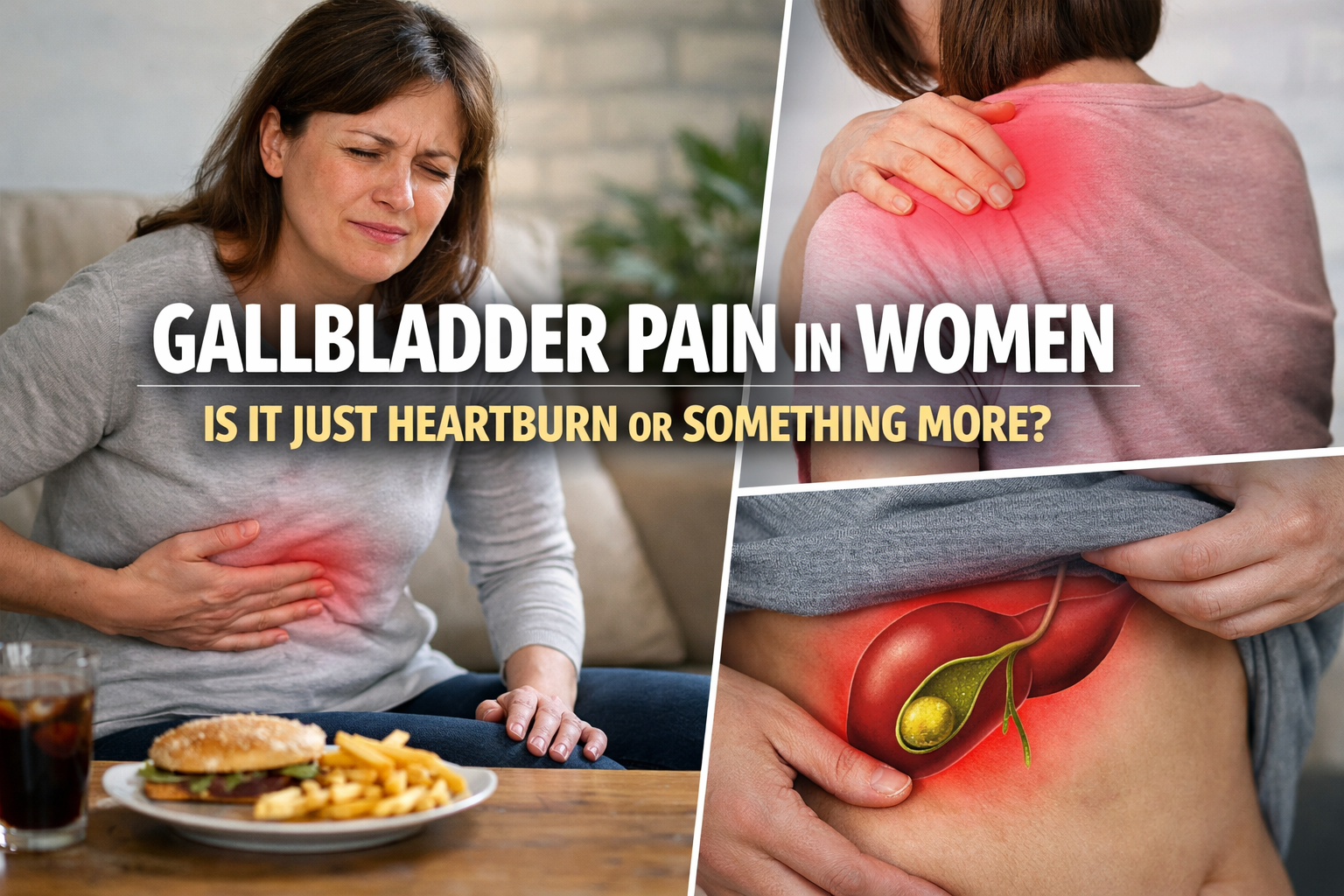
Classic gallbladder pain is usually felt in the upper right abdomen, but some people feel it in the upper middle abdomen instead. It often builds rather than strikes like a quick cramp. People describe it as deep, squeezing, sharp, burning, or steady and severe. It can radiate into the right shoulder blade, right shoulder, or upper back because of shared nerve pathways.
A typical gallbladder attack, often called biliary colic, tends to last from about 30 minutes to a few hours. The pain is usually constant during the episode rather than coming in brief waves, and it is not reliably relieved by passing gas, having a bowel movement, or vomiting. When the pain keeps going for many hours, becomes more severe, or is joined by fever or jaundice, doctors worry more about acute cholecystitis, bile duct blockage, or infection.
Symptoms that often come with gallbladder pain
Pain is the main symptom, but it is rarely the only one. Many people also have nausea, vomiting, bloating, or a heavy “indigestion” feeling after meals. Because fatty foods trigger gallbladder contraction, rich meals are a common trigger for attacks.
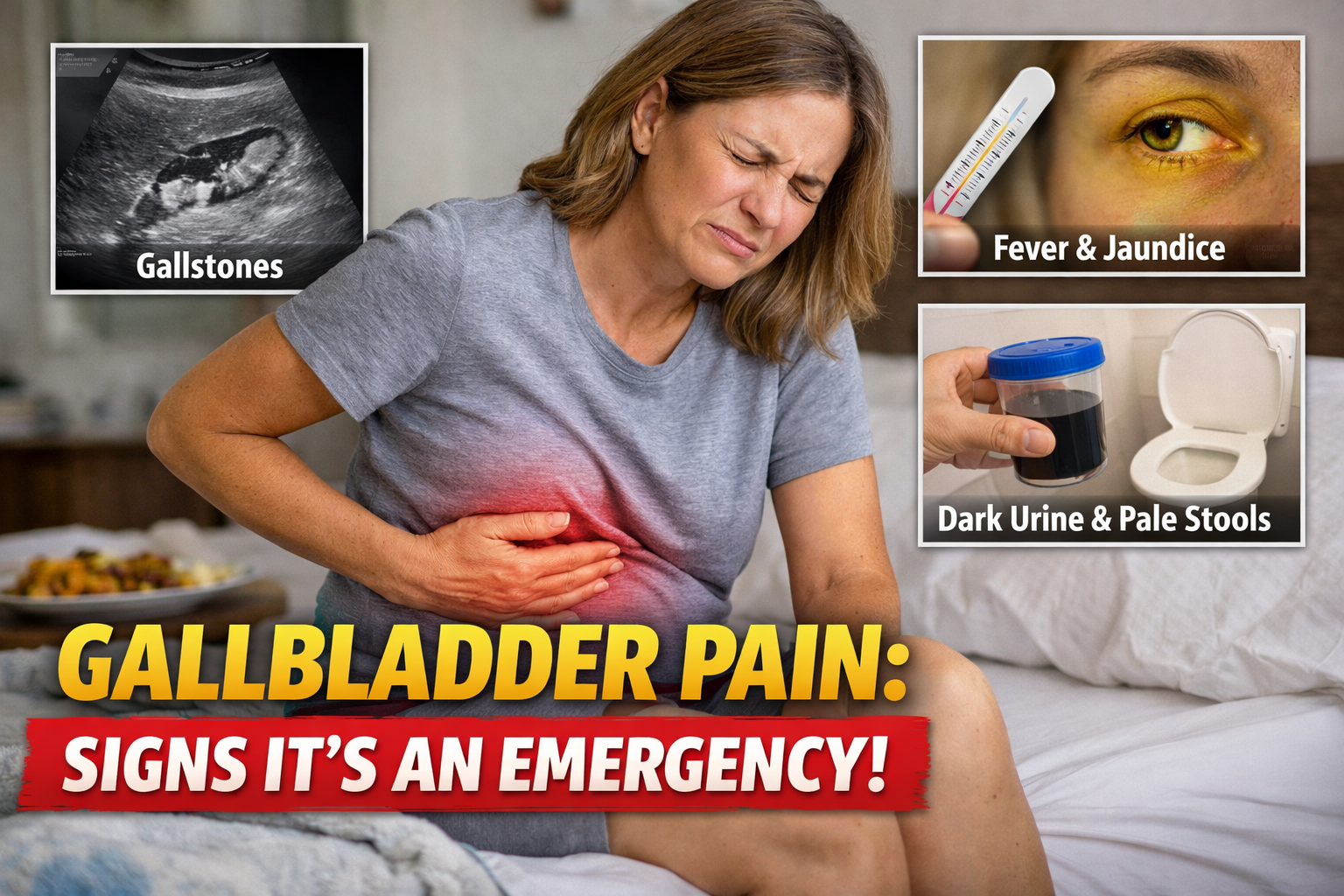
More concerning symptoms include fever, chills, yellowing of the skin or eyes, dark urine, and pale or clay-colored stools. These can suggest that bile is not flowing normally and may point to inflammation of the gallbladder or blockage in the bile ducts. Jaundice and dark urine happen when bilirubin backs up into the bloodstream instead of moving normally through bile.
Some people also notice that breathing deeply or pressing on the upper right abdomen makes the pain worse. In acute inflammation, the area may feel tender enough that even ordinary movement becomes uncomfortable.
The most common cause: gallstones
Gallstones are by far the most common cause of gallbladder pain. These are hardened deposits that form from substances in bile, most commonly cholesterol. Stones can be as small as grains of sand or much larger, and some people have one while others have many. Importantly, gallstones do not always cause symptoms. Many remain “silent” and are found only by chance on imaging.
Pain begins when a stone blocks the normal outflow of bile. That blockage raises pressure inside the gallbladder or the biliary system and triggers biliary colic, the classic attack pattern of upper abdominal pain, often after eating. If the blockage persists, the problem may progress from intermittent pain to inflammation, infection, jaundice, or pancreatitis.
Researchers do not think all gallstones form for exactly the same reason, but official guidance points to three major bile-related problems: too much cholesterol in bile, too much bilirubin, or not enough bile salts. Gallstones may also form when the gallbladder does not empty completely or often enough.
Other causes of pain in the gallbladder area
Not every gallbladder-related pain episode is just a simple stone attack. One major complication is acute cholecystitis, which means the gallbladder has become inflamed, most often because a gallstone is blocking the cystic duct. This form of pain is more likely to stay severe and persistent and may come with fever and marked tenderness. Left untreated, it can lead to serious complications, including tissue damage or rupture.
Stones can also move into the common bile duct, where they may block bile flow and lead to jaundice or bile duct infection. When infection develops in the biliary system, symptoms such as fever, chills, abdominal pain, nausea, vomiting, and jaundice become especially concerning and need urgent care.
Another possibility is biliary dyskinesia, a functional gallbladder disorder in which the gallbladder does not contract and empty effectively even when no stone is seen. It can cause pain after eating, nausea, and symptoms that feel very similar to gallstone disease.
Less commonly, gallbladder polyps or gallbladder cancer can be involved. Most gallbladder polyps are benign, and cancer is rare, but larger polyps are more concerning and may need closer follow-up or surgery. Gallbladder cancer often mimics more common gallbladder problems, which is one reason it can be hard to detect early.
Who is more likely to develop gallbladder problems?
Risk rises with age, and women are more likely than men to develop gallstones. Pregnancy, estrogen-containing birth control, and hormone therapy can raise risk because higher estrogen levels can make stone formation more likely.
Obesity is another major risk factor. Rapid weight loss can also increase the chance of forming gallstones, which is why crash diets and some very-low-calorie plans are risky from a gallbladder standpoint. Official guidance consistently recommends gradual weight loss rather than fast weight loss.
Other recognized risk factors include diabetes, family history, older age, diets high in fat and low in fiber, and some conditions that affect digestion or bile composition, such as Crohn’s disease.
When gallbladder pain may be an emergency
Gallbladder pain should be treated as urgent when it becomes severe, lasts longer than a few hours, or is paired with fever, chills, vomiting, jaundice, confusion, or signs of dehydration. These features can signal acute cholecystitis, bile duct obstruction, cholangitis, pancreatitis, or another serious abdominal emergency.
A useful rule is this: a short-lived post-meal attack that settles is still worth medical follow-up, but persistent pain that does not ease, especially with fever or yellowing of the eyes, should not be watched at home. The combination of right upper abdominal pain, fever, and jaundice is particularly worrisome for duct obstruction or infection.
Because upper abdominal pain can also overlap with heart problems, ulcers, pancreatitis, liver disease, or other causes, anyone who is unsure whether symptoms are digestive or potentially cardiac should seek urgent evaluation rather than guessing.
How doctors diagnose gallbladder problems
Diagnosis starts with the pattern of symptoms, physical examination, and blood work. Blood tests can help show inflammation, infection, or problems affecting the liver, bile ducts, or pancreas.
The first imaging test is usually an ultrasound, because it can detect gallstones, gallbladder wall thickening, and other common signs of gallbladder disease without radiation. If the picture is still unclear, doctors may add CT, MRI/MRCP, or a specialized scan such as a HIDA scan to assess gallbladder emptying and bile flow. In some situations, ERCP is used when doctors need to diagnose and treat problems in the bile ducts.
A HIDA scan becomes especially useful when symptoms strongly suggest gallbladder dysfunction but routine imaging does not show stones. That is one way clinicians evaluate suspected biliary dyskinesia or functional emptying problems.
How gallbladder pain is treated
Treatment depends on what is causing the pain. If gallstones are present but have never caused symptoms, treatment may not be needed right away. Many silent gallstones are simply observed. But once gallstones start causing attacks or complications, symptoms often come back, and surgery becomes much more likely.
The usual treatment for symptomatic gallstones is cholecystectomy, or surgical removal of the gallbladder. This is commonly done laparoscopically. People can live without a gallbladder because bile still flows from the liver into the small intestine, although digestion may need a short adjustment period afterward.
If there is acute cholecystitis or suspected infection, treatment may involve hospital care, IV fluids, pain control, antibiotics, and surgery depending on severity and timing. If a stone is lodged in a bile duct, endoscopic treatment may be needed before or alongside gallbladder removal.
What to do while waiting for medical evaluation
Diet changes cannot cure an obstructed gallbladder, but they may reduce symptom triggers for some people. Since fat stimulates gallbladder contraction, many people tolerate lighter, lower-fat meals better than large fried or heavy meals while waiting to be evaluated.
Long term, the best prevention advice from major health sources is not a “cleanse” or quick fix. It is maintaining a healthy weight, being physically active, and avoiding rapid weight loss. NIDDK specifically advises gradual weight loss rather than aggressive dieting because fast weight loss can increase gallstone risk.
What should be avoided is trying to self-manage severe symptoms at home for too long. Persistent pain, fever, jaundice, or repeated vomiting is not the moment for herbal experiments or internet remedies.
The bottom line
Gallbladder pain has a recognizable pattern: upper right or upper middle abdominal pain, often after a fatty meal, sometimes radiating to the back or right shoulder, and often accompanied by nausea. Gallstones are the most common cause, but complications such as cholecystitis or bile duct blockage are what make the symptom clinically important.
The safest approach is to take the pattern seriously, not just the intensity. Even pain that comes and goes deserves medical follow-up when it keeps returning. And pain that stays severe or comes with fever, jaundice, dark urine, or pale stools should be treated as urgent.

Related Posts

Early Signs of Diabetic Neuropathy: 10 Symptoms You Should Not Ignore
Gallbladder Pain Location in Females: Where It Hurts, What It May Mean, and When to Get Checked