
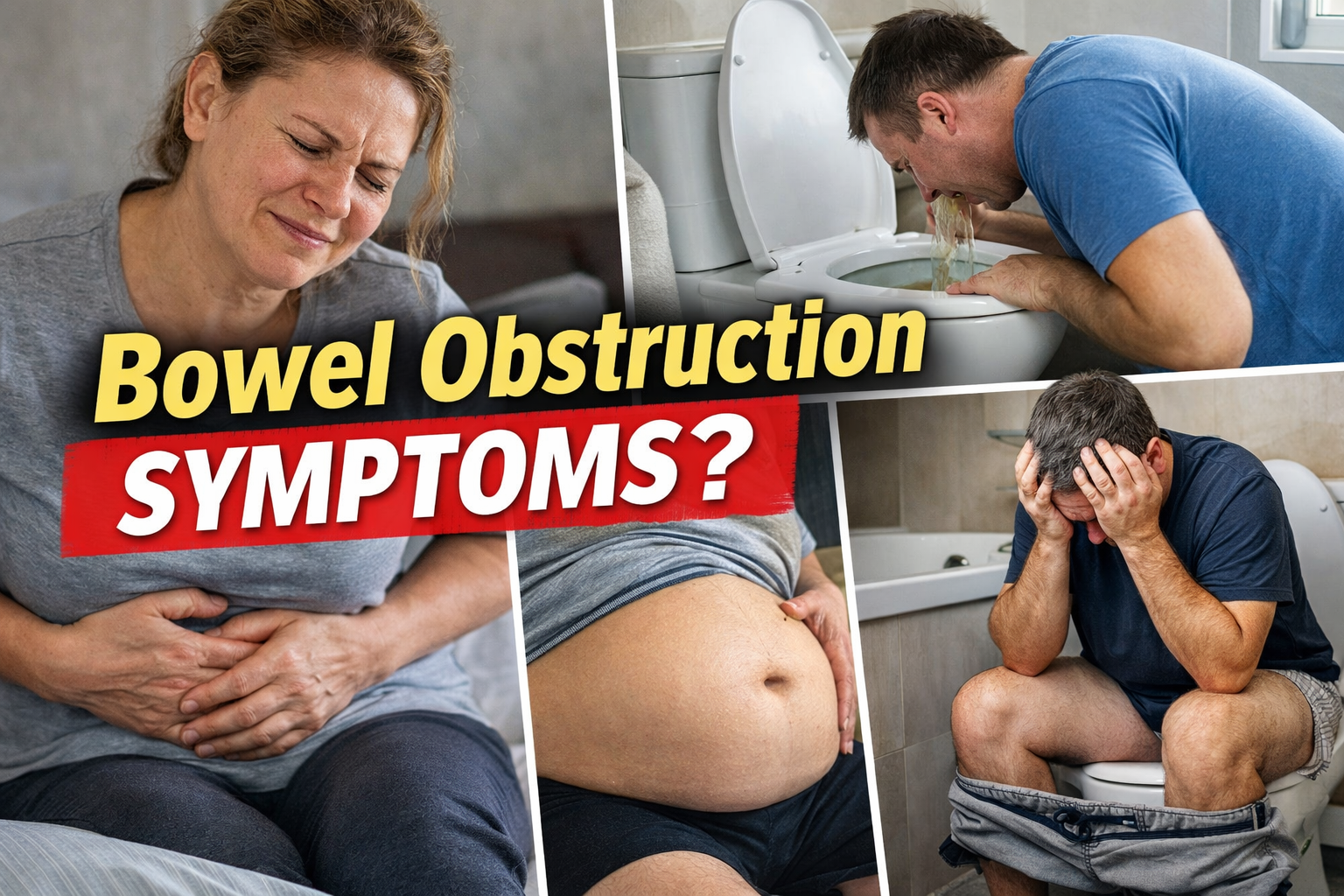
7 Key Bowel Obstruction Symptoms You Should Know About
When people search for bowel obstruction symptoms, they are usually trying to answer one urgent question: How do you tell the difference between routine constipation or bloating and a blockage that needs medical care? A bowel obstruction happens when food, fluid, stool, or gas cannot move through the intestines normally. The blockage may be partial or complete, and symptoms often become more concerning when pain, vomiting, abdominal swelling, and inability to pass gas or stool begin to occur together.
This matters because bowel obstruction is not just “bad constipation.” In adults, common causes include adhesions from prior surgery, hernias, cancers, impacted stool, volvulus, intussusception, and inflammatory conditions such as Crohn’s disease. A complete blockage can become dangerous and may lead to serious complications if not treated promptly.
Below is a fully rewritten, reader-friendly guide to the seven key bowel obstruction symptoms people should know, plus when those symptoms should be treated as urgent.
1. Severe abdominal pain and cramping
One of the most common warning signs is abdominal pain, especially pain that feels crampy, wave-like, or colicky. Many people describe it as pain that builds, eases a little, then returns again. In some cases, the pain is more constant and the abdomen feels tight or tender.
That pattern happens because the intestines may keep trying to push contents through a narrowed or blocked area. Early on, the pain may come and go. As the blockage worsens, pain may become more persistent, more intense, or more generalized. Severe pain that does not settle, especially when paired with vomiting or inability to pass gas, should not be brushed off as ordinary indigestion.
2. Nausea and vomiting
Nausea and vomiting are also classic symptoms. When material cannot move forward through the bowel the normal way, it can back up, making it hard to tolerate food or even fluids. Vomiting may begin after meals, may become more frequent, and can increase the risk of dehydration.
Not everyone with vomiting has a bowel obstruction, of course. Stomach viruses, food poisoning, medication side effects, and many other digestive conditions can also cause it. But vomiting becomes much more concerning when it shows up with strong cramping, abdominal swelling, and little or no gas or stool passing. That combination is one reason bowel obstruction often needs prompt evaluation rather than home treatment.
3. Inability to pass gas or have bowel movements
A major red flag is the inability to pass gas or stool, especially when this is a sudden change from normal. In a complete bowel obstruction, a person may not be able to pass gas or poop at all. This is different from routine constipation, where stool passage may be difficult or infrequent but is not always completely absent.
This symptom matters because it suggests that material may not be moving through the intestines properly. Some people with a partial obstruction may still pass a small amount of stool or have diarrhea, which can be misleading. That is why bowel obstruction cannot be ruled out just because there has been “some bowel movement.” The bigger picture matters: pain, bloating, vomiting, and reduced gas passage together are more worrisome than any one symptom alone.
4. Abdominal bloating and visible distension
A swollen, bloated, or visibly enlarged abdomen is another common feature. Gas and fluid can build up above the blocked area, making the belly feel full, tight, stretched, or uncomfortable. Some people notice their clothes suddenly feel tighter or that their abdomen looks more rounded than usual.
Bloating by itself is common and often harmless, especially after certain meals or during ordinary digestive upset. What makes it more concerning is when the distension is significant, sudden, or paired with pain, vomiting, or inability to pass gas. A swollen abdomen plus worsening pain is one of the clearer signs that medical assessment is needed.
5. Loss of appetite or feeling unable to eat
Many people with bowel obstruction lose their appetite quickly. Sometimes this feels like plain disinterest in food. Other times it feels more like early fullness, pressure, nausea, or a sense that eating will make everything worse. Loss of appetite is not the most specific sign, but it often appears alongside the more classic symptoms.
In real life, this symptom matters because it can contribute to poor fluid intake, weakness, and dehydration, especially if vomiting is also present. A person who has abdominal pain, progressive bloating, and has essentially stopped eating because of nausea or pressure should not assume the problem is minor.
6. Unusual bowel sounds or loud abdominal noises
Some people notice loud gurgling, rumbling, or high-pitched abdominal noises. Bowel sounds are normal to some extent, but they may become unusually noticeable when the intestines are struggling against a blockage. In other situations, bowel sounds may decrease or become absent as things worsen.
This symptom can be confusing because ordinary digestion can also make noise. On its own, it does not diagnose a bowel obstruction. But when unusual abdominal sounds appear together with cramping, swelling, nausea, vomiting, or obstipation, they become more meaningful. In a clinical setting, bowel sounds are one small piece of the overall evaluation, not the whole diagnosis.
7. Fatigue, weakness, and a general feeling of being unwell
While fatigue is not as specific as pain, vomiting, or inability to pass gas, many people with significant digestive illness feel weak, washed out, dehydrated, and generally unwell. Cleveland Clinic notes that malaise, or an overall feeling of illness, can occur with bowel obstruction, and dehydration from vomiting can make weakness worse.
This is one reason bowel obstruction can affect more than just the gut. A person may feel too drained to eat, drink, move around normally, or think clearly. Weakness becomes especially important when combined with ongoing vomiting, rapid worsening pain, or very little fluid intake.
When symptoms may be more urgent
Bowel obstruction should be treated as more urgent when symptoms are severe, persistent, or worsening, especially if there is strong abdominal pain, repeated vomiting, a swollen or tender abdomen, fever, or little to no gas or stool passing. NIDDK notes that people with symptoms of a complete blockage should seek medical attention right away, and MedlinePlus also lists worsening pain, swollen belly, nausea or vomiting, and little or no gas or stools as reasons to contact a clinician.
In practical terms, the most concerning pattern is not one isolated symptom but a cluster: cramping pain, vomiting, bloating, and failure to pass gas or stool. That combination is much harder to explain with simple constipation alone.
Why these symptoms are easy to misread
One reason bowel obstruction is tricky is that the early signs can overlap with more familiar problems such as constipation, stomach flu, food intolerance, medication side effects, reflux, or ordinary bloating. A person may try to wait it out, drink water, or assume the problem will pass. But bowel obstruction often becomes more suspicious when symptoms intensify instead of improving, or when the person seems unable to keep food down or stop the cycle of pain and distension.
Conclusion
The seven key bowel obstruction symptoms most people should know are:
severe abdominal pain or cramping
nausea and vomiting
inability to pass gas or have bowel movements
abdominal bloating or visible distension
loss of appetite
unusual bowel sounds
fatigue or general malaise
These symptoms do not prove that someone has a bowel obstruction, but they are important warning signs, especially when several appear together. Because obstruction can be partial or complete and may become serious quickly, symptoms that are severe, persistent, or escalating deserve prompt medical attention.
FAQ
Can you still poop with a bowel obstruction?
Yes, sometimes. A partial obstruction may still allow some stool or diarrhea to pass. A complete obstruction is more likely to cause inability to pass gas or stool.
Is bowel obstruction always painful?
Pain is very common, often crampy or wave-like, but the exact pattern can vary. Some people notice more pressure, bloating, nausea, and distension early on.
When should someone seek urgent care?
Prompt medical attention is especially important when there is severe or worsening abdominal pain, repeated vomiting, a swollen abdomen, fever, or little to no gas or stool passing.