
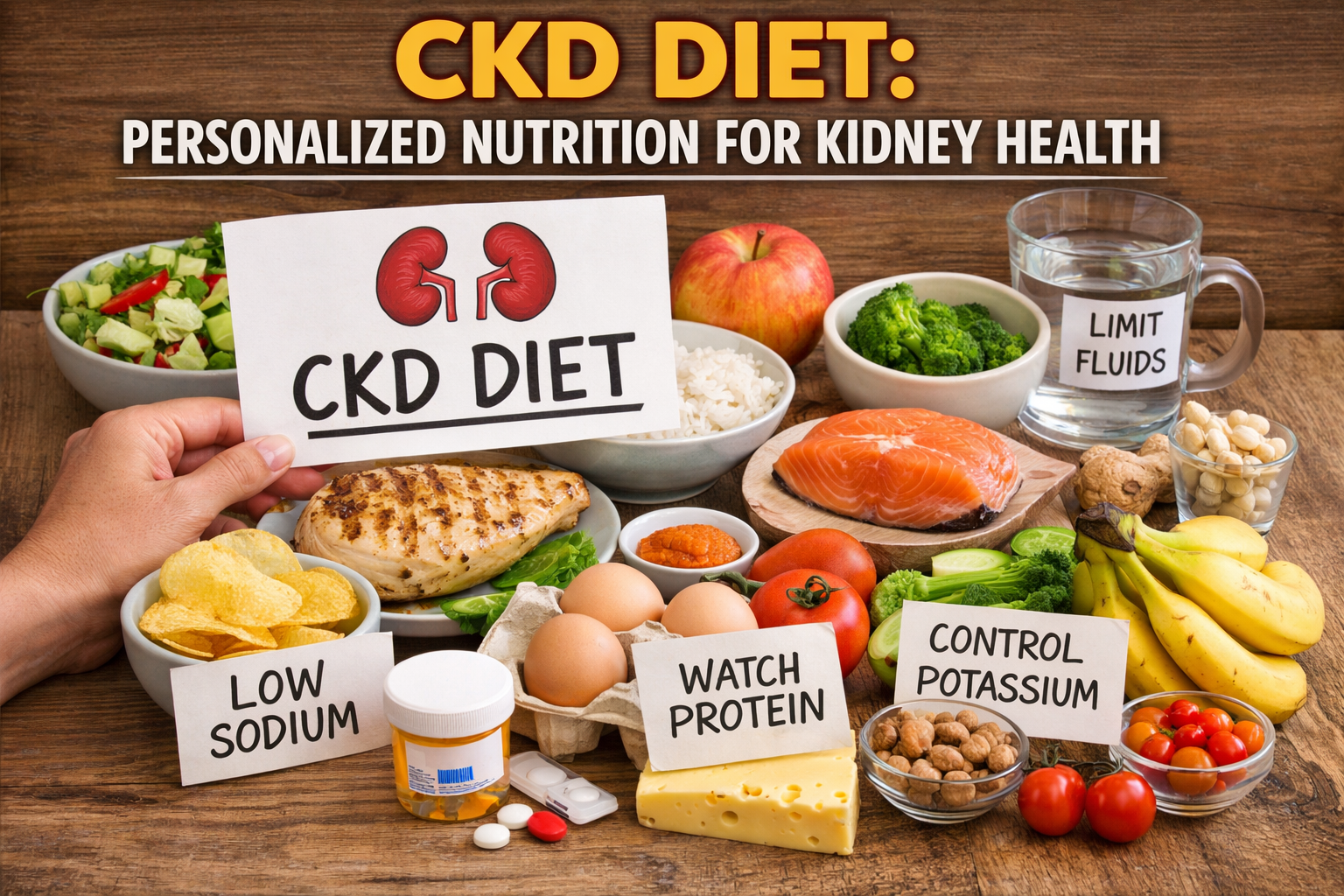
CKD Diet: A Practical Guide to Kidney-Friendly Eating, Meal Planning, and Everyday Food Choices
A CKD diet is not a single rigid meal plan. It is a way of eating that helps protect kidney function, manage symptoms, and reduce the buildup of substances the kidneys may struggle to clear. For some people, the biggest priorities are sodium and blood pressure. For others, the focus may shift to protein, potassium, phosphorus, fluids, or blood sugar control. What matters most is that the plan matches the person’s stage of chronic kidney disease, lab results, medications, and overall health.
That is why kidney nutrition can feel confusing at first. Advice that is appropriate for one person with CKD may be wrong for another. Someone with early CKD may not need major food restrictions yet, while a person with more advanced disease may need much tighter control of sodium, potassium, phosphorus, or fluid intake. National kidney guidance consistently emphasizes that dietary changes should be individualized rather than copied from a generic “renal diet” list.
This guide explains how a CKD diet works, which nutrients usually matter most, how food choices often change by CKD stage, and how to build a realistic meal pattern that supports kidney health without making eating feel miserable.
What is CKD, and why does diet matter?
Chronic kidney disease happens when the kidneys are damaged and cannot filter blood as effectively as they should. Healthy kidneys help remove waste, balance fluids, regulate sodium and potassium, and help manage mineral balance. As kidney function declines, the body may have a harder time keeping these systems in range. That is one reason food and drink choices can become part of treatment, not just “general healthy living.”
Nutrition matters in CKD for several practical reasons:
It can help control blood pressure, which is a major factor in kidney disease progression.
It can reduce fluid overload and swelling when sodium intake is too high.
It can help keep potassium and phosphorus from rising too high when the kidneys cannot remove excess amounts efficiently.
It can support better energy balance and preserve nutrition while avoiding unnecessary strain on the kidneys.
Diet is not a cure for CKD, but it can play a major role in slowing complications and supporting day-to-day health when used alongside medical care.
There is no one-size-fits-all “kidney diet”
One of the biggest misconceptions is that everyone with kidney disease must immediately stop eating fruit, avoid all dairy, or follow a strict low-protein menu. In reality, kidney nutrition depends on the individual. Even official kidney resources note that not everyone with CKD needs the same restrictions, and some people in earlier stages may mainly need a heart-healthy, lower-sodium eating pattern rather than a heavily limited diet.
Your eating plan may depend on factors such as:
CKD stage and estimated kidney function
Blood pressure
Blood potassium and phosphorus levels
Diabetes status
Whether dialysis is involved
Appetite, weight changes, and risk of malnutrition
Other conditions such as heart disease or fluid retention
That is why the most useful mindset is not “What foods are banned?” but “What does my kidney plan need right now?”
The main nutrients most people with CKD need to think about
1. Sodium
Sodium is one of the most common targets in CKD nutrition. Too much sodium can raise blood pressure and contribute to fluid retention, swelling, and extra strain on the heart and kidneys. Kidney guidance commonly recommends limiting sodium, often aiming for about 2,300 mg per day or less, though an individual clinician may recommend a different target.
High-sodium foods often include:
packaged soups
instant noodles
deli meats
frozen meals
salty snacks
takeout and restaurant meals
sauces, seasoning packets, and convenience foods
A lower-sodium diet does not mean bland food. Herbs, garlic, onion, lemon, vinegar, pepper, and salt-free seasoning blends can add a lot of flavor without pushing sodium too high.
2. Protein
Protein is essential, but in CKD it often needs a careful balance. Eating much more protein than needed can increase the kidneys’ workload, especially in people not on dialysis. On the other hand, too little protein can lead to muscle loss and poor nutrition. The National Kidney Foundation notes that many people with CKD who are not on dialysis are advised to limit protein, while people on dialysis often need more protein because treatment changes their nutritional needs.
The right amount depends on the person. Good protein sources may include eggs, fish, poultry, tofu, and other planned sources recommended by a kidney dietitian.
3. Potassium
Potassium helps nerves, muscles, and the heart work properly. But when kidney function declines, potassium can build up in the blood. High potassium can become dangerous because it may affect heart rhythm. Not every person with CKD needs to restrict potassium, but many people with more advanced disease or abnormal labs do need to pay attention to it.
Foods that may be high in potassium include bananas, oranges, potatoes, tomatoes, dairy products, beans, and some leafy greens. Whether these foods need limitation depends on the person’s lab results and overall plan.
Some cooking methods can lower potassium in certain vegetables. For example, kidney diet resources often recommend boiling vegetables in plenty of water and discarding the water as one way to reduce potassium content.
4. Phosphorus
Phosphorus becomes more important as CKD progresses. If phosphorus rises in the blood, it can weaken bones and contribute to blood vessel and heart problems over time. Both NIDDK and Mayo Clinic note that people with kidney disease may need to limit phosphorus, especially from processed foods that contain phosphorus additives.
Common phosphorus sources include:
dairy
nuts and seeds
beans and lentils
cola drinks
processed meats
packaged foods with ingredients containing “phos”
An important detail: phosphorus added to processed foods may be absorbed more readily than naturally occurring phosphorus in whole foods, which is one reason label reading matters so much in CKD.
5. Fluids
Not everyone with CKD has to restrict fluids. Fluid needs vary based on disease stage, swelling, urine output, medications, and whether dialysis is involved. Some people can drink normally; others need a more structured fluid plan.
What can you eat on a CKD diet?
A kidney-friendly eating pattern is usually built from simple foods prepared with less sodium and in portions that fit the person’s needs. Exact choices vary, but many CKD meal plans include a mix of these categories:
Lower-sodium basics
Fresh or minimally processed foods are often easier to work with than packaged foods. Fresh chicken, fish, eggs, rice, pasta, oats, and homemade meals usually make sodium control easier than heavily processed options.
Appropriate fruits and vegetables
Many fruits and vegetables can fit into a CKD plan, but the best choices depend on potassium needs. NIDDK emphasizes that food choices should match lab results, not internet myths. Some people can eat a fairly wide variety, while others need a tighter low-potassium approach.
Planned protein portions
Instead of piling protein into every meal, CKD nutrition often works better when protein is portioned intentionally. That may mean modest servings of fish, eggs, poultry, or plant proteins depending on stage and lab values.
Heart-healthy fats
Olive oil and similar unsaturated fats can be useful in a CKD eating pattern, especially because CKD and cardiovascular disease often overlap.
Foods that often need more caution
The exact restriction list changes person to person, but common problem areas include:
processed and packaged high-sodium foods
restaurant meals with hidden salt
large portions of high-potassium foods when potassium is elevated
foods and drinks with phosphorus additives
supplements used without medical guidance
Supplements deserve special caution. Some vitamins, minerals, and herbal products may be unsafe in CKD or may contain ingredients that are hard on the kidneys. People with CKD should check with their clinician before starting them.
How diet often changes by CKD stage
Stages 1–2
In earlier CKD, the focus is often on overall risk reduction: controlling blood pressure, improving diet quality, reducing sodium, and managing diabetes if present. A person may not need heavy potassium or phosphorus restriction at this point.
Stages 3–4
At moderate CKD, nutrition usually becomes more individualized. This is the point where protein, potassium, and phosphorus often need closer review based on lab values. Many people benefit from referral to a renal dietitian here.
Stage 5 and dialysis
Advanced CKD and dialysis often bring the most complex nutrition needs. Dialysis can change protein and fluid recommendations substantially, so the eating plan often has to be rebuilt rather than slightly adjusted.
Practical meal planning for real life
A CKD diet is easier to follow when you stop thinking in terms of perfect meals and start thinking in terms of repeatable habits.
Useful habits that make a difference
Build around simple meals.
Meals with fewer ingredients are usually easier to manage than restaurant-style or packaged foods with hidden sodium and additives.
Read labels.
Check sodium per serving, serving size, and ingredient lists for phosphorus additives. Look for “phos” in ingredient names.
Do not assume every “healthy” food is kidney-friendly.
Foods like bananas, potatoes, tomato products, bran cereals, or certain dairy-heavy items may or may not fit your plan depending on labs.
Plan ahead for eating out.
Restaurant food is often sodium-heavy. Asking for sauces on the side, skipping heavily seasoned dishes, and choosing simpler preparations can help. This is an inference based on sodium guidance and the high sodium content of restaurant-style foods.
Track your labs, not just your meals.
Potassium and phosphorus decisions should be driven by blood results and medical advice, not random online food lists.
A simple example of a kidney-friendly day of eating
This is only a general example, not a prescription.
Breakfast: scrambled egg, toast, berries
Lunch: grilled chicken or tofu, white rice, low-potassium vegetables
Snack: apple slices or unsalted crackers
Dinner: baked fish, pasta or rice, cooked vegetables, olive oil and herbs
Flavor add-ons: garlic, onion, lemon juice, pepper, salt-free herbs
This general structure reflects the common CKD principles of portioned protein, lower sodium, and individualized fruit and vegetable choices. The exact foods should be adjusted based on potassium, phosphorus, diabetes, and stage-specific guidance.
CKD diet and diabetes: why the balance gets harder
Many people with CKD also have diabetes. In that case, the meal plan must support blood sugar control while also protecting kidney function. That can make food choices more complicated because a food that fits diabetes goals may not always fit potassium or phosphorus goals, and vice versa. This is one reason formal nutrition counseling is so valuable in CKD.
When to work with a kidney dietitian
A renal dietitian can help translate lab values into daily meals. That is especially useful if:
you have stage 3 CKD or beyond
your potassium or phosphorus is rising
you have diabetes plus CKD
you are losing weight or muscle
you feel overwhelmed by conflicting food rules
you are starting dialysis or approaching it
This is one of the best investments many people with CKD can make, because kidney nutrition is easier to follow when it is personalized.
Frequently asked questions
Do all people with CKD need a low-potassium diet?
No. Potassium restriction is usually based on kidney function and blood potassium levels, not on the diagnosis alone. Some people with CKD do need to limit potassium, while others do not.
Is a CKD diet always low in protein?
Not always. Many people with CKD who are not on dialysis are advised to limit protein, but people on dialysis often need more protein.
Can I still eat fruit?
Usually yes, but the type and portion may need to change if potassium is an issue.
Are whole foods better than processed foods for CKD?
Often yes, especially because processed foods tend to be higher in sodium and may contain phosphorus additives.
Do I need to limit water?
Only some people do. Fluid advice depends on your stage, urine output, swelling, and treatment plan.
The bottom line
A CKD diet is best understood as a personalized kidney-support plan, not a generic list of forbidden foods. The core goals are usually to control sodium, match protein to the person’s needs, and manage potassium, phosphorus, and fluids when necessary. The details depend on lab results, CKD stage, symptoms, and whether dialysis is involved.
For many people, the most practical first steps are reducing processed foods, cooking more simply, reading labels more carefully, and asking for a referral to a kidney dietitian. That approach is usually far more useful than trying to follow a harsh “renal diet” from memory.