First Signs of a Bad Gallbladder: Early Symptoms That Should Not Be Ignored
Gallbladder problems often start in a way that feels easy to dismiss. A person may notice discomfort after a heavy dinner, nausea that seems like indigestion, or a strange pain under the right ribs that comes and goes. At first, it may not seem serious. But when the gallbladder is not working properly, those early episodes can become more frequent, more painful, and sometimes more dangerous. The most common underlying cause is gallstones, though inflammation and problems with bile flow can also be involved.
The gallbladder is a small organ under the liver that stores bile, a digestive fluid that helps break down fats. When bile flow is blocked or the gallbladder becomes inflamed, the body often sends warning signals. Recognizing those signals early can help people get evaluated before complications such as infection, bile duct blockage, or pancreatitis develop.
This guide explains the first signs of a bad gallbladder, what the pain usually feels like, when symptoms often show up, how they can differ from other digestive problems, and when it is time to seek urgent medical care.
What does “a bad gallbladder” usually mean?
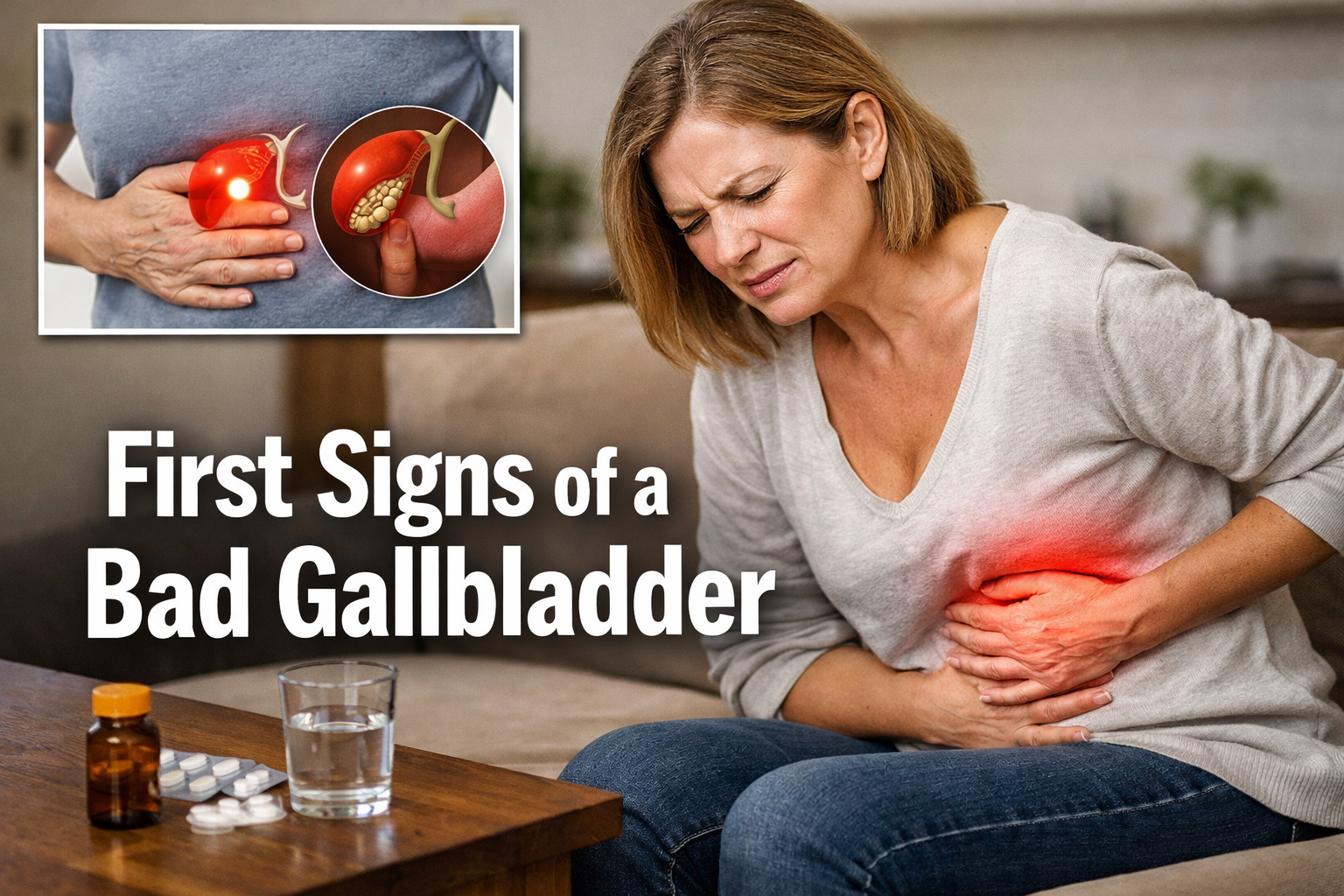
When people say they think they have a “bad gallbladder,” they are often referring to one of a few common problems. The most frequent is gallstones, which are hardened deposits that can form in the gallbladder. Some gallstones cause no symptoms at all, but others block bile flow and trigger painful attacks. In other cases, the gallbladder may become inflamed, a condition called cholecystitis. Some people can also have gallbladder dysfunction related to poor emptying, even if stones are not obvious on basic imaging.
That is why the “first signs” are not always dramatic at the beginning. Symptoms can start as intermittent digestive discomfort before progressing to the more classic pattern of gallbladder pain.
1. Pain in the upper right abdomen
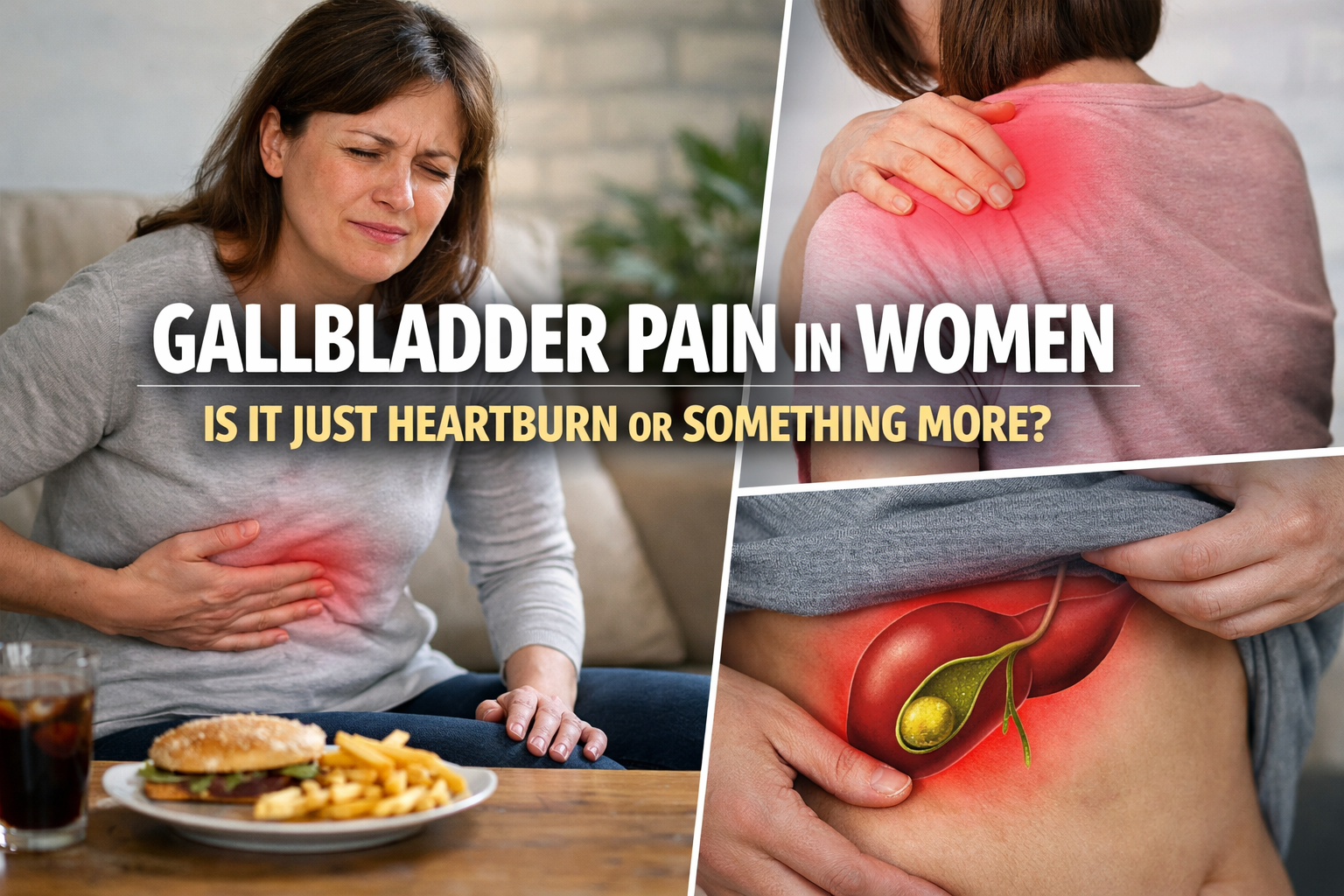
One of the earliest and most recognizable warning signs is pain in the upper right side of the abdomen, just below the rib cage. This is the area where the gallbladder sits. When a gallstone temporarily blocks bile flow, the pain can come on suddenly and feel sharp, cramping, tight, or gripping. NIDDK notes that gallbladder attacks commonly cause pain in the upper right abdomen and may last several hours.
For some people, the pain is not mild at all. It can build quickly and become intense enough to stop normal activity. Others describe it as a pressure or deep ache rather than a stabbing pain. Even when the exact sensation differs, the location and timing often provide the strongest clue.
2. Pain after eating, especially after fatty meals
A very common early pattern is pain that starts after eating, particularly after a meal that is greasy, fried, creamy, or otherwise high in fat. The reason is simple: fat in the diet signals the gallbladder to squeeze and release bile. If the gallbladder is irritated or blocked, that contraction can trigger pain. NIDDK says gallbladder attacks often follow heavy meals, and Mayo Clinic similarly links symptoms to gallstones that obstruct normal bile flow.
This detail matters because many people initially assume the problem is “just something I ate.” In reality, repeated pain after rich meals is one of the most classic clues that the gallbladder should be evaluated.
3. Pain that spreads to the back or right shoulder
Gallbladder pain does not always stay in one small spot. It may radiate to the upper back or the right shoulder blade. Mayo Clinic and NHS sources both describe this radiation pattern in gallbladder-related conditions.
That spreading pain can be confusing. Some people think they strained a muscle. Others worry they have chest or lung pain. But when pain starts in the upper abdomen and seems to move toward the back or right shoulder, especially after eating, gallbladder disease becomes more likely.
4. Nausea and vomiting
Nausea is another common early symptom. A gallbladder attack can make a person feel sick to the stomach, and vomiting may occur during more intense episodes. Cleveland Clinic notes that typical gallstone pain may come with nausea, while broader biliary disease symptoms commonly include nausea and vomiting.
This symptom is easy to misread. Many people think they have food poisoning, a stomach bug, or acid reflux. But when nausea keeps showing up alongside right upper abdominal pain, especially in episodes linked to meals, the gallbladder becomes a more important suspect.
5. Bloating, gas, or a heavy feeling after meals
Early gallbladder problems are not always dramatic attacks. Some people first notice a more subtle pattern: feeling unusually bloated, full, or uncomfortable after meals. They may complain of gas, pressure, belching, or a sense that fatty foods now “sit badly.” While these symptoms are not specific to gallbladder disease, they often appear alongside more typical biliary symptoms and can be part of the overall pattern. Cleveland Clinic’s biliary disease overview includes upper abdominal discomfort, appetite changes, and digestive upset among the symptom picture when bile is not flowing normally.
On their own, bloating and gas do not prove gallbladder disease. But when they repeatedly happen with post-meal right-sided pain or nausea, they are worth taking more seriously.
6. Food intolerance, especially to greasy foods
Many people with early gallbladder trouble start changing the way they eat before they understand why. They notice that fried foods, takeout, creamy sauces, pizza, or fast food suddenly seem harder to tolerate. What once felt normal now leads to pain, queasiness, or abdominal distress.
This does not mean fatty food causes the disease by itself, but it often reveals it. Because the gallbladder is closely involved in fat digestion, symptoms often become most obvious after richer meals. That is one reason clinicians pay so much attention to this pattern.
7. Fever or chills with abdominal pain
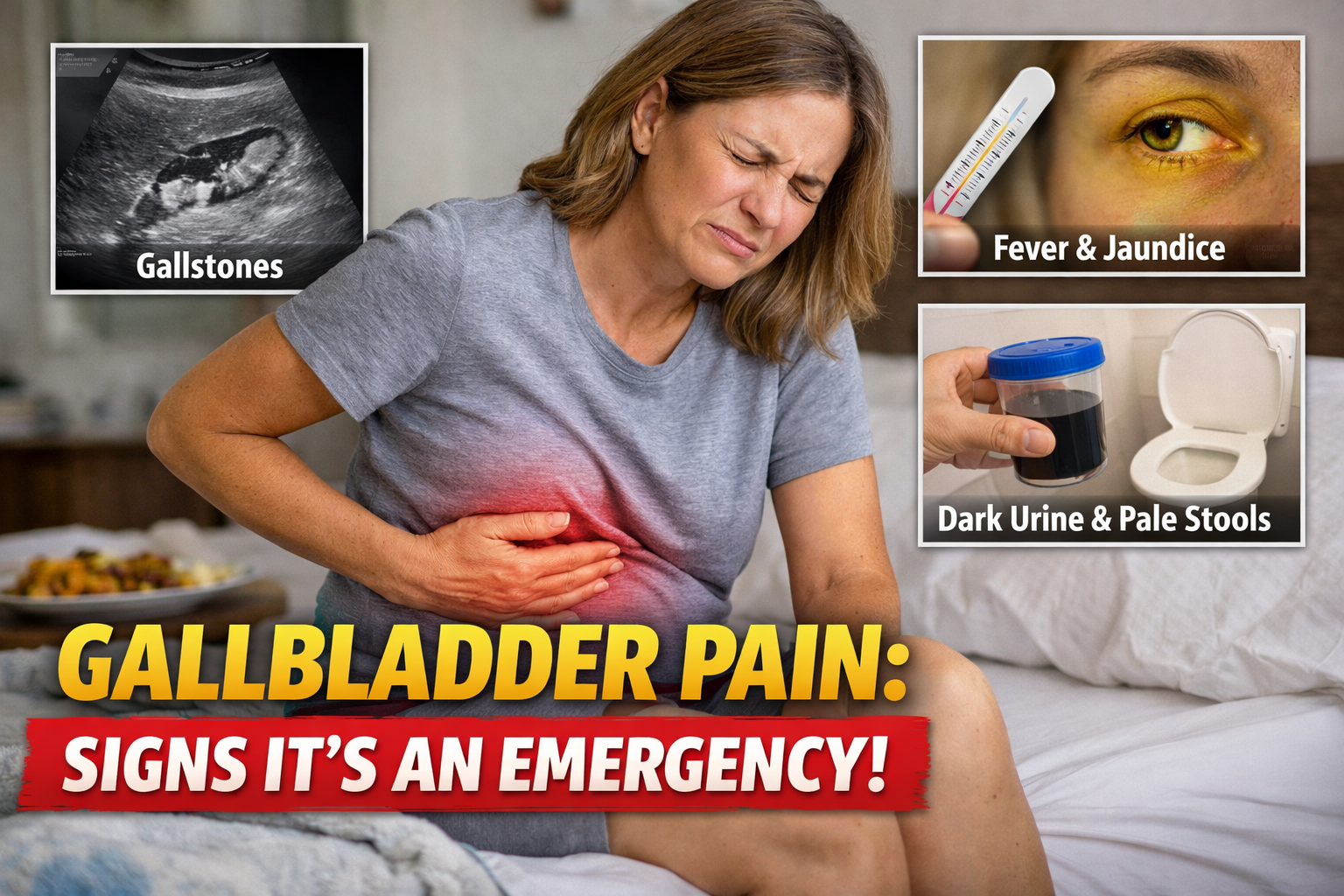
Once fever enters the picture, the concern level rises. Fever and chills can suggest that a blocked or irritated gallbladder has become inflamed or infected, as happens with cholecystitis. Mayo Clinic states that cholecystitis can cause severe pain and fever.
This is no longer the kind of symptom pattern that should be brushed off as simple indigestion. Upper abdominal pain plus fever is a strong reason to seek prompt medical care.
8. Jaundice, dark urine, or pale stools
If a stone blocks the bile duct, bile may back up instead of flowing normally into the intestine. This can lead to jaundice, meaning yellowing of the skin or whites of the eyes. It can also cause dark urine and pale or clay-colored stools. These are classic signs that bile flow may be obstructed and urgent evaluation is needed.
These symptoms are especially important because they suggest the problem may have moved beyond the gallbladder itself and may now involve the bile ducts or even the pancreas and liver.
9. A pattern of repeated “attacks”
One isolated episode of abdominal pain can have many causes. But gallbladder symptoms often show a recurrent pattern. NIDDK notes that if you have had one gallbladder attack, more attacks are likely to follow.
That repeating cycle matters. The pain may disappear completely between episodes, creating the false impression that the problem is gone. But repeated attacks are often a sign that the underlying issue is still there and may worsen over time.
When do gallbladder symptoms usually happen?
The timing can be very revealing. Gallbladder symptoms often appear after meals, especially heavier meals, and they may be more noticeable in the evening or at night. NIDDK specifically notes that gallbladder attacks often occur after heavy meals and usually in the evening or during the night.
This does not mean symptoms only happen then, but when someone says, “Every time I eat a rich dinner, I get pain under my right ribs later that night,” that is a very typical gallbladder story.
How gallbladder pain can be mistaken for other problems
Gallbladder pain is easy to confuse with several other conditions. It may be mistaken for:
indigestion or acid reflux
gastritis or a stomach ulcer
a pulled muscle in the chest or back
liver-related discomfort
kidney stone pain
pancreatitis
in some cases, even heart-related pain
The location, radiation pattern, meal trigger, and associated symptoms help separate these possibilities. Gallbladder pain is more likely when it centers in the upper right abdomen, comes after eating, radiates to the right shoulder or back, and is paired with nausea. But severe chest pain, trouble breathing, fainting, or pain that could be cardiac should never be self-diagnosed at home.
Red flags that need urgent medical attention
Seek urgent medical care right away if gallbladder-type symptoms come with any of the following:
severe pain that does not let up
fever or chills
yellowing of the skin or eyes
dark urine or pale stools
vomiting that will not stop
confusion, weakness, or signs of dehydration
chest pain or shortness of breath
These features may suggest complications such as acute cholecystitis, bile duct obstruction, infection, or pancreatitis. Mayo Clinic, NIDDK, and NHS all describe severe pain, fever, and jaundice as warning signs that need prompt medical evaluation.
Who is more likely to develop gallbladder problems?
Gallbladder disease can affect anyone, but risk is higher in some groups. NIDDK and Mayo Clinic identify increased risk in people assigned female at birth, older adults, people with obesity, people with diabetes, and those who lose weight rapidly. Pregnancy and some hormone-related factors can also raise risk.
That does not mean someone outside these groups cannot have gallbladder disease. It simply means the threshold for considering it should be lower when these factors are present.
What a doctor may do to check the gallbladder
If symptoms suggest gallbladder disease, medical evaluation often includes a history, physical exam, lab work, and imaging. NIDDK says blood tests can help look for infection or inflammation involving the bile ducts, gallbladder, pancreas, or liver. Ultrasound is commonly the first imaging test because it is good at detecting gallstones and signs of inflammation. In some cases, doctors may also use CT, MRI/MRCP, or a HIDA scan to assess gallbladder function or look for blockages.
What to do if you think your gallbladder is the problem
If you are noticing recurrent right upper abdominal pain, nausea after fatty meals, or pain that spreads to the back or right shoulder, do not ignore the pattern. Make an appointment with a healthcare professional, especially if the symptoms are repeating or intensifying.
Before the visit, it can help to note:
where the pain occurs
when it starts
how long it lasts
what foods seem to trigger it
whether nausea, vomiting, fever, jaundice, dark urine, or stool changes are also present
That record can make the appointment more useful and may speed up diagnosis.
Practical tips while waiting to be evaluated
These steps do not replace treatment, but they may reduce symptom flare-ups before you are seen:
avoid large, greasy, or fried meals
choose smaller meals for now
stay hydrated
avoid crash dieting or rapid weight loss
seek urgent care instead of self-managing if symptoms become severe or come with fever or jaundice
NIDDK notes that symptomatic gallstones can lead to serious complications if not treated, and Mayo Clinic advises watching closely for complication symptoms such as intensifying right upper abdominal pain.