
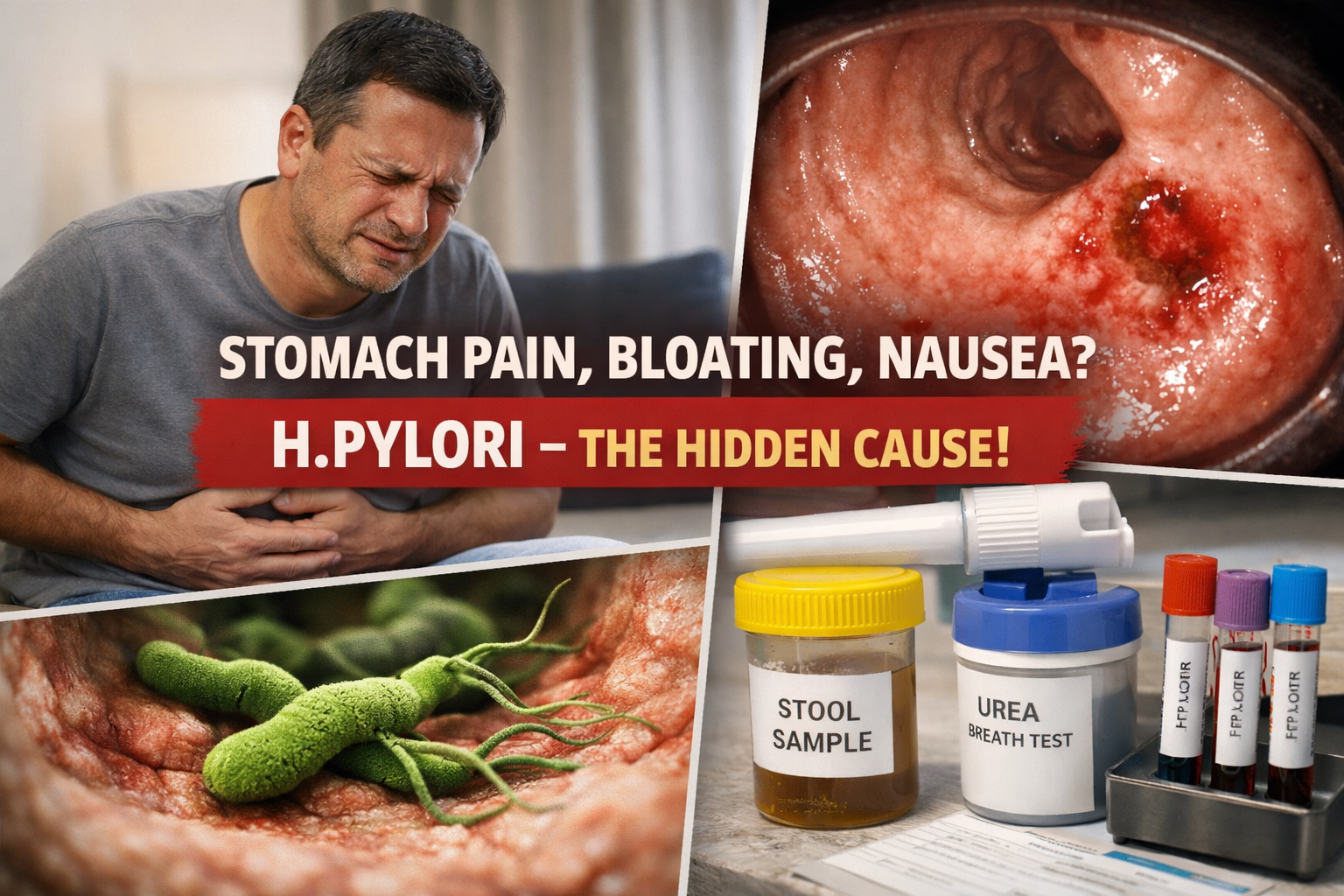
H. Pylori Infection: Symptoms, Causes, Testing, and What a Positive Result Really Means
H. pylori is one of those health issues many people have heard of but do not fully understand until stomach pain, nausea, bloating, or an ulcer workup brings it up. The important question is not just whether this bacterium exists in the stomach. It is whether it is actively causing inflammation, ulcer disease, or a need for treatment now. H. pylori is common worldwide, often starts in childhood, and frequently causes no symptoms at all. But when it does matter, it can matter a lot. It is a major cause of peptic ulcers, a common cause of chronic gastritis, and a well-established risk factor for certain stomach cancers.
What H. pylori actually is
Helicobacter pylori is a spiral-shaped bacterium that lives in the mucus layer lining the stomach. What makes it unusual is that it can survive in an environment most bacteria cannot tolerate. It does this by locally neutralizing acid around itself and burrowing into the protective mucus layer, where it can attach to the stomach lining and persist for years if it is not treated.
That persistence is the real issue. A person may carry H. pylori for a long time with no obvious symptoms, yet the bacteria can keep the stomach lining inflamed in the background. Over time, that chronic irritation may contribute to gastritis, ulcer formation, atrophic changes in the stomach lining, and a higher risk of gastric adenocarcinoma and gastric MALT lymphoma.
How H. pylori spreads
H. pylori is thought to spread mainly from person to person through contact with saliva, vomit, or stool. It may also spread through contaminated food or water. That helps explain why infection is more common in places with crowded living conditions, less reliable access to clean water, and poorer sanitation.
Most infections appear to start during childhood. In practical terms, that means many adults who test positive did not “catch it recently.” They may have been living with the bacterium for years without knowing it.
Who is more likely to get it
Risk is higher in people who grew up or live in crowded households, lack reliable access to clean water, or live in areas where H. pylori infection is more common. Family history can matter too, especially if close relatives have had peptic ulcers or stomach cancer.
That does not mean every person with these risk factors will become ill. It means the odds of exposure are higher, and if upper abdominal symptoms develop, H. pylori becomes more important to consider.
Symptoms of H. pylori infection
A lot of people with H. pylori have no symptoms. That is one reason it can go undetected for so long. When symptoms do happen, they usually reflect stomach inflammation or ulcer disease rather than the bacteria itself being felt directly.
Common symptoms can include:
aching, burning, or gnawing pain in the upper abdomen
stomach discomfort that may feel worse when the stomach is empty
bloating or gassiness
nausea
frequent burping
early fullness after small meals
loss of appetite
unexplained weight loss
These symptoms are not specific to H. pylori. Similar symptoms can happen with gastritis from other causes, peptic ulcers related to NSAID use, functional dyspepsia, reflux, and other digestive conditions. That is why testing matters more than guessing.
Why untreated H. pylori matters
The short version is that untreated infection may linger for years and keep the stomach inflamed. In some people, that inflammation damages the protective lining enough for ulcers to form in the stomach or the first part of the small intestine. Mayo Clinic notes that about 10% to 15% of people with H. pylori develop an ulcer.
The longer-term concern is cancer risk. H. pylori is recognized as a human carcinogen because chronic infection raises the risk of gastric adenocarcinoma and gastric MALT lymphoma. That does not mean a positive test equals cancer. Most infected people will never develop stomach cancer. But it does mean H. pylori is not something to brush off as “just a stomach bug.”
Untreated infection can also contribute to atrophic gastritis and, in some cases, iron-deficiency anemia or other complications tied to chronic stomach inflammation.
When H. pylori testing makes sense
Testing is commonly considered when someone has symptoms that fit peptic ulcer disease or chronic upper abdominal indigestion, especially if symptoms keep returning or do not improve as expected. It is also important in people with active or past peptic ulcers and in certain higher-risk settings related to gastric cancer or gastric MALT lymphoma.
Not everyone with occasional heartburn or a random day of stomach upset needs H. pylori testing. The decision depends on the symptom pattern, age, red-flag features, ulcer history, and overall clinical context.
The main tests doctors use
Urea breath test
The urea breath test is one of the most useful noninvasive options. You swallow a substance containing labeled urea. If H. pylori is present, the bacteria break it down and labeled carbon dioxide shows up in your breath sample. This test is widely used both for diagnosis and for confirming that treatment worked.
Stool antigen test
A stool antigen test looks for H. pylori in a stool sample. Like the breath test, it helps detect active infection and is commonly used both before treatment and after treatment. It is especially useful when a breath test is not available or practical.
Blood antibody test
Blood testing is less useful for many real-world decisions because it looks for antibodies, not necessarily current live infection. A blood test may stay positive even after the infection has already cleared, which is why MedlinePlus notes that blood testing is not commonly used to diagnose active H. pylori infection and cannot confirm cure after treatment.
Upper endoscopy with biopsy
If symptoms are severe, unusual, or concerning, a doctor may recommend upper endoscopy. This allows direct visualization of the upper digestive tract and lets the doctor take biopsies from the stomach lining. Endoscopy is especially important when there are alarm features such as bleeding, significant weight loss, persistent vomiting, trouble swallowing, or concern about complications.
How to prepare for H. pylori testing
Test preparation matters because some medications can temporarily suppress the bacteria or interfere with detection, creating false-negative results. In general, clinicians may tell you to stop certain acid-suppressing drugs, antibiotics, or bismuth-containing medicines before testing.
For follow-up testing after treatment, current ACG guidance says proof of eradication should be checked with a fecal antigen test, urea breath test, or biopsy-based test at least 4 weeks after antibiotics are finished, and only after PPIs or PCABs have been stopped for at least 2 weeks. During that gap, some patients may be bridged with H2 blockers or antacids if their clinician recommends it.
The exact instructions can vary by test. Breath testing and endoscopy may involve fasting. Stool testing usually has its own collection instructions. The safest approach is to follow the lab or clinician’s prep directions exactly rather than using generic internet advice.
What a positive result usually means
A positive breath test, stool antigen test, or biopsy-based test generally means you have an active H. pylori infection. In most cases, treatment includes more than one medication, often at least two antibiotics along with acid-suppressing therapy and sometimes bismuth. The reason combination therapy is used is to improve eradication and reduce the chance that the bacteria survive treatment.
Just as important as starting treatment is confirming that it actually worked. Current guidance emphasizes test-of-cure, because symptoms alone are not enough to prove the infection is gone.
What symptoms need urgent medical attention
Do not wait on a routine appointment if you have signs that suggest bleeding or another serious complication. Seek urgent care right away for:
black, tarry stools
vomiting blood or vomit that looks like coffee grounds
sharp, sudden, or severe abdominal pain that does not improve
dizziness, fainting, unusual weakness, or signs of shock
trouble swallowing
These are not “watch and see” symptoms. They can point to ulcer bleeding, perforation, or other urgent upper GI problems.
Prevention: what actually helps
There is no vaccine for H. pylori. The most practical prevention steps are basic but important: wash your hands after using the bathroom and before eating, drink water from a clean and safe source, eat properly prepared food, and avoid sharing food or utensils when possible.
These steps do not guarantee prevention, but they align with what we know about likely transmission routes and are especially important in households or regions where infection is more common.
H. pylori is common, often silent, and sometimes easy to underestimate. But it is also one of the most important bacterial causes of chronic stomach inflammation and peptic ulcer disease, and it is a meaningful risk factor for stomach cancer. The right next step is not self-diagnosis. It is accurate testing, proper preparation for that testing, and follow-up to confirm eradication if treatment is given.
If symptoms are mild but persistent, talk with a healthcare professional rather than assuming it is “just acid” or “just stress.” If symptoms include bleeding, black stools, severe pain, dizziness, or trouble swallowing, get urgent medical care.