
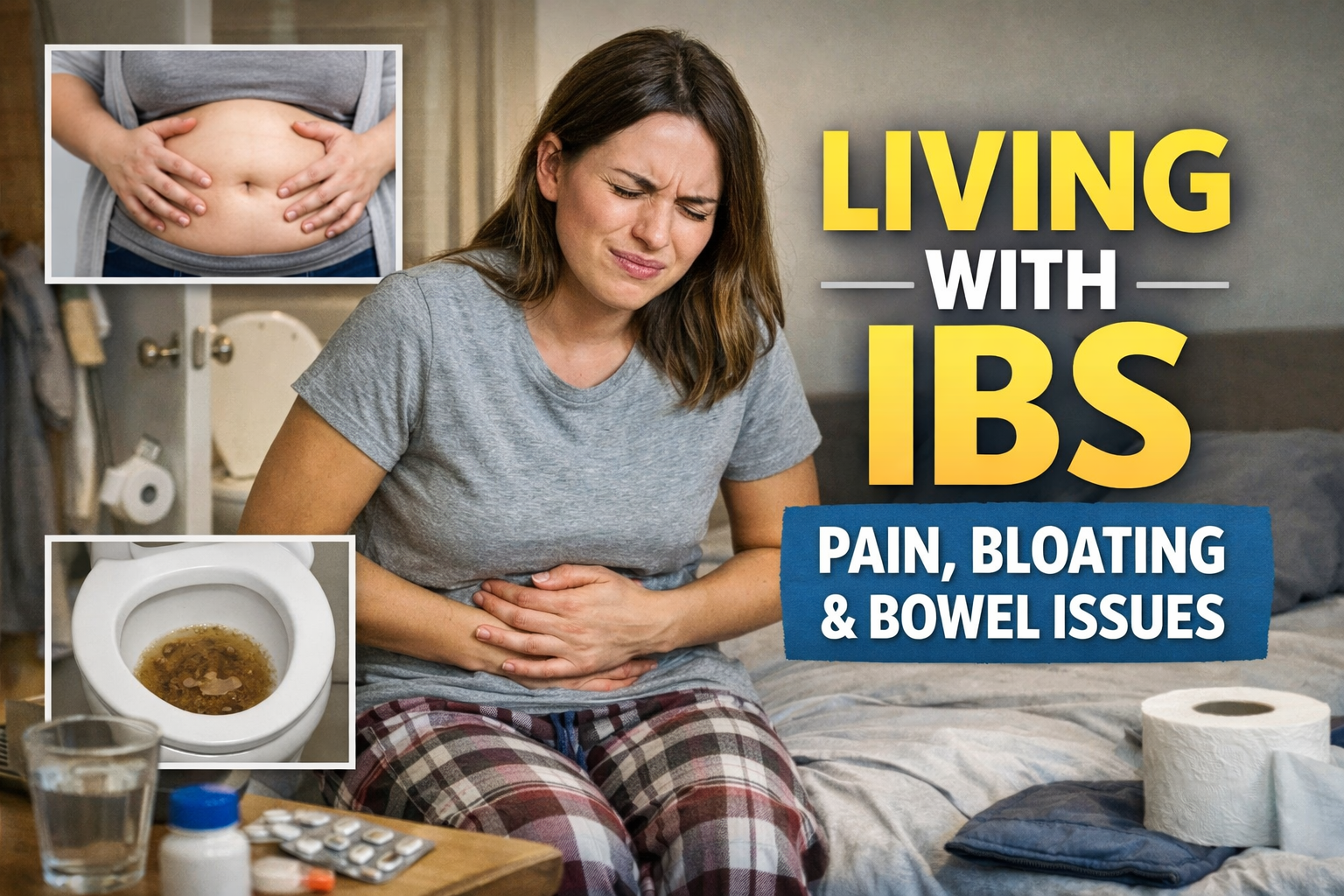
Irritable Bowel Syndrome (IBS): Symptoms, Causes, Risk Factors, and When to Get Checked
Irritable bowel syndrome, or IBS, is one of the most common reasons people live with ongoing stomach pain, bloating, constipation, diarrhea, or an uncomfortable mix of both. It can be disruptive, exhausting, and emotionally draining. But it is also important to be precise: IBS is not the same as inflammatory bowel disease, it does not cause visible injury to the digestive tract, and it does not raise colorectal cancer risk on its own.
That distinction matters because many people with IBS spend months or years worrying that something dangerous is being missed. IBS is real, and its impact can be serious from a quality-of-life standpoint, but it is considered a disorder of gut-brain interaction rather than a disease that damages the bowel lining. In practical terms, that means the digestive tract may look normal on routine testing even when symptoms are very real.
What IBS actually is
IBS is a symptom-based condition defined by repeated abdominal pain together with changes in bowel habits, such as diarrhea, constipation, or both. Doctors often group it into subtypes based on the main bowel pattern: IBS-C for constipation-predominant symptoms, IBS-D for diarrhea-predominant symptoms, IBS-M for mixed symptoms, and IBS-U when the pattern does not fit neatly into the other categories.
Modern guidance no longer treats IBS as something that can only be diagnosed after every possible test comes back normal. Instead, clinicians are encouraged to use a positive diagnostic strategy based on symptom pattern, basic evaluation, and selective testing when needed. That approach can speed up diagnosis, lower unnecessary testing, and get people to treatment sooner.
Common IBS symptoms
The core IBS symptoms are abdominal pain related to bowel movements and a change in stool frequency, stool appearance, or both. Many people also deal with bloating, excess gas, a sensation of incomplete emptying, and mucus in the stool. Symptoms usually come and go over time rather than staying the same every day.
What IBS feels like in real life can vary a lot:
IBS-C: hard or lumpy stools, straining, infrequent bowel movements, and the feeling that you still are not done after going.
IBS-D: loose or watery stools, urgency, repeated trips to the bathroom, and worry about being far from a toilet.
IBS-M: alternating constipation and diarrhea, sometimes in a pattern that feels unpredictable and hard to manage.
Across all types: cramping, visible bloating, discomfort after meals, and days when the bowel feels unusually sensitive to normal digestion.
Women with IBS may notice symptoms get worse around their periods. Many people also report fatigue, sleep problems, anxiety, or low mood alongside gut symptoms, which fits with the broader gut-brain connection seen in IBS.
Why IBS can affect daily life so much
IBS is often underestimated because it does not show up the way ulcers, tumors, or inflammatory diseases do. But recurring pain, urgency, constipation, bloating, and food-related symptom flares can reshape daily routines in a major way. People may skip meals before travel, avoid restaurants, cancel plans, or choose work and social settings based on bathroom access. That is one reason major gastroenterology sources emphasize symptom control and quality of life, not just ruling out dangerous disease.
What causes IBS?
There is no single proven cause of IBS. Current evidence points to several overlapping mechanisms rather than one simple explanation. Official sources consistently describe IBS as a problem involving how the brain and gut communicate, how the bowel moves, and how sensitive the intestines are to normal stretching, gas, and stool.
1. Gut-brain interaction problems
The gut and brain constantly send signals back and forth. In IBS, that signaling appears to be disrupted. As a result, the bowel may react too strongly to normal digestive activity, and the brain may interpret ordinary gut sensations as painful or urgent.
2. Changes in bowel movement speed and muscle activity
Some people with IBS have bowel contractions that move too quickly, which can contribute to diarrhea. Others have slower or less coordinated movement, which can contribute to constipation. Spasms can also help explain cramping pain.
3. A more sensitive gut
A common theme in IBS is that the intestine seems more sensitive than usual. Gas, stool, or normal stretching that might barely register in one person can feel very uncomfortable in someone with IBS. That heightened sensitivity helps explain why bloating and pain can feel intense even when standard tests look normal.
4. A severe gut infection in the past
Some people develop IBS after a significant stomach or intestinal infection. Official guidance recognizes a severe digestive tract infection as a risk factor, which is why some cases seem to begin after food poisoning or a bad viral or bacterial illness.
5. Food and stress as symptom triggers, not the whole cause
Food does not “cause” IBS in the way an infection causes pneumonia, but certain foods and drinks can clearly trigger symptoms in susceptible people. Stress works similarly: it may worsen IBS or make flares more frequent, even though it is not considered the sole cause.
Risk factors for IBS
IBS can happen in anyone, but some groups are more likely to develop it. Women are more likely than men to be diagnosed, and IBS is more common in people under 50. Family history also matters, and a history of stressful or difficult life events is associated with higher risk.
Mental health symptoms are also part of the picture. Anxiety, depression, and other psychological stressors are more common in people with IBS, though the relationship goes both ways: gut symptoms can worsen emotional distress, and emotional distress can amplify gut symptoms.
IBS also overlaps with some other chronic conditions more often than chance alone would suggest, including GERD, fibromyalgia, chronic pelvic pain, and certain mental health conditions. That does not mean IBS causes those conditions, but it does reinforce that IBS often exists in a broader symptom pattern rather than as an isolated bowel problem.
How doctors diagnose IBS
Doctors diagnose IBS by looking for a recognizable symptom pattern. A common framework is recurrent abdominal pain, on average at least once a week in the last 3 months, together with at least two of the following: pain related to bowel movements, a change in stool frequency, or a change in stool form. Symptoms usually must have started at least 6 months earlier.
The evaluation usually starts with a medical history, symptom review, family history, and physical exam. In many cases, no large battery of tests is needed. Instead, testing is chosen based on the person’s age, symptom pattern, and whether any warning signs point to another condition.
For people with diarrhea-predominant or mixed symptoms, the American College of Gastroenterology recommends checking for celiac disease and using fecal calprotectin or similar inflammatory testing, often along with CRP, to help distinguish IBS from inflammatory bowel disease. The same guideline recommends against routine colonoscopy in patients younger than 45 who have IBS symptoms but no warning signs.
IBS is not the same as IBD or colon cancer
This is one of the most important points for readers. IBS and inflammatory bowel disease can share symptoms like pain, diarrhea, and urgency, but they are not the same. IBD involves inflammation and tissue injury; IBS does not. IBS also does not increase colorectal cancer risk.
That said, people with IBS still need routine colorectal cancer screening based on age and risk factors, just like anyone else. For average-risk adults, Mayo Clinic notes that screening commonly starts at age 45, though some people need earlier or more frequent screening depending on family history or other risks.
When symptoms may be something more serious
IBS should not be self-diagnosed when warning signs are present. Medical evaluation is especially important if you have rectal bleeding, black or tarry stools, iron-deficiency anemia, unexplained weight loss, vomiting, fever, symptoms that start after age 50, diarrhea that wakes you from sleep, or pain that is not linked to bowel movements or is not relieved after passing stool or gas.
Family history also matters. A family history of celiac disease, colorectal cancer, or inflammatory bowel disease may change how a clinician evaluates your symptoms.
What helps after diagnosis
Although this article focuses on symptoms, causes, and risk factors, readers usually want to know what happens next. Treatment is tailored to the symptom pattern and often combines diet changes, lifestyle measures, stress management, sleep improvement, and selected medicines. NIDDK lists fiber, low FODMAP approaches, physical activity, better sleep, and mental health therapies among the tools doctors may use, while ACG supports a limited low FODMAP trial for global IBS symptoms and gut-directed psychotherapy for some patients.
The key is personalization. IBS care is rarely one-size-fits-all, and what works for IBS-C may not be right for IBS-D. That is why accurate subtyping and follow-up matter.
Bottom line
IBS is a common, chronic bowel disorder marked by abdominal pain plus changes in bowel habits, often with bloating, gas, and incomplete emptying. It does not damage the bowel and does not raise colorectal cancer risk, but it can have a major effect on work, social life, sleep, eating habits, and emotional well-being.
The best way to think about IBS is not as “just stress” and not as a dangerous bowel disease, but as a real disorder of gut-brain interaction that deserves proper diagnosis and a targeted management plan. If your symptoms fit the pattern, a clinician can often make a positive diagnosis with focused testing rather than an endless workup. If red-flag symptoms are present, more urgent evaluation is the safer next step.
FAQ
Is IBS a lifelong disease?
IBS is usually long-term, but symptoms often wax and wane. Many people have flares and quieter periods rather than constant daily symptoms at the same intensity.
Can IBS cause bleeding?
No. Rectal bleeding or black stools are not typical IBS features and should be medically evaluated.
Does stress cause IBS?
Stress is not considered the only cause, but it can worsen symptoms and trigger flares through the gut-brain connection.
Can food allergies explain IBS?
True food allergy rarely explains IBS, but food intolerances or food-triggered symptom flares are common.
Is IBS more common in women?
Yes. Official sources say women are more likely than men to develop or be diagnosed with IBS.
Do I need a colonoscopy to diagnose IBS?
Not always. In younger patients without warning signs, routine colonoscopy is generally not recommended just to diagnose IBS.
Can IBS start after food poisoning?
Yes. A severe digestive infection is a recognized risk factor, and some cases begin after gastroenteritis.
Does IBS increase colon cancer risk?
No. IBS does not increase colorectal cancer risk, though regular age-appropriate screening still matters.