
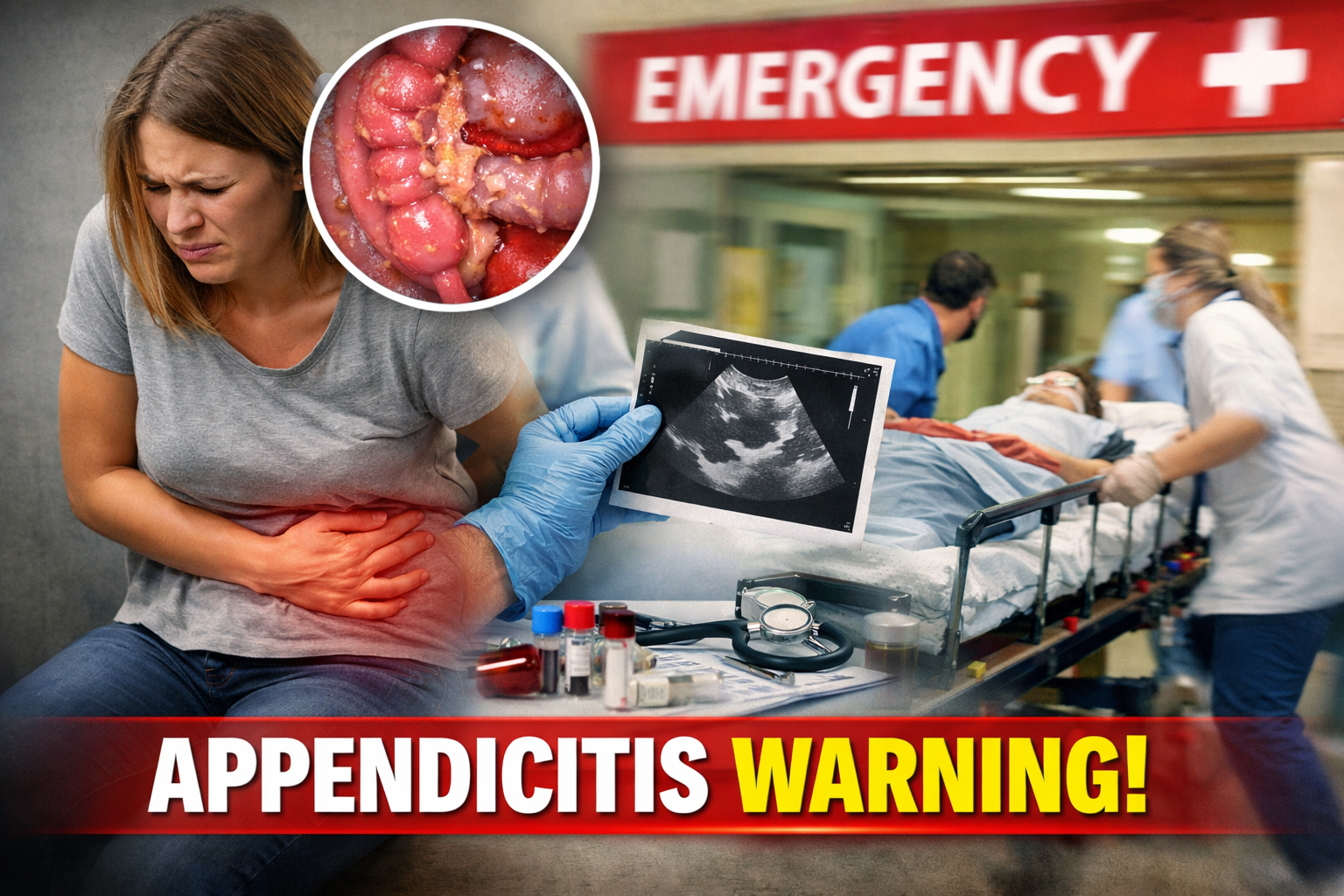
Appendicitis: Symptoms, Causes, Diagnosis, Treatment, and When to Get Emergency Help
Appendicitis is one of the most important causes of sudden abdominal pain that should never be ignored. It happens when the appendix becomes inflamed, usually after the opening inside it becomes blocked. That blockage can trap bacteria, leading to swelling, infection, and sometimes pus. Without prompt treatment, the appendix can burst, allowing infection to spread inside the abdomen and, in severe cases, into the bloodstream. That is why major medical sources treat appendicitis as an urgent condition rather than something to “watch and wait” at home.
What is appendicitis?
The appendix is a small, finger-like pouch attached to the large intestine in the lower right side of the abdomen. Appendicitis means that this structure has become inflamed and infected. Although the appendix is not considered essential for daily life, inflammation there can become dangerous quickly because swelling raises pressure inside the appendix and can cut off blood flow to its tissues. Once that process advances, the risk of rupture increases.
In many people, appendicitis develops fast over hours to a couple of days. It is most often an acute condition, meaning it starts suddenly and worsens quickly. There is discussion in medical sources about rare chronic or recurring appendicitis, but the urgent form that sends people to the emergency department is acute appendicitis.
What causes appendicitis?
The most likely cause is a blockage inside the appendix. Mayo Clinic notes that a blockage in the appendix lining, called the lumen, can lead to infection as bacteria multiply rapidly. As pressure and inflammation build, the appendix can become swollen and filled with pus.
That blockage can happen for several reasons. A hardened piece of stool, often called a fecalith or appendix stone, is one common cause. Swollen lymphoid tissue can also narrow the opening, especially when the body is reacting to an infection elsewhere. Less commonly, tumors, parasites, inflammatory bowel disease, or other sources of irritation may contribute.
A family history may raise risk somewhat, but appendicitis is not simply a straightforward inherited disorder. In many cases, it happens unexpectedly in people with no clear warning.
What do appendicitis symptoms feel like?
The classic symptom pattern starts with pain around the belly button that later moves to the lower right side of the abdomen. As inflammation worsens, the pain usually becomes sharper, more focused, and more constant. It often feels worse when walking, coughing, pressing on the area, or making sudden movements.
Other common symptoms include nausea, vomiting, loss of appetite, low-grade fever, bloating, constipation, diarrhea, or trouble passing gas. Some people simply feel unwell and tired before the picture becomes more obvious.
That said, not everyone has the textbook pattern. Cleveland Clinic notes that only about half of people with appendicitis have the classic presentation. Children, older adults, and pregnant people may be less likely to show the usual symptom sequence, which is one reason diagnosis can sometimes be delayed. During pregnancy, pain may feel higher in the abdomen because the appendix is pushed upward.
Early warning signs to take seriously
Many people first assume they have food poisoning, a stomach bug, constipation, gas pain, or menstrual cramps. The problem is that appendicitis can begin with vague, ordinary-looking discomfort before becoming much more severe. A pain that starts near the middle of the belly, then intensifies and shifts rightward, is especially concerning.
Warning signs that deserve urgent medical attention include:
abdominal pain that keeps getting worse
pain that moves to the lower right abdomen
nausea or vomiting along with worsening pain
fever with abdominal tenderness
a swollen or bloated abdomen
pain that becomes severe enough to make movement difficult
When appendicitis becomes an emergency
If appendicitis is not treated quickly, the appendix can perforate or burst. NHS guidance notes that when this happens, pain may briefly seem better for a short time, but then severe pain usually spreads across the abdomen. This can signal peritonitis, an infection of the abdominal lining, which is dangerous and needs immediate treatment.
A ruptured appendix can also lead to abscess formation, bloodstream infection, and sepsis. Cleveland Clinic emphasizes that once infection spreads through the abdominal cavity or blood, complications can become life-threatening.
If someone has severe abdominal pain, signs of sepsis, confusion, breathing difficulty, or is becoming extremely unwell, emergency care is needed right away. NHS advises immediate emergency help in these situations.
How doctors diagnose appendicitis
Diagnosis starts with the story of the pain and a physical examination. Doctors ask when the pain began, where it is located, how it has changed, and what other symptoms are present. They then examine the abdomen for tenderness, guarding, stiffness, or pain triggered by pressure and movement.
Lab tests help support the diagnosis and rule out other causes. These often include a blood test to look for signs of infection or inflammation, urine testing to help exclude problems such as a urinary tract infection or kidney stone, and a pregnancy test when appropriate.
Imaging is often used because appendicitis can mimic many other conditions. Ultrasound is commonly the first imaging test for children, young adults, and pregnant patients because it does not use radiation. MRI can also be used without radiation. CT scans are highly useful in many cases, but because they involve radiation, doctors are more selective about them in children and pregnancy.
This testing matters because other conditions can look similar, including kidney stones, bladder infection, pelvic inflammatory disease, ovarian or other reproductive conditions, inflammatory bowel disease, and intestinal obstruction.
Treatment for appendicitis
The standard treatment for appendicitis is an appendectomy, which means surgical removal of the appendix. NIDDK states that doctors typically treat appendicitis by removing the appendix, and prompt surgery lowers the risk that it will burst and cause additional complications.
There are two main surgical approaches. Laparoscopic surgery uses several small incisions and a camera, and it generally has a shorter recovery time and fewer complications. Open surgery uses a larger incision and may be chosen when the appendix has ruptured, infection is widespread, or the situation is more complex.
Antibiotics are also part of treatment. People who may have appendicitis are often treated with antibiotics before surgery. In selected mild cases, antibiotics alone may sometimes be considered, but NIDDK notes that surgery remains the standard of care while researchers continue studying which patients may safely avoid an operation.
If the appendix has already burst, treatment becomes more urgent and more complicated. Doctors may need to clean the abdominal cavity, treat peritonitis or abscesses, and use broader infection control measures in addition to surgery.
What recovery is usually like
Recovery depends on whether surgery was laparoscopic or open and whether the appendix had already burst. NIDDK notes that people often recover fully after treatment. Physical activity is usually limited for the first few days after laparoscopic surgery and longer after open surgery.
NHS also notes that keyhole surgery is commonly used and that open surgery may be needed in more complicated cases. In uncomplicated appendicitis, many people recover faster after laparoscopic surgery than after open procedures.
How appendicitis may progress if it is not treated
While patient education materials sometimes describe appendicitis in “stages,” the more useful practical point is that untreated inflammation can worsen step by step. First, the appendix becomes inflamed and swollen. Then pressure may reduce blood supply, leading to tissue damage. As the wall weakens, gangrene or perforation can occur. After rupture, infection can spread through the abdomen and potentially into the bloodstream.
That is exactly why a person should not wait for pain to become unbearable before seeking care. The earlier appendicitis is identified, the better the chance of avoiding rupture and serious complications.
When to seek urgent medical help
Seek urgent evaluation the same day if abdominal pain is worsening, moving to the lower right side, or coming with nausea, fever, or vomiting. If the pain is severe, spreading, or accompanied by signs of sepsis or rapid deterioration, emergency treatment is needed immediately. NHS specifically advises urgent help for abdominal pain that worsens or moves to the lower right, and emergency care for severe pain or signs of sepsis.
In the UK, that may mean contacting your GP urgently, using NHS 111, or going straight to A&E depending on severity. In other settings, it means urgent emergency department assessment.
FAQ
Can appendicitis go away on its own?
Some mild cases may improve with antibiotics, but appendicitis should not be managed casually at home. Surgery remains the standard treatment in most cases because of the risk of worsening infection and rupture.
Is the pain always on the lower right side?
Not at first. Pain often begins around the belly button and then shifts to the lower right abdomen as inflammation progresses. The location can be less typical in pregnancy, in children, and in older adults.
Can appendicitis be confused with other conditions?
Yes. Doctors often need tests because appendicitis can resemble urinary infections, kidney stones, pelvic problems, inflammatory bowel disease, and other causes of abdominal pain.
Is appendicitis always a surgical emergency?
It is always an urgent medical problem. Not every case goes straight to the operating room within minutes, but appendicitis needs prompt medical assessment because a burst appendix can become life-threatening.
Bottom line
Appendicitis is not just a bad stomach ache. It is an urgent condition that often begins with abdominal pain near the belly button, then shifts to the lower right side and becomes more intense. Nausea, vomiting, fever, appetite loss, and bloating can follow. Because the appendix can rupture and spread infection, prompt diagnosis and treatment matter. In most cases, treatment involves antibiotics and surgery, with imaging and lab tests helping doctors confirm the diagnosis and rule out other causes.