Calf Pain: Causes, Symptoms, Warning Signs, and When to Get Medical Help
Calf pain is easy to dismiss when it starts as soreness, tightness, or a cramp after a long day. Sometimes that is exactly what it is. But calf pain can also be the first sign of a blood clot, poor blood flow, tendon injury, nerve irritation, or a pressure-related emergency inside the leg. That is why the most important question is not just “Where does it hurt?” but “What pattern is this pain following?” Mayo Clinic and MedlinePlus both note that leg pain can come from muscles, tendons, nerves, veins, arteries, or the spine, and that certain symptom patterns deserve urgent attention.
The calf is built mainly from the gastrocnemius and soleus muscles. These muscles join into the Achilles tendon, which connects the calf to the heel and helps with walking, climbing stairs, running, and pushing up onto the toes. Because this area works constantly during everyday movement, calf pain can come from simple overuse. But because important blood vessels and nerves also pass through the lower leg, pain here should never be judged by soreness alone.
Why calf pain can feel so different from one person to another
Calf pain is not one single experience. It may feel like a sudden stab during exercise, a tight knot in the middle of the night, a deep ache after walking, a burning or tingling sensation, or a heavy, swollen discomfort in one leg. Those differences matter. Sharp pain after a sudden movement often points toward a muscle injury. Pain that starts with exercise and eases with rest can suggest reduced blood flow. Burning, tingling, or numbness raises concern for nerve-related causes. One-sided swelling, warmth, and redness are classic warning signs that raise concern for deep vein thrombosis, also called DVT.
Common causes of calf pain
1. Muscle strain or overuse
One of the most common explanations is a strained calf muscle. This can happen during running, jumping, fast direction changes, pushing off suddenly, or even after doing more activity than usual. Muscle strains may cause tenderness, swelling, bruising, spasms, weakness, or pain that gets worse when you walk or stretch the muscle. A milder overuse problem may simply feel sore and tight for a few days.
A related issue is ordinary exercise soreness or cramping. MedlinePlus and Mayo Clinic note that cramps can be linked to dehydration, muscle fatigue, long periods in one position, low levels of certain minerals, and some medicines such as diuretics or statins. Cramps are usually brief, but repeated or severe cramping should not be ignored, especially if it comes with weakness, swelling, redness, or warmth.
2. Achilles tendon problems
Pain at the back of the lower leg is not always coming from the muscle itself. The Achilles tendon can also be the source. Achilles tendinitis or tendinopathy often causes pain and stiffness along the back of the heel and lower calf, especially in the morning, after rest, or after activity. The area may feel tender, swollen, or warm, and some people notice difficulty pushing up onto their toes.
If there is a sudden injury, a popping sensation, or a new inability to push off the foot or rise onto the toes, a more serious Achilles injury may be possible.
3. Deep vein thrombosis (blood clot)
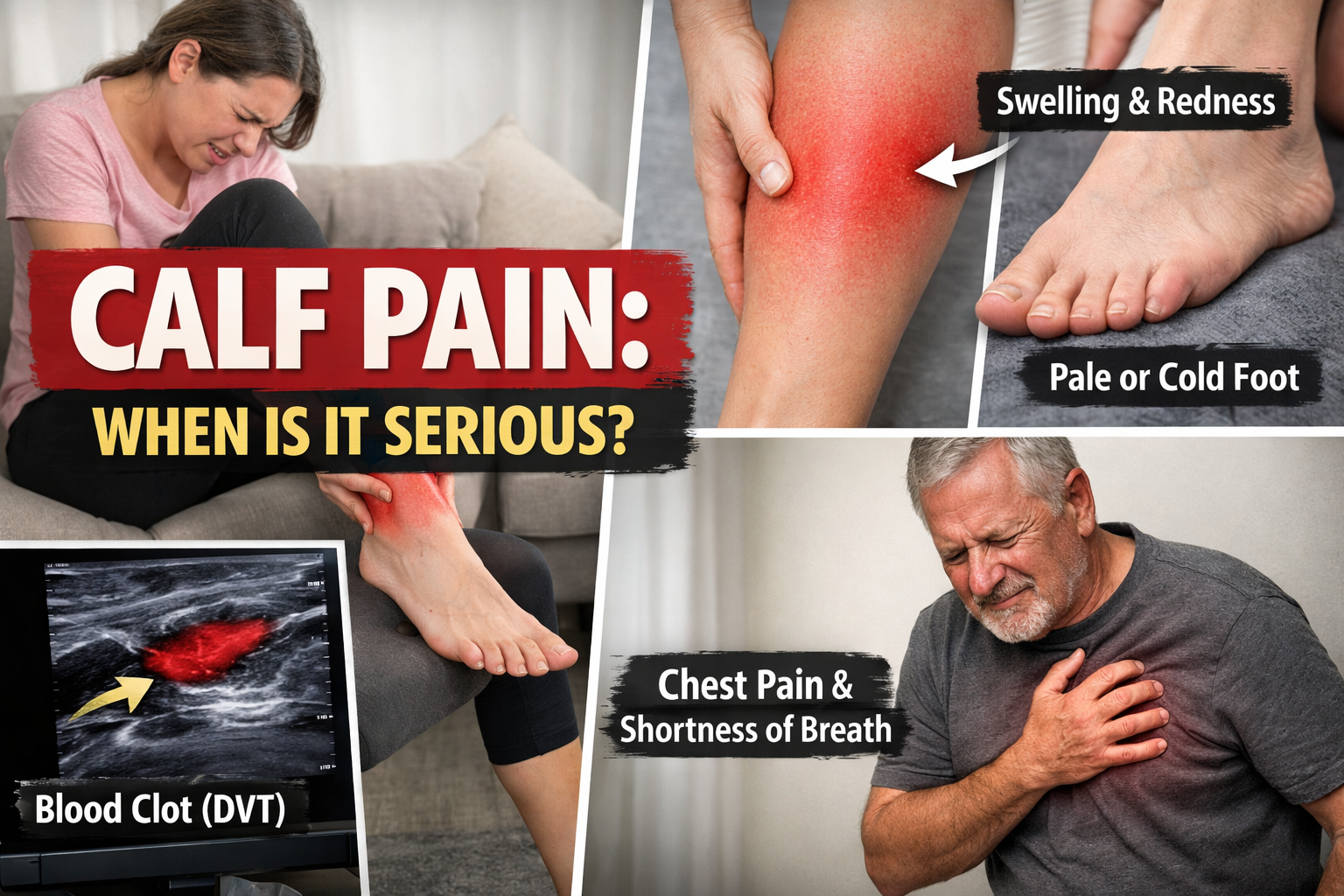
This is one of the most important dangerous causes to recognize. A DVT happens when a blood clot forms in a deep vein, usually in the leg. MedlinePlus and Mayo Clinic describe common leg symptoms as one-sided pain or tenderness, swelling, warmth, and redness or other color change. The pain may be gradual or sudden. It may feel like tightness, aching, or heaviness rather than a classic muscle pull.
Risk rises with long periods of immobility, recent hospitalization, surgery, injury, pregnancy, estrogen-containing medications, obesity, family history, and some clotting disorders. Even a long plane ride or prolonged bed rest can matter because staying still reduces blood flow in the legs.
The major reason DVT matters so much is that part of the clot can travel to the lungs and cause a pulmonary embolism. Mayo Clinic says emergency warning signs include sudden shortness of breath, chest pain with breathing or coughing, rapid breathing, a rapid pulse, fainting, or coughing up blood.
4. Poor blood flow from peripheral artery disease
Calf pain can also come from arterial circulation problems, especially peripheral artery disease (PAD). Mayo Clinic describes the classic pattern as pain or cramping in the calf that begins with walking or exercise and improves with rest. This is called claudication. Some people also notice coldness in the lower leg or foot, numbness, weakness, or pain that starts happening even at rest as the condition gets worse.
A leg or foot that becomes cool, pale, blue, or numb, or leg pain that does not go away even when you stop walking, needs prompt medical evaluation. MedlinePlus lists those features as warning signs for serious blood-flow problems.
5. Varicose veins and chronic venous problems
Not all vein-related pain is a clot. Varicose veins and other venous circulation problems can cause aching, heaviness, throbbing, calf cramps, ankle swelling, and symptoms that worsen after standing for a long time and improve when the legs are elevated. The discomfort is often more dull and heavy than sharp.
This kind of pain is usually less urgent than DVT, but persistent swelling, skin color changes, or sores that do not heal still need medical attention.
6. Sciatica or peripheral neuropathy
Calf pain is sometimes actually nerve pain. With sciatica, pressure on a nerve root in the lower spine can cause pain that radiates down the leg, often with numbness or tingling. With peripheral neuropathy, the symptoms are often more burning, prickling, shooting, or numb, and they commonly start in the feet and toes before spreading upward into the legs. Diabetes is a major cause of this pattern.
When calf pain comes with burning, tingling, reduced sensation, balance problems, or weakness, a nerve cause becomes more likely.
7. Compartment syndrome
This is less common, but it is one of the most urgent causes. Compartment syndrome happens when pressure builds up inside the tissues around the muscles. NHS and Cleveland Clinic describe it as very painful and potentially limb-threatening. Acute compartment syndrome is a medical emergency. Warning signs include severe pain out of proportion to the injury, pain that gets worse when the muscles are stretched, a tense or hard-feeling leg, numbness, tingling, weakness, or a pale, cold limb.
There is also a chronic exertional form that may cause aching, burning, cramping, tightness, numbness, or weakness during exercise.
Warning signs you should never ignore
Seek urgent or emergency care for calf pain if you notice any of the following:
One leg becomes swollen, warm, red, or newly tender, especially after travel, surgery, illness, pregnancy, or long periods of sitting.
Chest pain, shortness of breath, fainting, or coughing blood along with leg pain or swelling.
The leg or foot becomes pale, blue, numb, or cool to the touch.
You cannot walk or put weight on the leg, or the pain started after a pop, snap, or major injury.
Severe pain that seems far worse than the injury looks, especially with numbness, tingling, or a hard, tight calf.
Fever, spreading redness, or signs of infection around the painful area.
When calf pain is more likely to be minor
Calf pain is more likely to be a minor muscle problem when it clearly follows overuse, feels like soreness or a cramp, improves steadily with rest, and is not accompanied by one-sided swelling, warmth, skin color change, numbness, major weakness, or breathing symptoms. Even then, “minor” does not mean you should ignore it for weeks. Pain that keeps coming back, disrupts sleep, limits walking, or does not improve with reasonable self-care deserves a proper evaluation.
What you can do at home for likely minor calf pain
If the pain seems related to overuse, cramping, or a mild strain, MedlinePlus and Mayo Clinic recommend basic care such as rest, elevation, ice, and gentle stretching for cramps. Ice is commonly used for 15 to 20 minutes at a time during the first few days after a strain.
But home care has limits. Do not assume massage, stretching, or exercise is safe if the calf is one-sidedly swollen, hot, red, pale, unusually cold, or associated with shortness of breath. Those patterns may reflect a clot or serious circulation problem and need medical assessment first.
If you have diabetes, vascular disease, or reduced sensation in the legs or feet, be more cautious with self-treatment and ice because decreased feeling can make it harder to notice worsening symptoms or skin injury.
How doctors think about calf pain
Clinicians usually sort calf pain by pattern: injury-related, circulation-related, nerve-related, tendon-related, or pressure-related. They pay close attention to whether symptoms are one-sided, whether they appear during activity or at rest, whether there is swelling or color change, and whether there are neurologic symptoms such as tingling or weakness. That pattern often matters more than how intense the pain feels in the moment.
Prevention basics that actually matter
You cannot prevent every cause of calf pain, but the basics still help: increase activity gradually, use supportive footwear, avoid sudden jumps in training load, stay hydrated, move regularly during long trips or desk-heavy days, and take persistent leg symptoms seriously instead of repeatedly training through them. Those steps are especially important for people with diabetes, prior leg injuries, vascular risk factors, or a history of blood clots.