
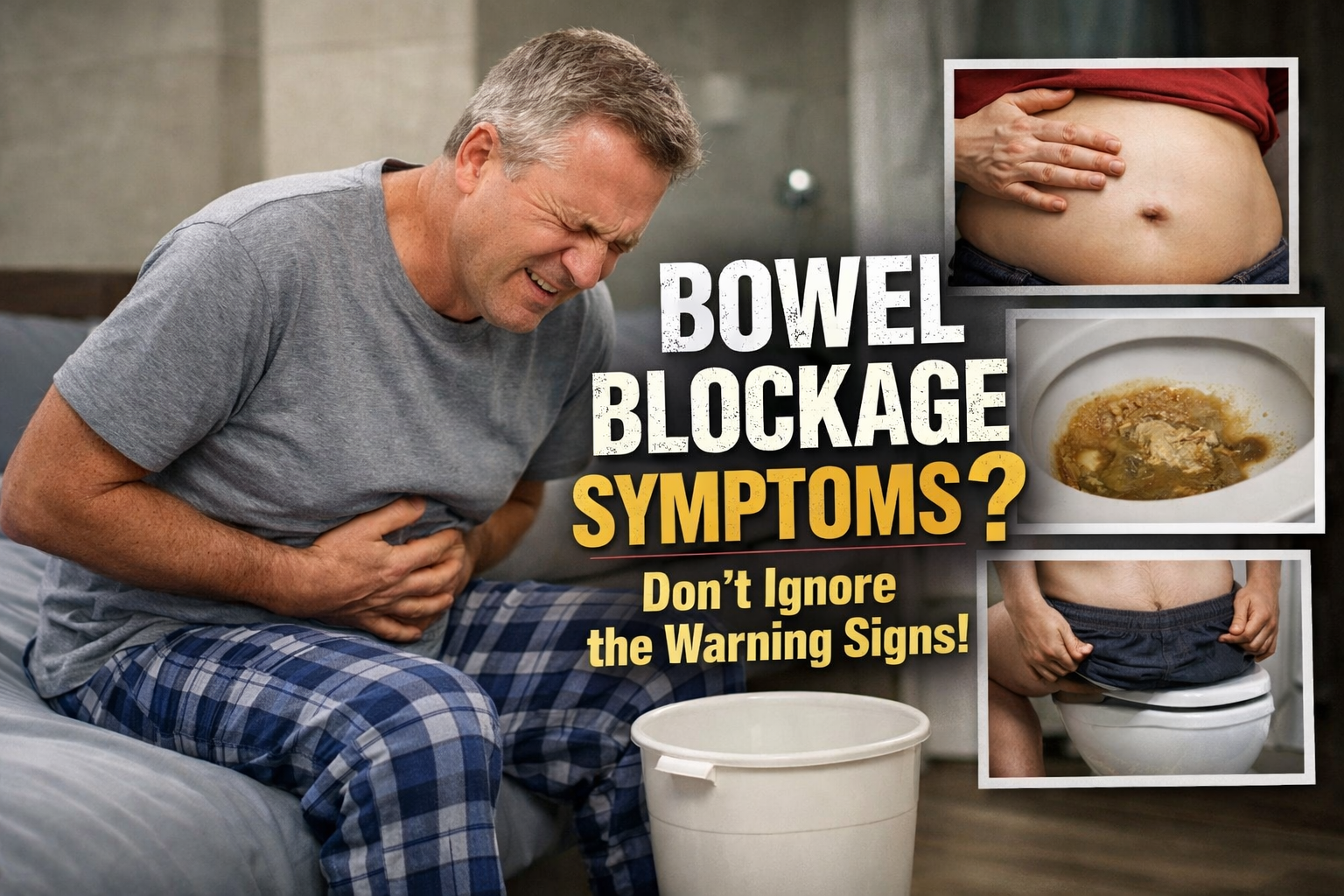
Bowel Blockage Symptoms: Warning Signs, Causes, Diagnosis, and When to Get Emergency Help
Bowel blockage symptoms can start in a way that feels deceptively ordinary. Many people first think they are dealing with constipation, trapped gas, food poisoning, or a bad stomach bug. But a bowel blockage, also called an intestinal obstruction, is different. It means food, fluid, gas, or stool is no longer moving through the intestines the way it should. Sometimes the blockage is partial. Sometimes it is complete. Either way, it can become serious very quickly.
What makes this topic important in real life is not only the pain. A blockage can lead to swelling inside the bowel, vomiting, dehydration, reduced blood flow, infection, and in severe cases, damage to the intestine itself. That is why symptoms such as severe cramping, a swollen abdomen, repeated vomiting, and being unable to pass stool or gas should never be brushed off as “just digestive trouble.”
This guide explains what bowel blockage symptoms usually look like, how they may differ depending on the type and location of the problem, what commonly causes them, how doctors evaluate them, what daily life may look like during recovery, and when urgent medical care is needed. This is an educational guide, not a diagnosis. If symptoms are severe, worsening, or accompanied by vomiting, fever, or abdominal swelling, prompt medical evaluation is important.
Table Of Contents
Understanding bowel blockage symptoms
Types Of bowel blockage symptoms
Causes Of bowel blockage symptoms
Symptoms Of bowel blockage symptoms
Risk Factors
Diagnosis Process
Living With bowel blockage symptoms
Prevention Strategies
Practical Examples
Conclusion
Frequently Asked Questions
Final Editorial Disclaimer
References
Understanding bowel blockage symptoms
A bowel blockage happens when the normal flow through the intestines is partly or fully blocked. The blockage may affect the small intestine or the large intestine, also called the colon. The small intestine is where most digestion and nutrient absorption happen. The large intestine helps absorb more water and forms stool.
To understand the symptoms, it helps to picture what the bowel is supposed to do. The intestines move material forward in wave-like contractions. When something physically blocks the passage, or when the bowel temporarily stops moving the way it should, food, liquid, air, and waste begin to build up behind the problem area. That buildup stretches the intestine. Stretching is one reason people feel cramping, pressure, swelling, and pain.
This is also why symptoms tend to cluster. A person may not only feel pain. They may also feel bloated, lose their appetite, become nauseated, vomit, or notice they are no longer passing gas or stool normally. In a complete blockage, the gut can stop acting like a functioning pipeline. In a partial blockage, some material may still pass, but not enough for things to feel normal.
In plain language, bowel blockage symptoms matter because they often mean the body is no longer handling digestion safely. The longer the obstruction continues, the greater the risk of dehydration, electrolyte imbalance, infection, and injury to the bowel wall.
Types Of bowel blockage symptoms
This section is really about the main types of bowel blockage and how symptom patterns can differ.
Partial vs. complete blockage
A partial blockage means some gas, liquid, or stool can still get through. Symptoms may come and go. A person may still pass a little stool or diarrhea, which can confuse them into thinking a blockage is impossible. In reality, partial blockages can still cause major pain, bloating, nausea, and vomiting.
A complete blockage means nothing significant is getting through. This is generally more dangerous. People are more likely to have severe constipation, no gas passing, more obvious abdominal swelling, repeated vomiting, and stronger, more persistent pain.
Small bowel vs. large bowel blockage
A small bowel blockage often causes cramping pain that comes in waves, nausea, vomiting, bloating, and dehydration. Vomiting may appear earlier because the blockage is higher up in the digestive tract.
A large bowel blockage may cause more noticeable abdominal distension, lower abdominal discomfort, and increasing difficulty passing stool and gas. Vomiting can still happen, but it may start later.
Mechanical blockage vs. functional blockage
A mechanical blockage means something is physically in the way. Examples include scar tissue, a hernia, a twisted bowel, a tumor, or a narrowed segment of intestine.
A functional blockage, often called ileus or pseudo-obstruction depending on the situation, means the bowel is not moving properly even though there may not be a physical object blocking it. This can happen after surgery, with certain medications, infections, electrolyte problems, or nerve and muscle disorders of the bowel.
This distinction matters because the symptoms can overlap, but the treatment approach may differ. One person may need urgent surgery. Another may need hospitalization, IV fluids, bowel rest, medication review, and close monitoring while bowel function returns.
Acute vs. recurring symptoms
Some bowel blockages develop suddenly and intensely. Others build more gradually, especially when caused by scar tissue, inflammatory narrowing, or tumors.
A person with a sudden acute blockage may wake up with severe wave-like pain, vomiting, and a rapidly swelling abdomen. A person with a narrowing that has been developing over time may notice repeated episodes after meals, intermittent cramping, less predictable bowel movements, and worsening bloating before things become severe.
Causes Of bowel blockage symptoms
Many people searching this topic want to know one thing: what causes this to happen?
Common causes in adults
Abdominal adhesions
Adhesions are bands of scar tissue that can form after abdominal or pelvic surgery. They are one of the most common causes of small bowel obstruction. A person may have had surgery months or even years earlier and assume that recovery is long finished. But scar tissue can still create a point where the bowel kinks or gets trapped.
Real-life example: someone had a prior appendix surgery, gallbladder surgery, C-section, or colon surgery. Later, they develop severe cramping, vomiting, and abdominal bloating with no obvious trigger.
Hernias
A hernia happens when part of the intestine pushes through a weak area in the abdominal wall. If that loop gets trapped, the bowel can become blocked. This may happen in the groin, around an old incision, or in another weak spot.
A trapped hernia is especially concerning because the blood supply can also become compromised.
Tumors and colon cancer
A growth inside or pressing on the bowel can narrow the passage until stool and gas can no longer move through. This is one reason new constipation, abdominal swelling, and progressive blockage symptoms in older adults deserve careful medical evaluation.
Inflammatory bowel disease and strictures
Conditions such as Crohn’s disease can lead to inflammation and later scarring. Over time, the bowel may narrow enough to create recurrent partial obstructions.
Diverticulitis-related narrowing
Inflammation in the colon can cause swelling and scarring that narrow the intestinal channel.
Volvulus
This is a twisting of the intestine. It can cut off both passage and blood flow, making it a true emergency.
Intussusception
Intussusception happens when one part of the bowel slides into another, like a telescope collapsing into itself. It is more common in children than adults. In adults, it may be linked to an underlying structural problem.
Impacted stool or foreign material
Severe stool impaction can block the bowel, especially in people with chronic constipation, limited mobility, neurologic conditions, or dehydration. In some cases, swallowed objects or bezoars can also obstruct the intestine.
Functional causes
Sometimes the bowel stops moving properly even without a clear mechanical plug.
Paralytic ileus
This often happens after surgery. It can also occur with infection, inflammation, opioid pain medications, electrolyte disturbances, or certain medical illnesses.
Intestinal pseudo-obstruction
This is less common, but it can mimic bowel blockage symptoms very closely. The bowel acts obstructed because movement is impaired, not because a physical barrier is found.
Causes in children
In infants and young children, intussusception is an important cause of bowel blockage. Other causes can include congenital problems, severe constipation, or other structural conditions. Any child with repeated vomiting, abdominal swelling, unusual lethargy, or blood in the stool should be evaluated urgently.
Symptoms Of bowel blockage symptoms
This is the part most people are really searching for. What does a bowel blockage actually feel like?
Cramping abdominal pain
Pain is often one of the earliest clues. It may begin as cramping that comes in waves. That wave-like pattern happens because the bowel is still trying to push contents through the narrowed or blocked area.
People describe it in different ways:
Tightening pain
Squeezing pain
Sharp spasms
Severe cramps that come and go
Pain that later becomes constant
Pain that shifts from intermittent cramps to ongoing severe pain can be more concerning, especially if the abdomen becomes tender and swollen.
Bloating and abdominal distension
Bloating is common, but bowel obstruction bloating is often more than ordinary post-meal fullness. The abdomen may look visibly enlarged, feel tight, and become increasingly uncomfortable over hours.
This matters because it suggests gas and fluid are backing up instead of moving forward.
Nausea and vomiting
When contents cannot move through the intestine normally, nausea often follows. Vomiting may happen early in small bowel obstruction and later in large bowel obstruction.
Repeated vomiting is dangerous because it can quickly lead to dehydration and mineral imbalance. A person may become dizzy, weak, thirsty, or notice dark urine and a racing heart.
Inability to pass gas
Not passing gas can be a major warning sign, especially when it occurs together with pain, swelling, and vomiting. People sometimes focus only on not having a bowel movement, but the inability to pass gas can be just as important.
Constipation or inability to have a bowel movement
In a complete blockage, a person may be unable to pass stool. In a partial blockage, bowel movements may still happen for a time, which can create false reassurance.
One practical takeaway: having diarrhea or passing a little stool does not always rule out a blockage. Partial obstruction can still produce loose output from material that is getting around the narrowed area.
Loss of appetite and feeling full quickly
Many people notice that eating feels unappealing or immediately worsens the discomfort. Even small meals may lead to pressure, fullness, or nausea.
Malaise and weakness
As symptoms continue, people often feel worn down, dehydrated, and generally unwell. This is not just from pain. It is also the result of poor intake, fluid loss, and the physical stress of obstruction.
Symptoms that suggest an emergency
Seek urgent medical care right away if bowel blockage symptoms are accompanied by:
Severe or worsening abdominal pain
A hard, swollen, or very tender abdomen
Repeated vomiting
Inability to pass gas or stool
Fever
Blood in the stool
Rapid heartbeat
Faintness, confusion, or signs of dehydration
Severe pain with a known hernia
These features raise concern for a complete obstruction or complications such as bowel injury, reduced blood flow, or infection.
Risk Factors
Not everyone has the same likelihood of developing bowel blockage symptoms. Some situations raise risk significantly.
Previous abdominal or pelvic surgery
This is one of the biggest risk factors because surgery can lead to adhesions.
Hernias
Known abdominal or groin hernias increase the chance that bowel can become trapped.
Colon cancer or other abdominal tumors
A growth can narrow the bowel gradually or suddenly.
Inflammatory bowel disease
Especially Crohn’s disease, which can create scarred narrow segments called strictures.
Diverticular disease
Repeated inflammation can lead to narrowing in the colon.
Chronic constipation and stool impaction risk
This is more relevant in some older adults, people with neurologic disease, people who are less mobile, or those using medicines that slow the bowel.
Opioid use and other medicines that slow gut movement
Some pain medicines and certain other drug classes reduce bowel motility and may contribute to ileus or worsening constipation.
Electrolyte problems and severe illness
Low potassium and other metabolic disturbances can interfere with normal bowel movement.
Older age
Risk often rises with age because surgeries, cancer risk, hernias, medication burden, and bowel motility issues become more common.
Recent surgery
Temporary ileus is especially common after abdominal operations.
Diagnosis Process
Doctors do not diagnose bowel blockage symptoms based on one symptom alone. They look at the whole pattern.
Medical history
A clinician will usually ask:
When did the pain start?
Is it cramping or constant?
Are you passing gas?
When was your last bowel movement?
Have you vomited?
Have you had abdominal surgery before?
Do you have a hernia, Crohn’s disease, diverticulitis, or cancer history?
What medications are you taking?
These questions help separate ordinary constipation from something more urgent.
Physical exam
The abdomen may be checked for swelling, tenderness, abnormal bowel sounds, a mass, or a hernia. A severely distended or very tender abdomen can raise the level of concern quickly.
Imaging
Imaging often plays a central role.
Abdominal X-ray may show signs of obstruction.
CT scan is often more useful because it can better identify the location, severity, and likely cause.
Ultrasound may be especially useful in some children.
Air or contrast enema may help in selected pediatric cases, especially intussusception.
Blood tests
Blood work may help show dehydration, infection, or electrolyte imbalance. These tests do not diagnose every blockage on their own, but they help determine severity and guide treatment.
Hospital evaluation
Because bowel obstruction can worsen fast, many people with strong symptoms are evaluated in an emergency department or hospital setting rather than an outpatient clinic.
Living With bowel blockage symptoms
This section matters because recovery is not just about treating the emergency. It is also about understanding what everyday life can look like afterward.
The emotional side
People who have had a bowel obstruction often become anxious about eating again, traveling, or being far from medical care. That is understandable. Severe pain, vomiting, and hospitalization can be frightening.
The eating adjustment
Depending on the cause, some people may temporarily need a low-fiber or lower-residue eating pattern after treatment. This does not mean everyone with digestive symptoms should start restricting fiber on their own. It means diet may need to be individualized, especially after a partial obstruction, surgery, or a diagnosis such as Crohn’s-related narrowing.
A practical example: one person recovering from a partial obstruction may tolerate yogurt, soup, eggs, smooth nut butter, white rice, or applesauce better than raw vegetables, popcorn, nuts, or large salads during the early stage. Another person may need a different plan based on their doctor’s instructions.
Daily frustrations people commonly face
Fear that normal bloating means the problem is back
Hesitation around larger meals
Trouble staying hydrated after vomiting
Constipation after hospitalization or pain medication
Difficulty knowing what symptoms are “expected” versus serious
Worry about recurrence after prior surgery or hernia problems
Reasonable self-management principles
These should never replace urgent care when symptoms are severe, but they may support recovery after medical evaluation:
Follow the eating plan given by your clinician
Reintroduce foods gradually instead of jumping back into heavy meals
Pay attention to hydration
Ask about constipation prevention if you are prescribed opioids
Know your personal warning signs for recurrence
Keep follow-up appointments if the cause was not fully resolved
Prevention Strategies
Not every bowel blockage can be prevented. Scar tissue, tumors, twisting, and sudden trapping in a hernia are not always predictable. Still, risk may sometimes be lowered.
Manage hernias early
If you know you have a hernia, follow medical advice about monitoring or repair. Sudden pain, swelling, redness, or inability to reduce the hernia is urgent.
Address persistent constipation
Chronic severe constipation should not be ignored. A good bowel routine, hydration, activity when possible, and medical review of constipation-causing medications may help lower the risk of stool impaction.
Review medications
If you take opioids or other medicines that slow the bowel, ask what can be done to reduce constipation risk safely.
Follow disease-specific care plans
If you have Crohn’s disease, diverticular disease, or a prior cancer history, staying consistent with follow-up can help detect complications before they become more serious.
Pay attention after surgery
After abdominal surgery, ask what symptoms are expected and which ones should trigger a call or urgent visit. Temporary slowing of the bowel can happen, but severe bloating, worsening pain, vomiting, or inability to pass gas may need evaluation.
Do not self-treat severe symptoms as “just constipation”
One of the most practical prevention steps is not delaying care. Repeated laxatives, large fiber loads, or forceful self-treatment can be risky when a real obstruction is present.
Practical Examples
A simple warning-sign checklist
Get urgent care promptly if you have:
Strong cramping or constant abdominal pain
A visibly swollen abdomen
Repeated vomiting
You cannot pass gas
You have not had a bowel movement and symptoms are worsening
Fever, blood in stool, or faintness
Severe pain with a known hernia
What to do when symptoms start
Notice the pattern, not just one symptom.
Pain plus swelling plus vomiting is very different from mild constipation alone.
Stop assuming that bowel blockage always means zero stool.
Partial obstruction can still allow some output.
Avoid delaying for days if symptoms are escalating.
Waiting for it to “pass” can be risky.
Be careful with home remedies.
Do not keep pushing laxatives, large meals, or aggressive fiber intake when severe pain, vomiting, and distension are present.
Seek emergency care if red flags are present.
This is especially important with severe pain, inability to pass gas, or repeated vomiting.
Real-life scenario 1
A middle-aged adult with prior abdominal surgery develops cramping pain that comes every few minutes, then starts vomiting and feels too bloated to stand comfortably. They assume it is food poisoning. But the combination of prior surgery, wave-like pain, and worsening distension should raise concern for obstruction.
Real-life scenario 2
An older adult has increasing constipation, abdominal fullness, and reduced appetite over several weeks, then suddenly cannot pass gas and develops swelling. That pattern deserves medical attention, especially if symptoms are new and progressive.
Real-life scenario 3
Someone with a known hernia develops sudden severe pain at the hernia site, nausea, and bloating. This is not a “watch and wait” situation. A trapped hernia can threaten the bowel’s blood supply.
A practical recovery routine after medical clearance
This is only a general example, not a personal treatment plan:
Sip fluids regularly through the day
Eat smaller meals instead of large heavy meals
Reintroduce foods gradually
Track vomiting, bowel movements, gas, swelling, and pain
Avoid ignoring symptoms that are clearly worsening
Keep written discharge instructions accessible
Common mistakes
Assuming “I had diarrhea, so it can’t be a blockage”
Treating severe symptoms like routine constipation
Ignoring inability to pass gas
Waiting too long because pain comes and goes
Restarting a normal heavy diet too quickly after treatment
Not asking for a constipation prevention plan when prescribed opioids
Conclusion
Bowel blockage symptoms are important because they often involve more than discomfort. They can signal that food, gas, fluid, or stool is no longer moving through the intestines safely. The most common warning signs include cramping abdominal pain, bloating, vomiting, constipation, and inability to pass gas, but the exact pattern depends on whether the blockage is partial or complete and whether it affects the small or large bowel.
The most practical advice is simple: look at the whole picture. Severe pain, swelling, repeated vomiting, and failure to pass gas or stool should not be treated like ordinary constipation. The next best step is timely medical evaluation, especially for people with prior abdominal surgery, hernias, Crohn’s disease, cancer risk, or recent surgery. Fast action can make a major difference.