Female Bowel Obstruction Symptoms: Warning Signs, Causes, Diagnosis, and When to Get Emergency Help
Female bowel obstruction symptoms can begin in a way that feels confusingly ordinary. A woman may think she is dealing with constipation, trapped gas, food poisoning, bad menstrual pain, a stomach bug, or even stress-related digestive trouble. But a bowel obstruction is different. It means food, fluid, gas, or stool is no longer moving through the intestines the way it should. The blockage may be partial at first, or it may become complete. Either way, it can turn serious quickly because pressure can build up inside the bowel, fluids can shift, dehydration can develop, and blood flow to part of the intestine can become compromised.
One of the most important points for women to understand is this: the core symptoms of bowel obstruction are usually not unique to women, but the surrounding context can be. Prior abdominal or pelvic surgery, including gynecologic procedures, can lead to adhesions that later obstruct the bowel. In some women, conditions such as endometriosis, pelvic disease, pregnancy, or cancers involving the abdomen or pelvis can either contribute to obstruction or make the early symptoms easier to misread. That is why severe cramping, repeated vomiting, a swollen abdomen, and trouble passing stool or gas should never be brushed off as “just hormones” or “just constipation.”
This guide explains what female bowel obstruction symptoms often feel like in real life, why they happen, what causes are common in women, how doctors evaluate the problem, what recovery may look like, and when symptoms need urgent or emergency medical attention. This article is for education only and is not a diagnosis. Severe abdominal pain, ongoing vomiting, or inability to pass gas or stool needs prompt medical assessment.
Table Of Contents
Understanding Female Bowel Obstruction Symptoms
Types Of Female Bowel Obstruction Symptoms
Causes Of Female Bowel Obstruction Symptoms
Symptoms Of Female Bowel Obstruction Symptoms
Risk Factors
Diagnosis Process
Living With Female Bowel Obstruction Symptoms
Prevention Strategies
Practical Examples
Conclusion
Frequently Asked Questions
Final Editorial Disclaimer
References
Understanding Female Bowel Obstruction Symptoms
A bowel obstruction happens when the small intestine or large intestine becomes partly or completely blocked. When that happens, the normal forward movement of digested food, liquid, gas, and stool slows down or stops. The bowel above the blockage can stretch and fill with fluid and air. That is why people often notice pressure, bloating, cramping, nausea, and vomiting as the problem develops. In more serious cases, the blocked part of the bowel may lose blood flow or tear, which is why this is treated as a potentially urgent condition rather than routine digestive upset.
For women, the phrase “female bowel obstruction symptoms” usually reflects search intent rather than a completely different disease. In practice, the symptoms are largely the same as in any adult, but women may have female-specific clinical context. A history of cesarean delivery, hysterectomy, ovarian surgery, other pelvic operations, endometriosis, pelvic inflammatory disease, pregnancy, or abdominal or pelvic cancer can change how doctors think about the cause and how quickly they investigate.
Another reason this topic matters is that bowel obstruction can mimic other problems women commonly experience. Early symptoms may overlap with constipation, menstrual cramping, ovarian pain, gastroenteritis, bloating before a period, or discomfort during pregnancy. That overlap is exactly what makes the condition easy to underestimate in the first hours or day.
Types Of Female Bowel Obstruction Symptoms
Partial obstruction
A partial obstruction means some material is still getting through. Symptoms may come and go rather than stay constant. A woman may still pass a little gas or stool, may have diarrhea instead of total constipation, and may feel intermittent waves of cramping rather than nonstop pain. This is one reason partial obstruction is often mistaken for a less serious digestive problem at first.
Complete obstruction
A complete obstruction is more severe. The bowel is blocked enough that gas and stool largely cannot pass. Pain, swelling, nausea, and vomiting often become more intense. When someone has abdominal pain together with no gas and no bowel movement, the situation deserves urgent attention because complications can follow.
Small bowel obstruction
Small bowel obstruction often causes cramping pain, abdominal distention, nausea, vomiting, poor appetite, and dehydration. Adhesions from prior surgery are a common cause. Women with a history of abdominal or pelvic surgery are therefore an especially important group to think about.
Large bowel obstruction
Large bowel obstruction may involve more prominent abdominal swelling, constipation, and difficulty passing gas, though symptoms can overlap with small bowel obstruction. Tumors, volvulus, severe stool blockage, and other structural causes may be involved.
Mechanical obstruction versus pseudo-obstruction
Most people use “bowel obstruction” to mean a physical blockage, such as scar tissue, a hernia, a twist, or a tumor. Doctors also consider pseudo-obstruction, where symptoms look similar but the bowel is not moving normally rather than being blocked by a mechanical barrier. From a patient’s point of view, the symptom pattern can feel very similar, which is why medical evaluation matters.
Causes Of Female Bowel Obstruction Symptoms
Adhesions after abdominal or pelvic surgery
This is one of the most important causes in women. Adhesions are bands of internal scar-like tissue that can form after abdominal or pelvic surgery. They can pull, twist, kink, or compress the intestines. Adhesions are common after abdominal surgery, and pelvic surgery raises the risk further. In women, that can include hysterectomy, ovarian surgery, cesarean delivery, surgery for fibroids, surgery for endometriosis, or bowel surgery itself. Symptoms can appear long after the original procedure, sometimes years later.
This matters in real life because many women do not connect current digestive symptoms to an operation that happened five, ten, or even twenty years ago. But scar-related obstruction does not have to happen right after surgery. A woman with previous pelvic surgery who develops wave-like pain, vomiting, or inability to pass gas should mention that surgical history early in evaluation.
Hernias
A hernia can trap part of the intestine and block the movement of bowel contents. Some hernias are obvious, while others are not easy to notice. A painful bulge in the groin or abdominal wall together with nausea, vomiting, or constipation can be an important clue.
Tumors and cancers
Cancer can cause bowel obstruction by growing in the bowel itself, pressing on the bowel from nearby structures, spreading within the abdomen, or causing scar tissue after treatment. For women, ovarian, colon, stomach, and pancreatic cancers are among the abdominal or pelvic cancers that may be involved. Cancer-related obstruction may develop gradually and can be mistaken for chronic bloating or slow digestion before it becomes severe.
Endometriosis
Endometriosis is a less common but important female-specific cause. In rare cases, endometriosis involving the bowel or nearby tissues can narrow the intestine or contribute to obstruction. It is not the most likely explanation for most women with obstruction symptoms, but it belongs in the discussion, especially in women of reproductive age who also have a history of cyclical pelvic pain, painful periods, pain with sex, infertility, or known endometriosis.
Volvulus, intussusception, and twisting problems
Sometimes the bowel twists on itself or one part telescopes into another. These causes are less common than adhesions in many adult women, but they can lead to sudden pain, bloating, nausea, vomiting, and severe constipation. These problems can also threaten blood supply to the bowel, which raises the urgency.
Inflammatory bowel disease and strictures
Conditions such as Crohn’s disease can inflame the bowel wall and create narrowed segments called strictures. When the bowel lumen becomes too narrow, food and fluid cannot move forward normally. Symptoms may be chronic and intermittent at first, then worsen into a clearer obstruction picture.
Severe constipation or fecal impaction
Long-standing constipation can sometimes become severe enough to contribute to blockage, especially in the large bowel. This does not mean that every constipated woman has an obstruction, but it does mean that constipation with constant abdominal pain, vomiting, fever, inability to pass gas, or worsening swelling needs more caution than everyday sluggish digestion.
Pregnancy-related context
Bowel obstruction during pregnancy is uncommon, but it is serious. Adhesions from prior surgery, including previous cesarean birth, can play a role. Diagnosis can be more difficult because nausea, abdominal discomfort, and bowel changes may be blamed on pregnancy, and the enlarged uterus can make abdominal findings harder to interpret.
Symptoms Of Female Bowel Obstruction Symptoms
Crampy abdominal pain that comes in waves
This is one of the classic symptoms. Many women describe it as pain that rises, peaks, and then eases briefly before coming back again. It may feel like severe gas pain, intense cramping, or a gripping sensation in the abdomen. At first, the pattern may seem intermittent. As the obstruction worsens, pain may become more frequent, more severe, or more constant.
In real life, this can be confusing because it may resemble menstrual cramps, IBS flares, or food poisoning. What makes it more concerning is the company it keeps. Pain plus bloating, vomiting, or inability to pass gas points away from a simple digestive hiccup and toward something that needs prompt evaluation.
Abdominal bloating or visible swelling
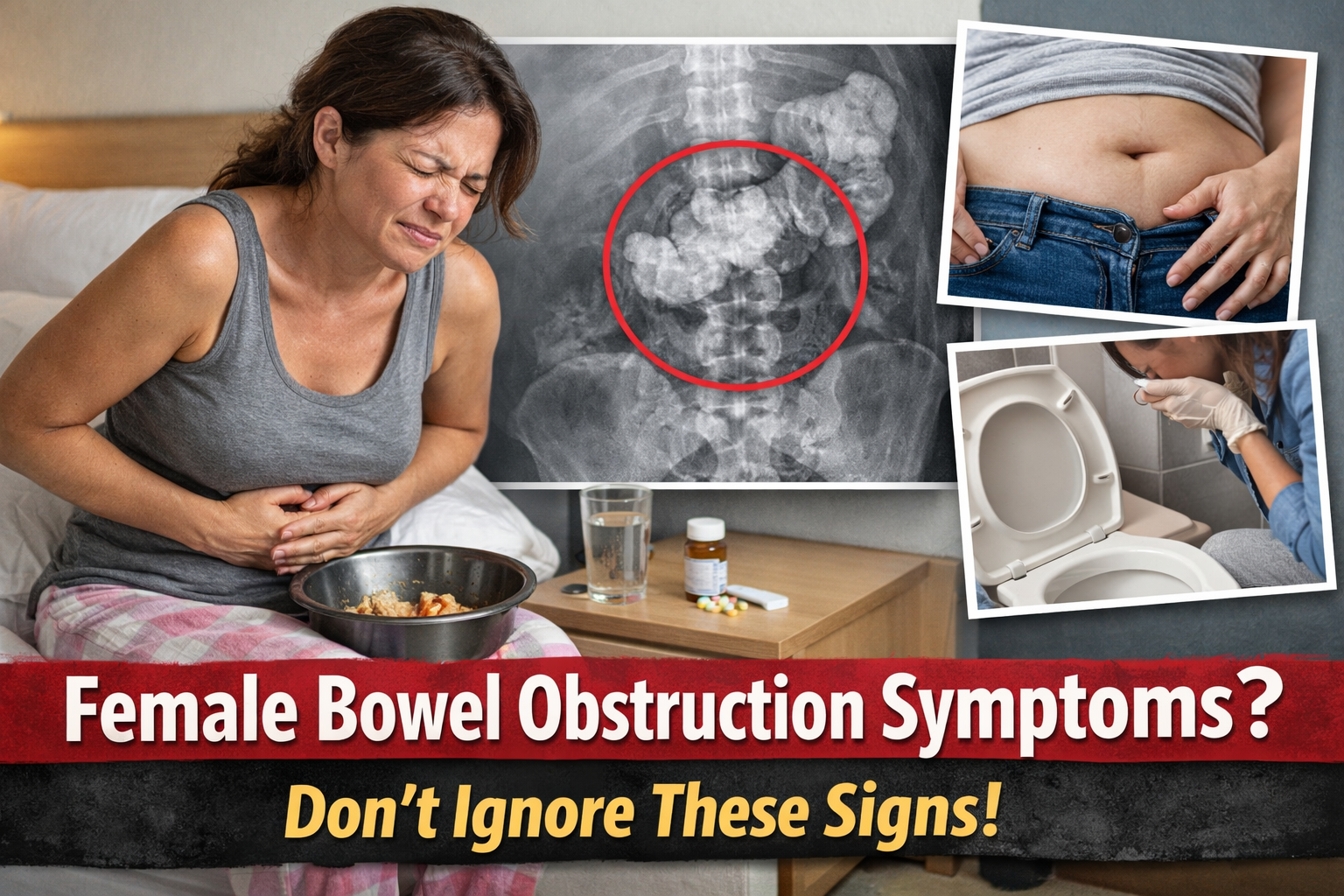
Obstruction often causes the abdomen to feel tight, puffy, or distended. Some women notice they cannot button pants that fit the day before. Others say their belly feels hard, stretched, or unusually full even when they have barely eaten.
Bloating matters because it reflects buildup of gas and fluid above the blockage. In partial obstruction it may come and go. In more severe obstruction it may become pronounced and painful. If the abdomen is getting larger while nausea and pain are worsening, that is not something to “sleep off.”
Nausea and vomiting
Nausea is common, and vomiting is especially concerning when it keeps happening or prevents fluids from staying down. Vomiting may occur earlier and more prominently with small bowel obstruction. Repeated vomiting can quickly lead to dehydration, weakness, dizziness, dark urine, and a racing heart.
For women, this symptom is easy to misread. It may be blamed on a virus, pregnancy, medication side effects, or “something I ate.” But vomiting that comes with significant abdominal pain, swelling, or constipation deserves faster action than isolated nausea alone.
Inability to pass gas
This is one of the most helpful practical warning signs. Many people focus only on whether they had a bowel movement, but not being able to pass gas can be a major clue that the bowel is not moving normally. In a complete blockage, gas may stop passing altogether.
A woman may say, “I feel like everything is stuck.” That feeling should be taken seriously, especially when paired with cramping pain and bloating. This combination is much more concerning than ordinary constipation alone.
Constipation or inability to have a bowel movement
Many women first search this topic because they think they are severely constipated. Obstruction can indeed cause constipation or the inability to have a bowel movement. The difference is that bowel obstruction often brings additional red flags such as vomiting, worsening distention, severe pain, and inability to pass gas.
Ordinary constipation is more likely to involve hard or lumpy stools, straining, and a feeling of incomplete emptying. Obstruction is more concerning when the whole digestive system seems to be shutting down rather than simply moving slowly.
Diarrhea can still happen
This surprises many people. A partial obstruction can still cause diarrhea or loose stools. That is one reason women sometimes dismiss the possibility of obstruction if they are not fully constipated. Loose stool does not always mean the bowel is clear. Some liquid stool may move around a partial blockage.
Loss of appetite and early fullness
Women with bowel obstruction often say they do not want food, or they feel full after only a few bites. The abdomen may already feel under pressure, and eating can make cramping or nausea worse. This symptom may sound minor, but when it appears with pain and distention it fits the overall obstruction pattern.
Dehydration and feeling generally unwell
As fluid becomes trapped in the bowel and vomiting continues, dehydration can develop. Signs may include dark urine, dry mouth, dizziness, weakness, fast heartbeat, and feeling faint. Some women describe this as feeling “drained,” shaky, or too sick to function normally.
Fever, fast heartbeat, or worsening constant pain
These are red flags because they may suggest complication rather than simple blockage alone. If the bowel loses blood flow, becomes inflamed, or develops infection or perforation, symptoms can escalate quickly. Fever, a rising pulse, severe tenderness, confusion, or pain that no longer comes and goes should be treated as emergency signs.
Symptoms that may blur the picture in women
Some women also have pelvic symptoms at the same time. They may wonder whether pain is related to a cyst, endometriosis, a gynecologic problem, or pregnancy. In early pregnancy especially, crampy abdominal pain and vomiting can confuse the picture. That is why women should mention missed periods, pregnancy status, abnormal bleeding, prior pelvic surgery, history of endometriosis, and pelvic masses when seeking care.
Risk Factors
Several factors raise the chance that female bowel obstruction symptoms may reflect a real obstruction rather than simple digestive upset.
Common risk factors include:
Prior abdominal or pelvic surgery, especially open surgery
Hysterectomy, ovarian surgery, cesarean delivery, or colorectal surgery
Known abdominal adhesions
Hernia
Crohn’s disease or other inflammatory bowel disease
Abdominal or pelvic cancer
Radiation to the abdomen or pelvis
Severe chronic constipation
Known endometriosis involving the bowel or pelvis
Pregnancy in a woman with prior abdominal or pelvic surgery
Risk factors do not diagnose obstruction by themselves. They simply lower the threshold for taking symptoms seriously. A woman with no prior surgeries can still develop an obstruction, but a woman with prior pelvic surgery plus vomiting and inability to pass gas deserves especially prompt attention.
Diagnosis Process
Doctors usually begin with the history. They want to know when symptoms started, whether pain is crampy or constant, whether vomiting is ongoing, whether gas or stool is still passing, and whether there is a history of abdominal or pelvic surgery, cancer, inflammatory bowel disease, hernia, or pregnancy. In women, menstrual history, pregnancy status, and relevant gynecologic history can also matter because they affect the list of possible causes.
A physical exam follows. The abdomen may be swollen, tender, or firm. A clinician may listen for bowel sounds and look for clues such as a hernia or signs of dehydration. Blood tests can help check hydration status, electrolyte problems, infection, and how severe the illness may be.
Imaging is often central to diagnosis. Abdominal x-rays may be used, but CT is generally more detailed and more likely to show the presence, location, cause, and severity of intestinal obstruction. For suspected acute small-bowel obstruction, CT of the abdomen and pelvis with IV contrast is listed as usually appropriate in radiology guidance. In special situations, including pregnancy or certain lower-radiation concerns, clinicians may adjust the imaging plan.
This is why self-diagnosis is so unreliable. The symptoms may tell you that something is wrong, but imaging and examination are often what reveal whether the problem is a partial blockage, complete blockage, adhesion, tumor, hernia, volvulus, or another condition entirely.
Living With Female Bowel Obstruction Symptoms
If you have ever had a bowel obstruction, daily life afterward may feel more cautious for a while. Many women become more alert to bloating, bowel pattern changes, abdominal pain, and tolerance of meals. That can be emotionally exhausting, especially if the cause was adhesions or another condition that can recur.
Real-life management depends on the cause and what your treating team recommends. Some women recover and go back to normal eating fairly quickly. Others may need a temporary diet adjustment, careful hydration, follow-up appointments, or ongoing management of a condition such as Crohn’s disease, cancer, or postoperative adhesions. The hardest part is often learning not to ignore symptom patterns that once seemed harmless.
It can also affect work, travel, childcare, and sleep. A woman recovering from surgery or hospitalization may worry about eating out, getting stuck far from a hospital, or mistaking a recurrence for ordinary constipation. Keeping a short written record of symptoms, bowel movements, vomiting episodes, and prior surgery history can make future care faster and clearer. This is a practical step, not a cure, but it can make emergency evaluation more efficient.
Prevention Strategies
Not all bowel obstructions can be prevented. Scar tissue, tumors, congenital issues, and some inflammatory problems are not things a person can fully control. That said, women who know they have risk factors can take practical steps that may support earlier recognition and better long-term management.
Practical prevention and risk-reduction habits
Know your surgical history and keep it written down.
Tell new clinicians about prior abdominal or pelvic surgery.
Do not normalize repeated episodes of severe cramping, vomiting, or inability to pass gas.
Manage chronic constipation early rather than waiting for it to become severe.
Follow treatment plans for Crohn’s disease or other chronic bowel conditions.
Keep follow-up appointments if you have a known hernia, pelvic mass, or cancer history.
After surgery, follow recovery instructions closely and ask what symptoms should trigger urgent reassessment.
During pregnancy, take severe abdominal pain, persistent vomiting, constipation with distention, or inability to pass gas seriously rather than assuming it is a routine pregnancy symptom.
It is also worth noting what prevention does not mean. It does not mean trying unsafe home treatment when symptoms are severe. It does not mean forcing food, fiber, laxatives, or enemas on yourself when you may have a true obstruction. When obstruction is possible, the priority is medical assessment, not aggressive self-treatment. This caution is especially important if there is vomiting, strong pain, or no gas passing.
Practical Examples
A simple red-flag checklist
Seek urgent medical care right away if you have:
Severe cramping or constant abdominal pain
A swollen or increasingly distended abdomen
Repeated vomiting
Inability to pass gas
Inability to have a bowel movement together with worsening pain or bloating
Fast heartbeat, dizziness, dark urine, or signs of dehydration
Fever or feeling suddenly much sicker
Symptoms during pregnancy that are severe, persistent, or clearly worsening
A practical “do and don’t” list
Do:
Stop minimizing severe symptoms.
Keep track of when you last passed gas or stool.
Note your vomiting frequency and whether fluids stay down.
Mention past surgeries, endometriosis, Crohn’s disease, cancer, pregnancy, or hernia history.
Go to urgent care or the emergency department if symptoms are escalating.
Don’t:
Assume diarrhea rules out obstruction.
Keep eating large meals through worsening nausea and pain.
Depend on laxatives when you have severe abdominal pain and vomiting.
Ignore inability to pass gas.
Explain away severe symptoms as “just period pain” without evaluation.
Example scenario 1
A 42-year-old woman with two prior cesarean deliveries develops crampy abdominal pain, nausea, and increasing bloating over eight hours. She has only passed a tiny amount of stool and realizes she has stopped passing gas. At first she thinks it is constipation, but the combination of prior pelvic surgery, worsening distention, and no gas makes obstruction more concerning than ordinary constipation.
Example scenario 2
A 34-year-old woman with known endometriosis has pelvic pain from time to time, so she nearly ignores a new episode. This time, however, the pain is more severe, she vomits twice, and her abdomen feels unusually tight and swollen. The fact that the pattern is different from her usual symptoms is an important clue that she should not rely on self-treatment alone.
Example scenario 3
A pregnant woman in her third trimester develops colicky abdominal pain, vomiting, and constipation. Because pregnancy itself can cause nausea and bowel changes, she hesitates. But severe symptoms in pregnancy can still reflect bowel obstruction and should be assessed quickly, especially with a history of prior abdominal surgery.
What to tell a clinician
When you seek care, it helps to say:
When the pain started and whether it comes in waves or stays constant
Whether you are vomiting and whether you can keep liquids down
When you last passed gas
When you last had a bowel movement
Any prior abdominal or pelvic surgeries
Whether you might be pregnant
Whether you have endometriosis, Crohn’s disease, hernia, cancer, or chronic constipation
Conclusion
Female bowel obstruction symptoms usually include crampy abdominal pain, bloating, nausea, vomiting, constipation, and trouble passing gas or stool. What makes the topic different in women is not that the symptom pattern is completely unique, but that the causes and diagnostic context may involve prior pelvic surgery, adhesions, pregnancy, endometriosis, pelvic disease, or abdominal and pelvic cancers.
The most practical takeaway is simple: if abdominal pain is strong, the belly is swelling, vomiting is ongoing, or gas and stool stop passing, do not treat it like routine constipation. Prompt medical evaluation can identify the cause, guide treatment, and reduce the risk of serious complications.