Diverticula, Diverticulosis, and Diverticulitis: What the Terms Mean and Why the Difference Matters
When people hear the words diverticula, diverticulosis, and diverticulitis, they often assume they all mean the same thing. They do not. The terms are closely related, but each describes a different stage or aspect of the same colon condition. Understanding the distinction can make medical advice easier to follow and help people know when symptoms are minor, when they need evaluation, and when they may signal something more urgent.
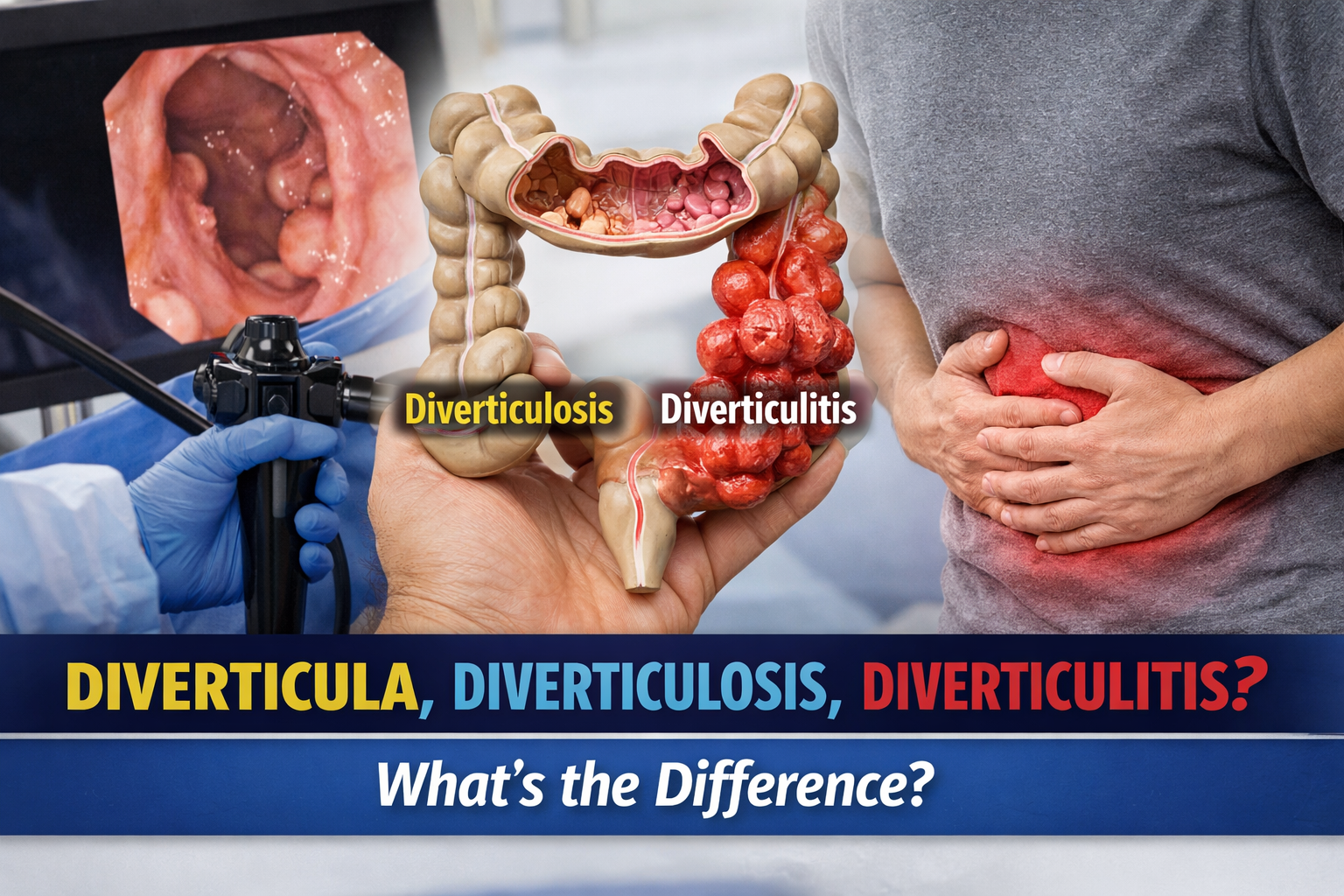
In simple terms, diverticula are small pouches that bulge outward through weak spots in the wall of the colon. Diverticulosis means a person has these pouches. Diverticulitis means one or more of those pouches have become inflamed, and sometimes infected. Many people have diverticula and never develop serious problems, but when inflammation starts, symptoms can become painful and occasionally dangerous.
What are diverticula?
A diverticulum is a pouch that forms in the wall of the digestive tract. More than one pouch is called diverticula. These pouches can occur in different parts of the gut, but in everyday practice they are most often discussed in the colon, especially the lower part of the large intestine. In the colon, they commonly form where pressure inside the bowel pushes the inner lining outward through weaker areas of the wall.
Most colonic diverticula do not cause symptoms by themselves. Many people only learn they have them after a colonoscopy or CT scan done for another reason. That is one reason the condition can feel confusing: a person can have structural changes in the colon without feeling sick at all.
What is diverticulosis?
Diverticulosis simply means that diverticula are present. It is not automatically an illness in the everyday sense. In many people, it is more of a finding than a problem. Diverticulosis becomes more common with age, and it is frequently seen during routine colonoscopy exams.
Although diverticulosis often causes no symptoms, some people report chronic lower abdominal discomfort, bloating, constipation, diarrhea, or cramping. These symptoms can overlap with other common digestive conditions, especially irritable bowel syndrome, so symptoms alone do not prove that diverticula are the cause. A proper medical evaluation matters when digestive symptoms keep returning.
What is diverticulitis?
Diverticulitis happens when at least one diverticulum becomes inflamed. In some cases, infection is also involved. This is the term that usually matters most in real life because it is the stage associated with acute symptoms, medical treatment, and possible complications.
Unlike uncomplicated diverticulosis, diverticulitis can cause steady abdominal pain, often on the lower left side, along with fever, nausea, changes in bowel habits, tenderness, and reduced appetite. Some people develop only a few symptoms, while others become much sicker. Severe cases can lead to abscess, perforation, fistula, blockage, or bleeding.
The difference in one quick view
The easiest way to keep the terms straight is this:
Diverticula = the pouches
Diverticulosis = having the pouches
Diverticulitis = inflamed or infected pouches causing illness
That distinction matters because treatment and urgency are very different. Someone with incidental diverticulosis may only need routine guidance about diet and lifestyle. Someone with diverticulitis may need medical assessment, imaging, antibiotics in selected cases, dietary modification during recovery, or even hospitalization if the episode is severe or complicated.
Why do diverticula form?
The exact cause is not fully understood, but experts believe diverticula form when pressure inside the colon pushes against weaker areas of the wall over time. They are especially common in the sigmoid colon, the lower part of the colon where pressure can be higher. Age plays a major role, but it is not the only factor.
Research and major medical sources also point to broader risk patterns that may influence diverticular disease, including low fiber intake, inactivity, smoking, obesity, and some medication exposures. Not every person with these risk factors will develop diverticulitis, but they are associated with higher odds of problems over time.
Common symptoms: when people notice nothing and when they do
Most people with diverticulosis have no symptoms at all. That is why it is commonly discovered by accident during tests done for another reason.
When symptoms do happen without clear inflammation, they may include:
bloating
cramping
constipation
diarrhea
lower abdominal discomfort
When diverticulitis develops, symptoms are more concerning. Warning signs may include:
constant abdominal pain, often in the lower left abdomen
fever
nausea or vomiting
tenderness over the abdomen
changes in bowel movements
feeling unwell or unable to eat normally
Risk factors for diverticulitis
Not everyone with diverticulosis gets diverticulitis. In fact, many never do. But several factors are linked to higher risk, including:
increasing age
obesity
cigarette smoking
physical inactivity
lower-fiber eating patterns
certain medicines such as NSAIDs, steroids, or opioids
There is also an important myth worth clearing up: nuts, seeds, and popcorn are not proven causes of diverticulitis. Older advice often told people to avoid them, but current evidence does not support that blanket rule. In practice, many clinicians now focus much more on overall dietary pattern, fiber intake, hydration, exercise, and individualized tolerance.
How doctors diagnose it
Diverticulosis is often found during colonoscopy or CT imaging done for another reason. Diverticulitis is more likely to be evaluated when someone comes in with pain, fever, or bowel changes. In those situations, doctors may use a physical exam, blood work, and CT imaging to look for inflammation or complications.
After a diverticulitis episode, some patients are advised to have a follow-up colonoscopy, often after recovery, especially if the episode was complicated or if they are not up to date on colon evaluation. The exact timing depends on severity and prior testing history.
What treatment usually looks like
For uncomplicated diverticulosis without symptoms, treatment often centers on long-term prevention and gut health, not aggressive intervention. That may include increasing dietary fiber over time, staying hydrated, exercising regularly, and reducing smoking risk.
For diverticulitis, treatment depends on how severe the case is. Mild cases may sometimes be treated at home with close medical guidance. More serious cases may require antibiotics, IV fluids, drainage of an abscess, or surgery for complications such as perforation, fistula, obstruction, or repeated severe episodes.
During recovery from an acute flare, diet advice may change temporarily. Some people are told to use a clear liquid or low-fiber approach for a short time, then gradually return to a higher-fiber pattern once symptoms improve. Long term, a fiber-rich diet is commonly recommended to help lower future risk.
What you can do to lower risk
You cannot make existing diverticula disappear, but you can still support colon health and potentially lower the chance of future inflammation. Helpful habits include:
eating more fiber from fruits, vegetables, legumes, and whole grains
drinking enough fluids
staying physically active
maintaining a healthy weight
not smoking
discussing regular NSAID use or other medicines with your clinician if appropriate
These steps are not just “digestive tips.” They are part of a broader pattern linked with better overall metabolic and cardiovascular health too, which matters because chronic inflammatory and lifestyle-related conditions often overlap.
When to seek medical care right away
Urgent medical attention is important if you have symptoms that suggest an acute attack or complication, especially:
severe or worsening abdominal pain
fever
persistent vomiting
inability to keep fluids down
dizziness or weakness
rectal bleeding
signs of infection or sepsis such as confusion, fast heart rate, or marked weakness
Diverticulitis can range from mild to serious. It is not something to self-diagnose based only on internet reading if symptoms are intense or new.
The bottom line
The three terms describe a progression, not three unrelated conditions. Diverticula are the pouches. Diverticulosis means the pouches are present, often without symptoms. Diverticulitis means inflammation has developed and may require prompt treatment. Most people with diverticulosis do well, but knowing the difference helps you respond appropriately if pain, fever, bleeding, or bowel changes appear.
FAQ
Is diverticulosis the same as diverticulitis?
No. Diverticulosis means you have diverticula. Diverticulitis means one or more of them are inflamed, sometimes with infection.
Can diverticulosis cause symptoms?
Sometimes, but many people have no symptoms at all. Bloating, cramping, constipation, diarrhea, and abdominal discomfort can occur, though those symptoms can overlap with other digestive conditions.
Do nuts and seeds cause diverticulitis?
Current evidence does not support the old idea that nuts and seeds should automatically be avoided to prevent diverticulitis.
Can diverticula go away?
Existing diverticula generally do not disappear. The goal is usually to prevent symptoms, complications, and future attacks.
Do I need a colonoscopy after diverticulitis?
Some people do, especially after a complicated episode or if they are not current on colon screening. Your clinician decides based on your history and the severity of the attack.