
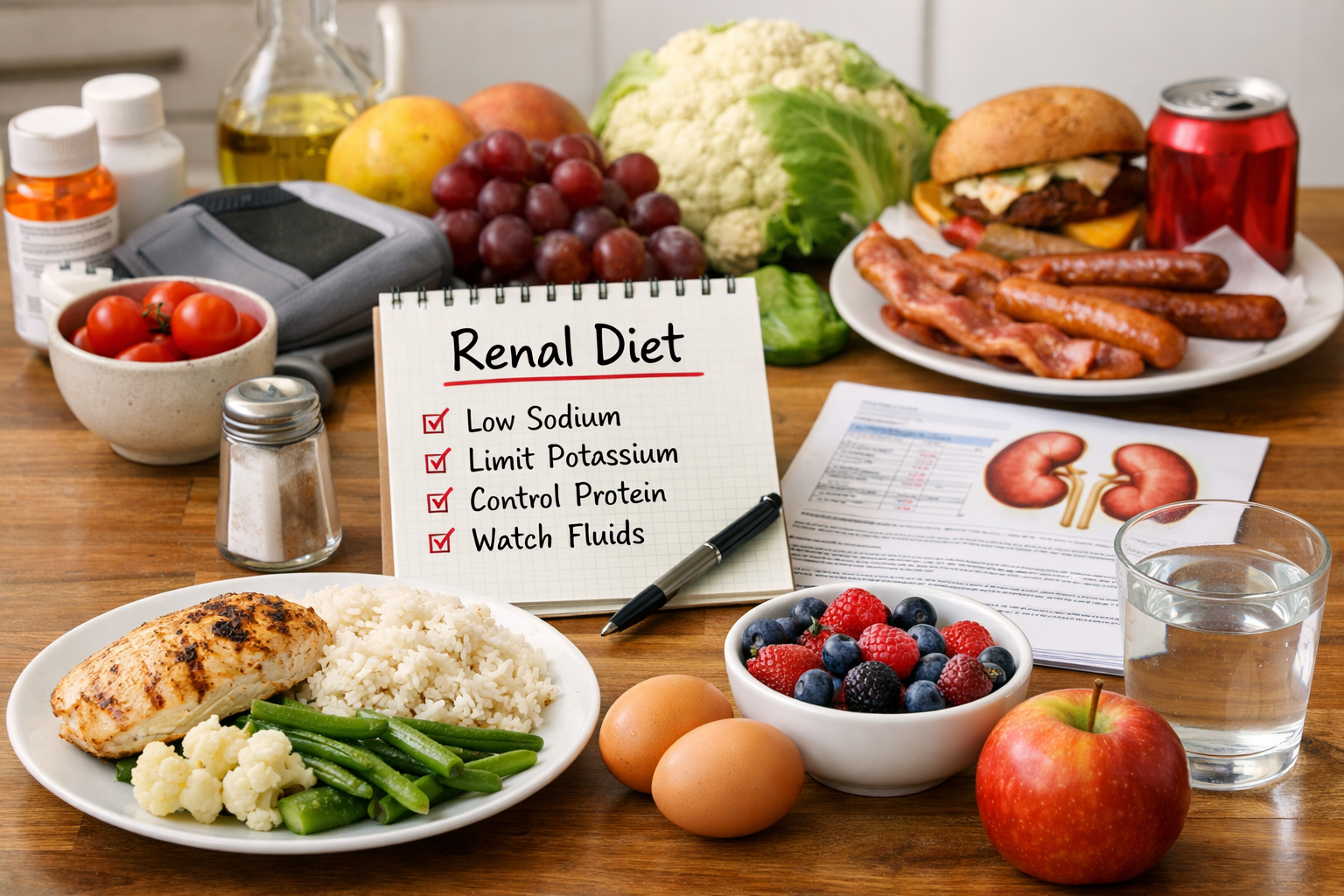
Renal Diet Guide: What to Eat for Chronic Kidney Disease, Meal Ideas, and Practical Kidney Health Tips
When people hear the phrase renal diet, it can sound intimidating, as if eating with kidney disease means giving up every familiar food. In reality, a renal diet is less about a single rigid menu and more about a tailored eating pattern designed to reduce stress on the kidneys while still meeting the body’s nutrition needs. For some people, that means watching sodium more closely. For others, the bigger issues may be protein, potassium, phosphorus, or fluid intake. The right approach depends on kidney function, lab results, symptoms, treatment stage, and whether dialysis is involved.
This matters because the kidneys do much more than make urine. They help remove waste from the blood, regulate fluid balance, support blood pressure control, and help maintain healthy mineral levels. When kidney function declines, the body may have a harder time keeping sodium, potassium, phosphorus, and fluid in balance. That is one reason food choices can become a central part of treatment.
A good renal diet is not one-size-fits-all. Someone with early chronic kidney disease may only need a heart-healthy, lower-sodium eating pattern, while a person with more advanced CKD or kidney failure may need tighter limits on potassium, phosphorus, protein, or fluids. The safest plan is always the one built around current labs and medical advice, ideally with help from a renal dietitian.
What is a renal diet?
A renal diet, also called a kidney diet, is an eating plan designed to help people with reduced kidney function avoid buildup of waste products, extra fluid, and certain minerals that the kidneys may no longer manage well. Depending on the situation, the diet may focus on limiting sodium, potassium, phosphorus, and sometimes protein or fluids.
The goal is not simply restriction for the sake of restriction. The real aim is to help reduce complications, support treatment, protect overall health, and maintain enough calories and nutrients to prevent muscle loss and poor nutrition. This balance is especially important because overly restrictive eating can create new problems if the person stops eating enough.
Why diet becomes more important in chronic kidney disease
In CKD, the kidneys gradually lose some of their ability to filter the blood and regulate fluid and minerals. As that happens, substances such as potassium and phosphorus may rise, sodium can worsen fluid retention and blood pressure, and protein waste products may become harder for the body to clear.
That does not mean every person with CKD needs every restriction. In fact, some people do not need tight limits on potassium or phosphorus unless blood tests show a problem. This is one of the biggest reasons generic “kidney diet” advice can be misleading. The best renal diet is shaped by lab trends, stage of disease, medications, and whether the person is on dialysis.
The main parts of a renal diet
1. Sodium control
For many people with kidney disease, sodium is one of the first nutrition targets. Too much sodium can increase thirst, worsen fluid retention, and raise blood pressure. Mayo Clinic notes that people with kidney disease are often advised to keep sodium to around 2,000 milligrams a day.
In real life, sodium reduction usually means cutting back on:
packaged meals
deli meats and processed meats
canned soups
salty sauces and seasoning blends
fast food and restaurant meals
chips, crackers, and other salty snacks
Home cooking helps because it gives you more control over how much salt goes into your food. Flavor can come from lemon juice, garlic, onion, herbs, pepper, vinegar, and salt-free spice blends instead of relying on shaker salt.
2. Protein management
Protein is essential, but the ideal amount changes with kidney disease stage and treatment. In people not on dialysis, protein often needs to be moderated because the kidneys have to process protein waste products. But protein still matters for maintaining muscle, healing, and immune function.
High-quality protein choices are often emphasized, including eggs, fish, poultry, and other lean animal proteins. For people on hemodialysis, protein needs are usually higher, not lower, because dialysis removes some protein and amino acids. That is why renal diet advice can change dramatically once dialysis starts.
3. Potassium awareness
Potassium helps nerves and muscles work properly, including the heart. But when the kidneys cannot remove excess potassium well, levels can rise and become dangerous. Very high potassium can lead to serious heart rhythm problems.
Not everyone with CKD has to avoid potassium-rich foods, but people with elevated lab values may need to limit certain fruits, vegetables, juices, and salt substitutes. Foods commonly watched more closely include bananas, oranges, potatoes, tomatoes, dried fruit, and some nuts and seeds.
4. Phosphorus control
Phosphorus can also build up when kidney function declines. High phosphorus levels can weaken bones and contribute to calcium deposits in blood vessels and other tissues. Added phosphorus in processed foods is especially important because it may be absorbed more readily.
Common high-phosphorus items include many processed meats, cola drinks, dairy-heavy foods, packaged snacks, and foods with ingredient names containing “phos.” Reading labels becomes especially useful here.
5. Fluid intake
Fluid limits are not necessary for everyone with CKD, but they can become important in more advanced disease or kidney failure, especially when urine output falls or swelling becomes a problem. Fluids are not just drinks. Soups, yogurt, gelatin, ice, and watery foods can also count.
What foods are often included in a renal diet?
The best renal diet focuses on foods that fit the person’s lab needs while still making meals satisfying and realistic.
Common kidney-friendlier choices may include:
apples, berries, grapes, peaches, pineapple
cabbage, cauliflower, bell peppers, green beans, onions
white rice, pasta, bread, and other lower-phosphorus refined grains when appropriate
eggs, fish, skinless poultry, and measured portions of lean protein
olive oil and other heart-healthy fats in sensible amounts
This does not mean everyone with CKD should avoid all whole grains, beans, dairy, tomatoes, bananas, or potatoes forever. It means those foods may need to be adjusted based on kidney stage and lab results. A person with normal potassium and phosphorus may have more flexibility than someone with repeated elevations.
Foods often limited or avoided
Many kidney diet restrictions are less about single “bad” foods and more about patterns that repeatedly overload the body with sodium, phosphorus additives, potassium, or excess fluid.
Foods that often need closer attention include:
processed meats such as bacon, sausage, hot dogs, and deli meats
canned soups and instant noodles
fast food and heavily salted restaurant meals
dark colas and foods with phosphate additives
salt substitutes containing potassium
large portions of high-potassium fruits and vegetables, if potassium is high
packaged snack foods and frozen convenience meals
One practical point that gets missed: “low sodium” does not automatically mean “kidney safe.” Some reduced-salt products replace sodium with potassium, which may be a problem for people who need potassium restriction.
Simple meal planning ideas for a renal diet
A renal diet becomes much easier when meals are built from a simple template rather than reinvented from scratch every day.
A practical meal pattern might look like this:
Breakfast: egg scramble with onions and bell peppers, toast, and berries.
Lunch: grilled chicken, white rice, and steamed green beans.
Dinner: baked fish, pasta or rice, cooked cabbage or cauliflower, and a small fruit serving.
Snack ideas: apple slices, crackers in measured portions, rice cakes, or other dietitian-approved options.
Batch cooking can help a lot. Preparing plain chicken, rice, chopped vegetables, and portioned snacks in advance reduces decision fatigue and lowers the odds of reaching for high-sodium convenience food.
Cooking tips that can make a renal diet easier
Some cooking methods can help reduce mineral content in certain vegetables. Boiling vegetables in water may lower potassium, and some guidance also recommends soaking cut vegetables and then cooking them in fresh water for additional reduction in selected foods. This technique is often used for foods like potatoes, though exact benefit varies.
Other useful tips include:
choose fresh or frozen vegetables more often than canned versions
rinse canned foods when appropriate to reduce sodium
ask for sauces and dressings on the side when dining out
avoid seasoning packets unless you know the sodium content
compare labels between brands because mineral additives can vary a lot
Renal diet and diabetes: a common overlap
Many people with CKD also have diabetes, which makes meal planning more complex. In that case, the eating plan has to support both blood sugar control and kidney protection. That may mean paying attention to carbohydrate choices, meal timing, sodium, protein, and specific mineral restrictions at the same time.
This is one situation where professional guidance matters even more, because a food plan that helps blood sugar but is heavy in potassium or phosphorus may not fit the person’s kidney needs.
Why a renal dietitian can make a big difference
A renal diet is one of the clearest examples of why personalized nutrition matters in medicine. National and clinical sources consistently recommend working with a kidney dietitian or renal dietitian because nutrition needs can change over time and may differ widely from one patient to another.
A dietitian can help with:
reading labels
building meal plans around lab values
adjusting protein intake
finding lower-sodium swaps that still taste good
making room for cultural foods and personal preferences
troubleshooting poor appetite or unintended weight loss
Signs your current diet may need review
A person should not try to judge kidney nutrition only by symptoms, because sodium, potassium, and phosphorus problems may not always cause obvious warning signs early on. Still, swelling, rising blood pressure, poor appetite, fatigue, shortness of breath, or concerning lab changes can all be reasons to revisit the meal plan with a clinician. Urgent symptoms such as irregular heartbeat, major weakness, or trouble breathing need prompt medical evaluation.