Hypoglycemia Diet: What to Eat to Help Prevent Low Blood Sugar Episodes
A hypoglycemia diet is not a fad plan or a one-size-fits-all menu. It is a practical way of eating built around one goal: helping keep blood sugar from dropping too low between meals, after exercise, or during the day and night. For many people, that means eating at regular intervals, choosing slower-digesting carbohydrates more often, pairing carbs with protein or fat, and avoiding patterns that trigger sharp rises and falls in glucose. Mayo Clinic notes that low blood sugar can cause symptoms such as shakiness, sweating, dizziness, confusion, and weakness, and it can become serious if not treated promptly.
This matters because “eat less sugar” is not enough advice. Some people develop symptoms a few hours after eating refined carbs. Others run into trouble after skipping meals, drinking alcohol without food, exercising without planning ahead, or taking diabetes medicines that can lower glucose too much. The best diet approach depends on the cause of the lows, how often they happen, whether diabetes medicines are involved, and what your clinician has told you about your own blood sugar targets. NIDDK and the American Diabetes Association define hypoglycemia in many diabetes settings as blood glucose below 70 mg/dL, though symptoms and urgency can vary by person and circumstance.
What is a hypoglycemia diet?
A hypoglycemia diet is an eating pattern designed to reduce rapid blood sugar swings and lower the chance of another drop. In everyday terms, it usually focuses on:
regular meals instead of long gaps without eating
quality carbohydrates instead of mostly refined starches and sugary foods
balanced meals that include carbohydrate, protein, and often healthy fat
planning ahead for exercise, workdays, travel, and nighttime
having fast-acting carbs ready in case symptoms start
For people with reactive hypoglycemia, Mayo Clinic recommends a balanced eating pattern with high-fiber foods, limiting sugary foods and processed simple carbohydrates, especially on an empty stomach, eating smaller meals or snacks about every three hours, and eating food with alcohol if they drink.
Common signs that your eating pattern may be contributing to lows
A person may need to rethink their meal structure if they often notice:
shakiness
sweating
sudden hunger
headache
irritability
lightheadedness
trouble concentrating
weakness
symptoms a few hours after eating sweets or refined carbs
symptoms after skipping meals or after hard activity
These symptoms are common with low blood sugar, though they are not specific to diet alone. If episodes are frequent, severe, or unexplained, it is important to look for the underlying cause rather than trying to self-manage with snacks alone.
The main principles of eating for better blood sugar stability
1. Do not go too long without eating
For many people prone to lows, long gaps between meals are a setup for symptoms. Eating on a consistent schedule can help reduce those dips. Mayo Clinic specifically advises smaller meals and snacks spaced about every three hours for reactive hypoglycemia.
That does not mean everyone must eat constantly. It means your routine should prevent the “I forgot to eat all day and now I feel awful” cycle. A practical pattern for many adults is three meals plus one to three planned snacks, depending on medication use, activity level, and how their body responds.
2. Build meals around slower-digesting carbohydrates
Carbohydrates matter, but the type matters too. Whole grains, beans, lentils, fruit, vegetables, and other fiber-containing carbs usually create a gentler rise in glucose than sugary drinks, candy, white bread, or pastries. Mayo Clinic recommends high-fiber foods such as whole grains, fruits, and vegetables while limiting processed simple carbohydrates.
Better carb choices often include:
oats
brown rice or quinoa
beans and lentils
whole grain bread with good fiber content
apples, berries, pears, citrus
sweet potatoes
non-starchy vegetables with meals
This is less about banning carbs and more about choosing carbs that are less likely to trigger a spike-and-crash pattern.
3. Pair carbs with protein
Carbs eaten alone can move quickly. Carbs eaten with protein tend to be more satisfying and often more stable. The ADA’s meal-planning guidance emphasizes balanced plates with non-starchy vegetables, protein, and quality carbohydrates.
Good pairings include:
apple with peanut butter
Greek yogurt with berries
whole grain toast with egg
hummus with whole grain crackers
beans with brown rice and vegetables
cottage cheese with fruit
This simple habit can make a noticeable difference for people who get shaky a few hours after carb-heavy meals.
4. Include healthy fat, but do not rely on it alone
Healthy fats from nuts, seeds, avocado, olive oil, and fatty fish can make meals more filling and help slow digestion. But fat should support a balanced meal, not replace carbohydrate entirely when your body needs glucose. A low-carb approach that is too aggressive can backfire in some people who are prone to lows, especially if they use glucose-lowering medicines.
5. Limit sugary drinks and highly refined foods as everyday choices
Sugary drinks, sweets, and refined grains can cause fast rises in glucose followed by drops in some people. Mayo Clinic specifically warns against sugary foods and processed simple carbohydrates, especially on an empty stomach, for reactive hypoglycemia.
Foods worth limiting as routine staples include:
soda
energy drinks with sugar
sweet tea and sweet coffee drinks
candy
pastries
white bread or white rice in large portions without protein or fiber
sugary breakfast cereals
These foods may still fit occasionally, but they tend to work better when eaten with a full meal rather than by themselves.
Best foods for a hypoglycemia-friendly eating plan
The most helpful foods are usually the ones that combine staying power with convenience.
Smart carbohydrate choices
steel-cut oats or old-fashioned oats
beans, chickpeas, lentils
whole grain bread or wraps
brown rice, quinoa, barley
fruit such as apples, berries, oranges, pears
sweet potatoes
vegetables of all kinds
Helpful protein choices
eggs
Greek yogurt or unsweetened yogurt
chicken or turkey
fish
tofu, tempeh, edamame
cottage cheese
nuts, seeds, nut butter
Helpful fat choices
avocado
olive oil
nuts
seeds
natural nut butters
salmon or sardines
The goal is not perfection. The goal is to make your meals steadier, more predictable, and less likely to set off symptoms later.
Foods that may make hypoglycemia harder to manage
Some foods are not “bad,” but they can be unhelpful when lows are frequent:
sweet foods eaten by themselves on an empty stomach
large servings of refined starch without protein
alcohol without food
skipping breakfast, then overeating later
high-sugar snacks used as routine fuel instead of emergency treatment
Alcohol deserves special caution. Mayo Clinic advises eating food with alcohol rather than drinking on an empty stomach.
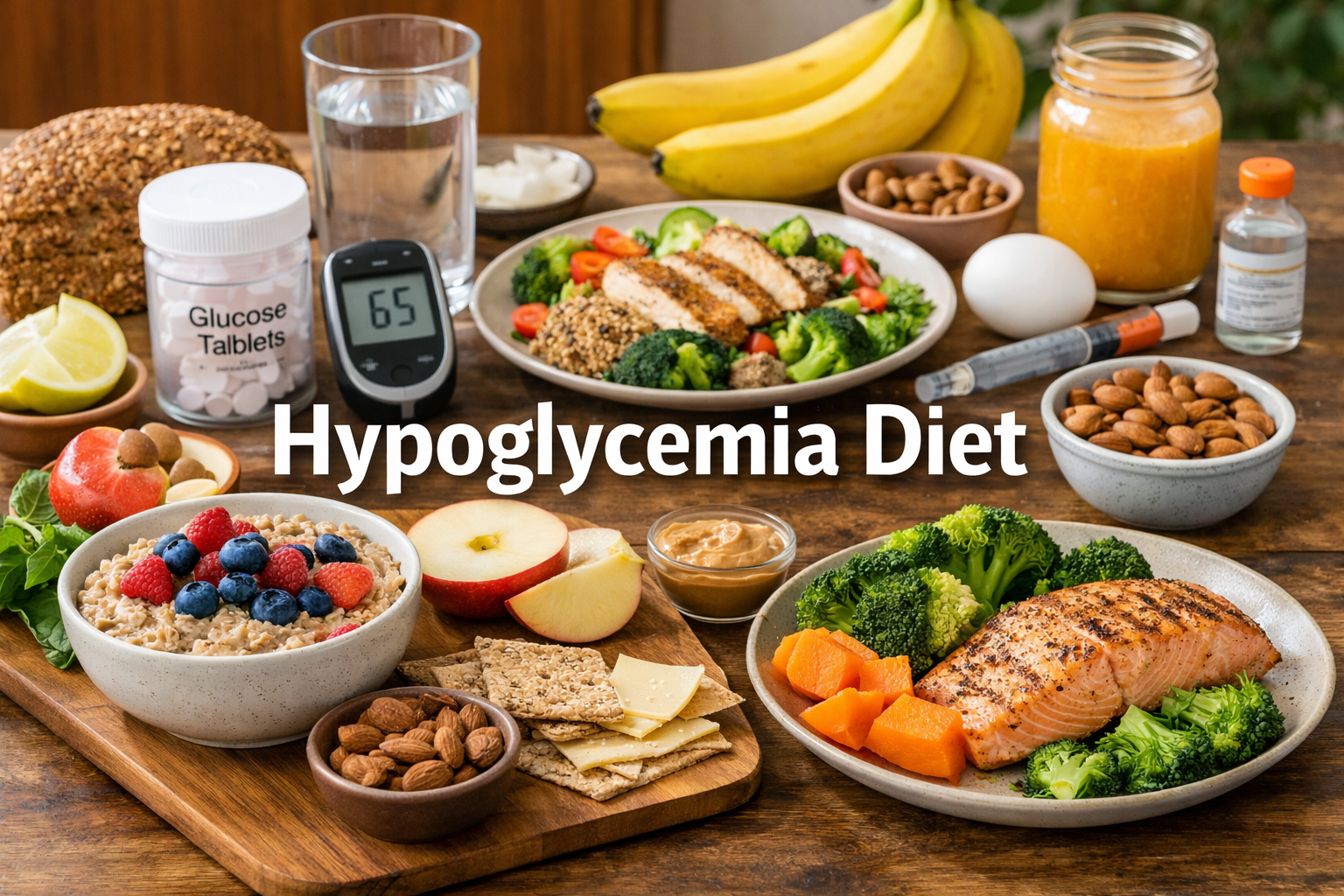
What a day of eating might look like
A realistic hypoglycemia-friendly day does not need to be complicated.
Breakfast
Oatmeal with chia seeds and berries, plus Greek yogurt or eggs on the side.
Mid-morning snack
Apple slices with peanut butter.
Lunch
Grilled chicken, brown rice or quinoa, and a large serving of vegetables with olive oil.
Afternoon snack
Hummus with carrots and whole grain crackers, or yogurt with nuts.
Dinner
Salmon, roasted sweet potato, and broccoli.
Evening snack, if needed
A small snack that combines carb and protein, such as whole grain crackers with cheese or half a banana with nut butter.
Not everyone needs all these eating times. The right structure depends on your symptoms, schedule, and medications.
How to treat a blood sugar low when it happens
A prevention-focused diet is important, but it is different from emergency treatment. When blood sugar is actually low, the priority is fast-acting carbohydrate, not a “healthy snack.” NIDDK, CDC, ADA, and Mayo Clinic all support the basic 15-15 approach: take 15 to 20 grams of fast-acting carbohydrate, wait 15 minutes, and recheck if possible. If blood sugar is still low, repeat.
Examples of fast-acting carbs include:
glucose tablets or glucose gel
4 ounces of regular juice
4 to 6 ounces of regular soda
1 tablespoon of sugar or honey
hard candy that provides the right carb amount
After the low is corrected, CDC and NIDDK advise following up with a snack or meal that includes carbohydrate plus protein if the next meal is not soon.
One important detail: foods high in fat, such as chocolate, are not the best first choice for treating an acute low because they may not raise blood sugar as quickly. Mayo Clinic says pure glucose is preferred and notes that higher-fat foods work more slowly.
Diet tips for reactive hypoglycemia
If symptoms often happen two to four hours after meals, these habits may help:
do not eat large carb-heavy meals by themselves
choose higher-fiber carbs more often
include protein each time you eat
avoid sugary drinks on an empty stomach
consider smaller meals spaced through the day
pay attention to which meals trigger symptoms
This pattern lines up closely with Mayo Clinic’s advice for reactive hypoglycemia.
Diet tips if you have diabetes or take glucose-lowering medicine
This is the group where caution matters most. If you use insulin or medicines that can lower blood sugar, your meal timing should match your treatment plan. Skipping meals, delaying meals, drinking alcohol without food, or exercising without adjusting food or medicine can increase risk. Mayo Clinic and NIDDK both stress the importance of treating lows promptly and working with your healthcare team to prevent recurrence.
In this setting, a hypoglycemia diet is not a replacement for medication review. Repeated lows may mean the medicine plan, dose, timing, or exercise strategy needs adjustment.
Exercise, sleep, and planning matter too
Food is only part of the picture. Physical activity can lower blood sugar during or after exercise. Poor sleep, irregular schedules, and heavy alcohol intake can also make patterns harder to predict. Mayo Clinic notes that some people benefit from tools such as frequent glucose checks or continuous glucose monitoring when lows are a concern.
Helpful habits include:
carrying glucose tablets or another fast-acting carb
not working out on an empty stomach if that triggers symptoms
packing balanced snacks for work or travel
noticing whether nighttime or early-morning symptoms are happening
keeping a simple log of symptoms, meals, timing, and activity
When to get medical help
Do not assume every episode is “just because I did not eat enough.” Medical evaluation is important when:
symptoms are severe
lows are frequent or unexplained
you faint, have seizures, or cannot safely self-treat
you have diabetes and lows keep happening
you do not take diabetes medicine but still seem to have recurrent hypoglycemia
symptoms happen at night or interfere with driving, work, or daily life
Severe hypoglycemia is an emergency. ADA notes that severe low blood glucose requires help from others to treat.
Frequently asked questions
Is sugar bad if I have hypoglycemia?
Not exactly. Fast sugar is useful when you are actively having a low. But using sweets and sugary drinks as routine everyday fuel can worsen blood sugar swings in some people.
Can I still eat fruit?
Yes. Fruit can fit well in a hypoglycemia-friendly diet, especially when paired with protein or fat, such as yogurt, nuts, or nut butter. Mayo Clinic’s reactive hypoglycemia guidance supports balanced meals that include fruits and other high-fiber foods.
Is breakfast important?
Often, yes. For people who feel shaky late in the morning or who tend to go too long without eating, breakfast can help prevent an early drop and reduce overeating later.
Are small frequent meals always necessary?
Not for everyone. But if long meal gaps trigger symptoms, smaller meals or planned snacks may help. This is especially true in reactive hypoglycemia or when medicine timing increases risk.
The bottom line
The best hypoglycemia diet is usually simple, not extreme: eat on a regular schedule, choose higher-fiber carbohydrates more often, pair carbs with protein, limit sugary foods as everyday stand-alone snacks, and keep fast-acting carbs on hand for emergencies. For some people, those changes make a major difference. For others, repeated lows are a signal that the underlying cause needs medical attention, especially if diabetes medications are involved.