Pulmonary Embolism: Symptoms, Risk Factors, Warning Signs, and When to Get Emergency Help
Pulmonary Embolism: Symptoms, Risk Factors, Warning Signs, and When to Get Emergency Help
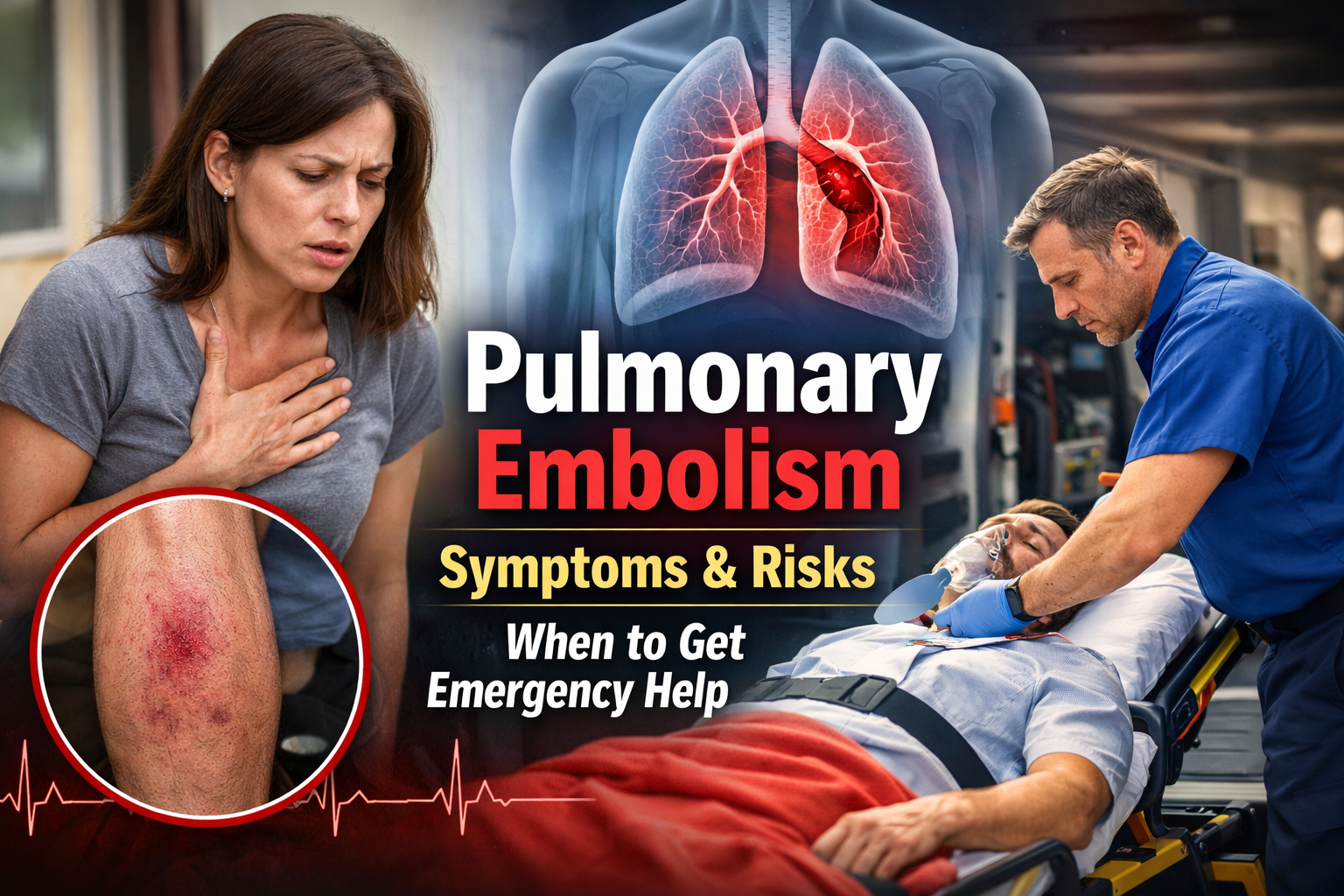
Pulmonary embolism, often shortened to PE, is a serious medical emergency that happens when a clot blocks blood flow in an artery of the lungs. In many cases, the clot starts in a deep vein in the leg or pelvis, then breaks loose and travels to the lungs. That is why pulmonary embolism and deep vein thrombosis, or DVT, are often discussed together under the broader term venous thromboembolism (VTE).
What makes PE so dangerous is how quickly it can interfere with oxygen exchange and strain the right side of the heart. Some people develop sudden shortness of breath, chest pain, and a racing heartbeat within minutes. Others may have milder symptoms at first, or even no obvious warning signs until the situation becomes severe. Because treatment can be life-saving, suspected pulmonary embolism should never be treated as something to “watch and wait.”
This guide explains what pulmonary embolism is, what symptoms to watch for, who is most at risk, how it relates to DVT, and when symptoms mean you need emergency care right away.
What is a pulmonary embolism?
A pulmonary embolism is a blockage in a lung artery, most often caused by a blood clot. The most common pathway is this: a clot forms in a deep vein, usually in the leg, thigh, or pelvis, then part of that clot travels through the bloodstream to the lungs. Once there, it can block blood flow and make it harder for the body to get enough oxygen.
Not every PE is the same. Some clots are relatively small and affect a smaller branch of the pulmonary arteries. Others are large enough to cause a sharp drop in oxygen levels, low blood pressure, fainting, or collapse. A very large pulmonary embolism can become life-threatening in a short period of time.
Why pulmonary embolism is so dangerous
The lungs are responsible for moving oxygen into the blood. When a clot blocks part of the pulmonary circulation, the affected area cannot exchange gases normally. At the same time, the right side of the heart may have to push harder to move blood through narrowed or blocked arteries. In severe cases, this can lead to right heart strain, dangerously low blood pressure, shock, or sudden death.
This is also why PE symptoms can overlap with other emergencies such as a heart attack, severe pneumonia, or a collapsed lung. The symptoms are not always specific, but the stakes are high enough that prompt evaluation matters.
Common pulmonary embolism symptoms
Pulmonary embolism can present in different ways, but several symptoms come up again and again in major medical sources.
1. Sudden shortness of breath
This is one of the most common symptoms. Breathing may feel harder all of a sudden, even at rest, or the person may notice they become unusually breathless with minimal effort. NHLBI notes that symptoms can come on within seconds to minutes, but in some people they build more gradually over days to weeks.
2. Chest pain, especially pain that worsens with breathing
Pulmonary embolism often causes sharp chest pain that gets worse when taking a deep breath, coughing, or moving. This type of pain is often described as pleuritic chest pain. It is different from the classic crushing pressure of some heart attacks, but both can be emergencies.
3. Rapid breathing
A person with PE may start breathing faster than usual. This can happen because the body is trying to compensate for reduced oxygen exchange in the lungs.
4. Fast heart rate
A racing or pounding heartbeat can happen as the heart tries to move blood through the lungs more effectively. A faster-than-normal or irregular heartbeat is listed by CDC as a warning sign that needs prompt attention.
5. Cough, sometimes with blood
Some people with pulmonary embolism develop a cough. In some cases, the cough may produce blood or blood-streaked mucus. Coughing up blood is especially concerning when it appears with shortness of breath or chest pain.
6. Lightheadedness, dizziness, or fainting
If the embolism is significantly affecting circulation, the person may feel weak, faint, or may actually pass out. Fainting or near-fainting can point to a more dangerous PE and should be taken very seriously.
Severe warning signs that need emergency help now
Call emergency services or go to the nearest emergency department right away if symptoms suggest PE, especially if they include:
sudden trouble breathing
chest pain that worsens with breathing or coughing
coughing up blood
fainting, collapse, or near-fainting
very low blood pressure symptoms such as confusion, profound weakness, or feeling like you may pass out
bluish lips or skin, which can suggest low oxygen
CDC specifically advises getting immediate medical help for PE warning signs such as difficulty breathing, chest pain that worsens with a deep breath or cough, coughing up blood, or lightheadedness and fainting.
The link between DVT and pulmonary embolism
Pulmonary embolism and deep vein thrombosis are closely connected. A DVT is a clot in a deep vein, usually in the lower leg, thigh, or pelvis. A PE can happen when part of that clot breaks off and travels to the lungs. That is why preventing, recognizing, and treating DVT is a key part of preventing pulmonary embolism.
Possible DVT symptoms include:
swelling in one leg or arm
pain or tenderness, often in the calf
warmth in the area
redness or discoloration of the skin
Still, an important point is that not everyone with PE has obvious leg symptoms first. CDC notes that you can have a pulmonary embolism without clear signs of DVT.
Major risk factors for pulmonary embolism
Almost anyone can develop a blood clot, but the risk rises when certain conditions or exposures are present. The chance also increases when multiple risk factors overlap.
Prolonged immobility
Long periods of sitting or lying down can slow blood flow in the legs and raise clot risk. This may happen during hospitalization, recovery from illness, long-distance travel, or extended bed rest. CDC’s travel guidance notes that DVT and PE risk can rise during long trips, especially when other risk factors are already present.
Recent surgery or major injury
Operations involving the abdomen, pelvis, hips, or legs are well-known clot risk factors. Fractures and severe muscle injury can also damage veins and promote clot formation.
Cancer and cancer treatment
Cancer increases the tendency of blood to clot, and some cancer treatments further raise that risk. This is one reason clinicians are especially alert for VTE in people with active cancer.
Pregnancy and the postpartum period
Pregnancy naturally shifts the body toward easier clotting, which helps reduce bleeding during delivery but also raises clot risk. CDC says women are especially at risk during pregnancy, childbirth, and the three months after delivery.
Estrogen-containing medications
Birth control pills and hormone therapy that contain estrogen can increase clot risk. The risk is especially important to discuss if there are other factors present, such as smoking or a personal or family history of blood clots.
Smoking
Smoking damages blood vessels and is associated with higher clot risk, especially when combined with estrogen-containing medications or other risk factors.
Obesity
Higher body weight is linked with a greater risk of VTE, likely through a mix of inflammation, reduced mobility, and effects on blood flow.
Older age
Blood clots can happen at any age, but the risk rises significantly in older adults. MedlinePlus notes that people over 60 are at greater risk than younger adults, though younger people can absolutely still develop PE.
Personal or family history of blood clots
If you have had a prior DVT or PE, your future risk is higher. A family history of blood clots may also suggest an inherited tendency toward abnormal clotting.
Inherited clotting disorders
Certain inherited thrombophilias can make blood more likely to clot. These are not the most common explanation for PE overall, but they can be important in younger patients, recurrent clots, or strong family histories.
Can healthy young people get a pulmonary embolism?
Yes. Pulmonary embolism is more common in older adults, but it can happen in younger people too. Risk may rise with hormonal birth control, pregnancy, recent surgery, major injury, inherited clotting disorders, or prolonged immobility such as long travel. So while age matters, it does not rule PE out.
How pulmonary embolism is diagnosed
Doctors do not diagnose PE from symptoms alone because the symptoms can overlap with many other conditions. Evaluation often includes the medical history, risk factors, a physical exam, and testing. Mayo Clinic notes that imaging and blood tests may be used, and pulmonary angiography is considered highly accurate but is usually reserved for selected cases rather than as the first test for everyone.
In real-world care, the exact workup depends on the person’s symptoms, stability, and likelihood of PE. That is one reason early evaluation matters: clinicians need to decide quickly who needs urgent imaging and treatment. This is an inference based on standard emergency-care practice and the way major sources describe risk-stratified evaluation.
How pulmonary embolism is treated
Treatment depends on how severe the embolism is, but the goal is to stop the clot from getting larger, prevent new clots, and reduce strain on the lungs and heart. Mayo Clinic explains that anticoagulants, or blood thinners, are a main treatment because they keep existing clots from enlarging and help prevent new ones while the body gradually breaks the clot down.
More severe cases may need faster-acting or more aggressive treatment, especially if blood pressure is dropping or the heart is under major strain. That can include clot-dissolving therapy or procedures in selected high-risk patients. This summary reflects current major clinical guidance and expert sources.
Possible complications
A large or untreated pulmonary embolism can be fatal. Even when someone survives the initial event, complications can happen. One important long-term complication is chronic thromboembolic pulmonary hypertension, in which persistent blockage and scarring in the pulmonary circulation raise pressure in the lung arteries and can lead to ongoing shortness of breath and heart strain.
This is one reason follow-up matters after a PE, especially if symptoms such as shortness of breath or exercise intolerance do not improve as expected.
Ways to lower risk
Not every pulmonary embolism can be prevented, but risk can often be reduced.
Keep moving during travel and recovery
During long trips, get up and walk when possible, move your legs frequently, and avoid staying still for many hours at a time. During illness or recovery, follow medical advice about early movement.
Follow hospital or post-surgery prevention plans
Hospitals often use prevention measures after surgery or during admission because the risk of DVT and PE is well known in those settings. These may include blood thinners, compression devices, or both.
Manage modifiable risk factors
Quitting smoking, working toward a healthy weight, and discussing the risks and benefits of estrogen-containing medications with a clinician may help reduce clot risk.
Know your personal risk history
A previous clot, a strong family history, recent surgery, cancer, pregnancy, or prolonged immobility should all raise awareness. People with multiple risk factors may need more individualized prevention planning.
When to seek immediate medical attention
Get emergency medical care now if you have:
sudden shortness of breath
chest pain, especially if it worsens when breathing in
coughing up blood
fainting or near-fainting
severe weakness, confusion, or signs of low blood pressure
PE symptoms along with DVT symptoms such as one-sided leg swelling or calf pain
Do not try to self-diagnose this at home. Pulmonary embolism can worsen quickly, and prompt treatment can be life-saving