Blood Clot in the Leg (DVT): Symptoms, Causes, Risk Factors, and When to Get Help
A blood clot in the leg is easy to underestimate at first. It may start as calf pain, a feeling of tightness, or swelling that seems minor enough to blame on exercise, travel, or standing too long. But when a clot forms in a deep vein, the problem is no longer just leg discomfort. It becomes deep vein thrombosis (DVT), a condition that can block blood flow in the leg and, in some cases, send part of the clot to the lungs as a pulmonary embolism (PE). CDC says venous thromboembolism, the umbrella term that includes DVT and PE, is serious, often preventable, and may affect as many as 900,000 people in the United States each year.
That is why the most important question is not simply, “Is this leg sore?” It is, “Does this pain fit the pattern of a dangerous clot?” DVT most often develops in the lower leg, thigh, or pelvis, and it frequently affects one side rather than both. The condition can appear with obvious symptoms, but it can also occur with few or no symptoms, which is one reason it is sometimes missed until complications develop.
What a blood clot in the leg actually is
Blood clotting is a normal survival mechanism. When you get cut or injured, your blood forms a clot to stop bleeding. The problem with DVT is that clotting happens inside a deep vein when it is not supposed to, usually in a leg vein carrying blood back toward the heart. Because deep veins handle a large share of blood return, a clot there is more dangerous than a small clot in a surface vein near the skin.
The major danger is not only the clot sitting in the leg. It is the possibility that part of it can break off, travel through the bloodstream, and lodge in the lungs. That is called a pulmonary embolism, and it can cause sudden breathing symptoms, collapse, and life-threatening complications. CDC notes that PE can even happen without noticeable DVT symptoms beforehand, which is why unexplained chest or breathing symptoms should never be brushed aside.
Symptoms of a blood clot in the leg
DVT does not always look dramatic. In real life, it often feels like a leg that is “not right” rather than a textbook emergency. The most common warning signs include:
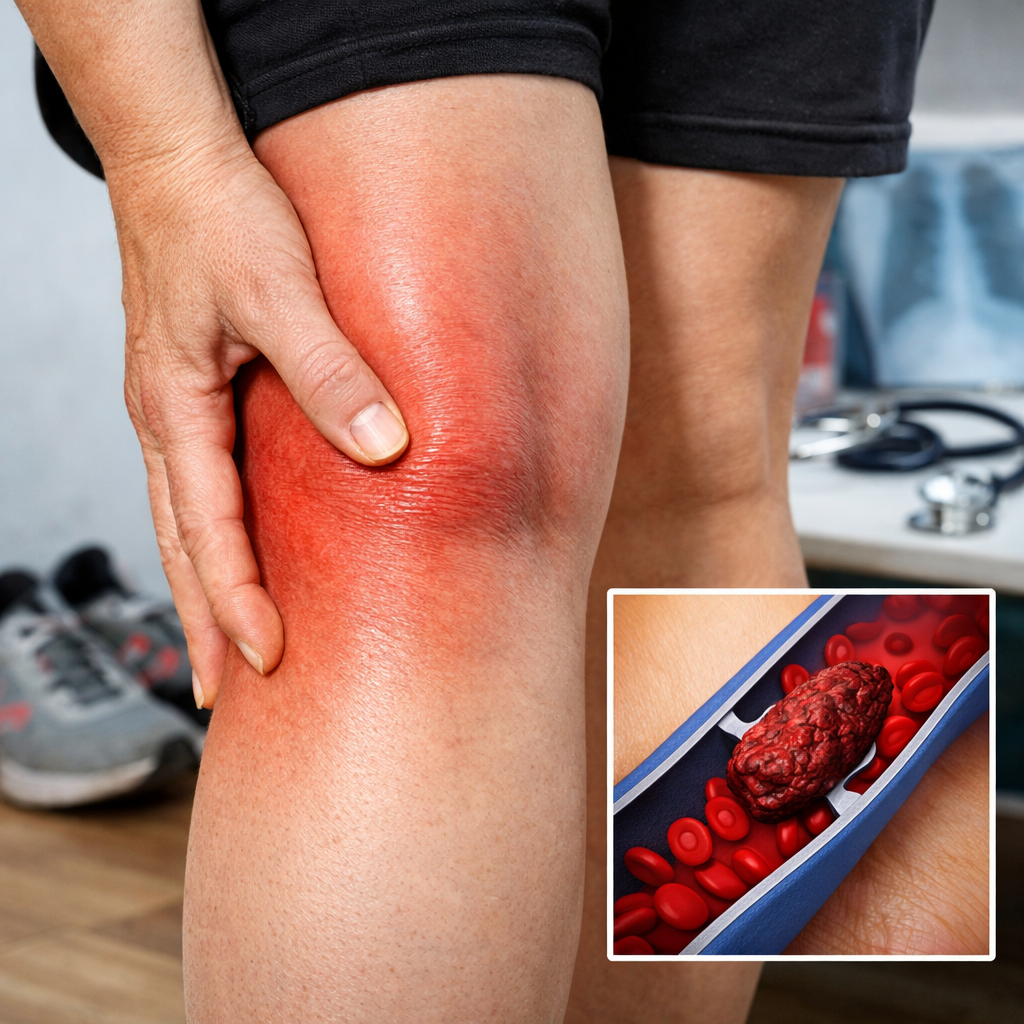
Swelling in one leg, especially when one calf, ankle, or lower leg suddenly looks puffier than the other.
Pain or tenderness, often in the calf, that may feel like cramping, soreness, or a deep ache.
Warmth over the affected area, compared with the other leg.
Redness or skin discoloration, which may look red, bluish, or darker than the surrounding skin.
Symptoms that mostly affect one side, not both legs equally.
Many people expect a clot to cause severe pain, but that is not always what happens. Some DVTs cause only modest discomfort or swelling. Others produce almost no warning at all. Mayo Clinic notes that DVT can occur with few or no symptoms, which is one reason risk factors matter so much when deciding whether a leg symptom is harmless or urgent.
Why DVT is often confused with something less serious
One reason DVT is dangerous is that it can imitate much more common problems. A person may assume the issue is a calf strain, a pulled muscle, a leg cramp, or skin irritation. And to be fair, many cases of leg pain are not blood clots. But CDC notes that DVT symptoms are nonspecific, meaning the pattern overlaps with other conditions. That is why a new one-sided swollen, painful, warm leg deserves medical attention instead of guesswork.
A simple rule of thumb is this: a regular cramp usually comes on suddenly and may improve with stretching or movement, while DVT symptoms are more concerning when they involve persistent one-sided swelling, pain, warmth, or discoloration, especially in someone with risk factors such as recent travel, surgery, pregnancy, or immobility.
What causes a blood clot to form in the leg
Doctors often explain DVT using three broad mechanisms. First, the inside of a vein may become damaged, such as after surgery, trauma, or inflammation. Second, blood may move too slowly, which can happen during long periods of sitting, bed rest, or reduced mobility. Third, blood may become more likely to clot than normal because of hormones, certain illnesses, inherited clotting disorders, or other medical factors. NIH and CDC both describe these same broad pathways: vein injury, slowed blood flow, and increased clotting tendency.
That framework matters because DVT usually is not caused by just one thing. More often, it develops when several risks stack together. Someone might be older, taking estrogen, and then spend many hours sitting during travel. Or they may have surgery, spend days resting, and also have cancer or a personal history of blood clots. CDC specifically notes that the chance of DVT or PE rises when a person has more than one risk factor at the same time.
Common risk factors for DVT
1. Long periods of not moving
This is one of the most familiar triggers. Blood flows better when leg muscles contract and help push blood upward. When you sit still for long periods, that pumping effect drops. Long-distance travel, desk-bound days without breaks, illness, and bed rest can all increase risk. CDC notes that the longer you stay immobile during travel, the greater the risk becomes.
2. Surgery, hospitalization, and injury
Major surgery, especially involving the abdomen, pelvis, hip, or legs, is a well-known risk. So are fractures, severe muscle injury, and hospital stays that reduce movement. These situations can damage veins, increase inflammation, and keep a person inactive long enough for clotting to become more likely.
3. Age
DVT can happen at any age, but risk rises with older age. Mayo Clinic notes that risk increases after age 60, though younger adults can absolutely still develop DVT if other risk factors are present.
4. Pregnancy and the postpartum period
Pregnancy changes the body in ways that favor clotting and can reduce blood flow from the legs, especially later in pregnancy as pressure builds in the pelvis. CDC says women are at increased risk during pregnancy, childbirth, and the three months after delivery. NHLBI and ACOG also identify pregnancy, hormone exposure, and the postpartum period as important clot risks.
5. Hormonal birth control or hormone therapy
Estrogen-containing birth control and hormone therapy can increase clotting tendency. That does not mean everyone using them will get a clot, but the risk becomes more important when combined with smoking, obesity, immobility, or a personal or family history of blood clots.
6. Cancer and certain chronic medical conditions
Cancer is a major clot risk, both because of the disease itself and because some treatments make clotting more likely. Other conditions linked with higher risk include heart failure, inflammatory bowel disease, autoimmune disorders such as lupus, and some inherited clotting disorders.
7. Smoking, obesity, and previous clots
Smoking affects blood flow and clotting. Obesity adds pressure to the veins and is linked with higher clot risk. A previous DVT or PE also matters because it raises the chance of recurrence. Family history can be important too, especially when clots happened at a younger age or without an obvious trigger.
When to seek medical help
If you develop new swelling, pain, warmth, or redness in one leg, especially after travel, surgery, illness, pregnancy, or a long period of immobility, you should seek prompt medical evaluation. DVT is not something to monitor casually at home for several days while hoping it passes. Early diagnosis matters because the goal is to prevent the clot from growing or traveling to the lungs.
Call emergency services or get emergency care right away if leg symptoms are accompanied by:
sudden shortness of breath
chest pain, especially with deep breathing
coughing up blood
fainting, lightheadedness, or a racing heartbeat
Those symptoms can signal a pulmonary embolism, which is a medical emergency.
How doctors diagnose DVT
Diagnosis usually starts with the story: what symptoms you have, when they started, whether they affect one leg, and what risk factors are present. From there, the most common first test is a duplex ultrasound, which Mayo Clinic describes as the standard test for diagnosing DVT. It uses sound waves to look at blood flow in the veins and check for blockages.
A D-dimer blood test may also be used. MedlinePlus notes that D-dimer testing helps check whether a blood clot may be present and whether more testing is needed, but it is not enough by itself to confirm exactly where a clot is. In some situations, additional imaging such as CT or MRI may be used, particularly when clots are suspected in areas that ultrasound does not show well.
How to lower your risk
You cannot eliminate every clot risk, but there are practical steps that can meaningfully lower the odds:
Move regularly during long flights, car rides, or workdays. Get up when possible, and flex your ankles and calves if you must stay seated.
Stay hydrated, especially when traveling or recovering from illness.
Follow post-surgery and hospital mobility instructions closely, including walking as soon as your medical team says it is safe.
Discuss hormone-related risk with a clinician if you use estrogen-containing contraception or hormone therapy and have other clot risks.
Take pregnancy and postpartum symptoms seriously, because risk stays elevated after delivery.
Work on long-term risk reduction, including smoking cessation and weight management if those apply to you.
For some people at especially high risk, a clinician may recommend additional prevention measures, such as compression devices, compression stockings in specific situations, or preventive medication. That decision depends on the full risk picture, not one factor alone.
The bottom line
A blood clot in the leg is not just another cause of calf pain. DVT is a circulation problem with the potential to become a lung emergency if the clot travels. The warning signs that matter most are one-sided swelling, pain, warmth, and discoloration, especially when they show up after immobility, travel, surgery, pregnancy, or in someone with multiple risk factors.
Not every painful or swollen leg is a clot, but DVT is serious enough that it should not be self-diagnosed from symptoms alone. If the pattern fits, get evaluated. And if chest pain, sudden breathlessness, coughing up blood, or fainting enters the picture, treat it as an emergency.